 中文
中文 English
MOSFET Selection for Compact Power Solutions: SI2308CDS-T1-GE3, SIRA01DP-T1-GE3 vs. China Alternatives VB1695, VBQA2305
Number of views:9999
 Back to previous page
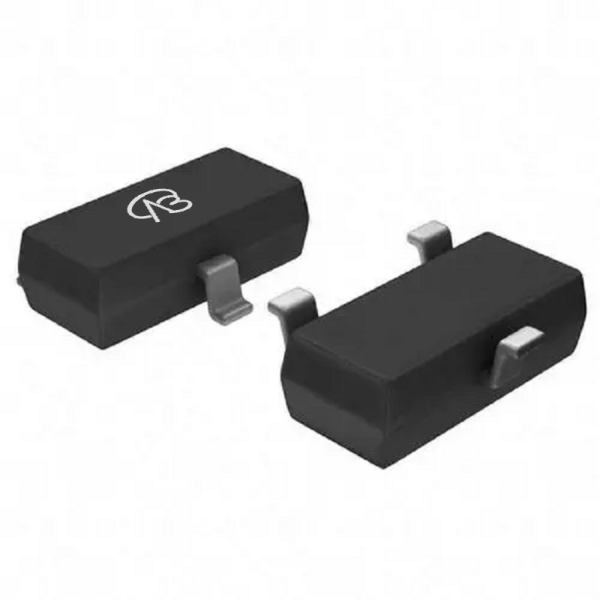
Comparative Analysis: SI2308CDS-T1-GE3 (N-channel) vs. VB1695
Analysis of the Original Model (SI2308CDS-T1-GE3) Core:
This is a 60V N-channel TrenchFET Gen IV power MOSFET from VISHAY in a compact SOT-23 package. Its design core is to provide robust switching capability in a minimal footprint for low-to-medium power applications. Key advantages include a drain-source voltage (Vdss) of 60V, a continuous drain current (Id) of 2.6A, and an on-resistance (RDS(on)) of 144mΩ at 10V. It features 100% Rg testing and is designed for applications requiring reliable performance in space-constrained designs.
Compatibility and Differences of the Domestic Alternative (VB1695):
VBsemi's VB1695 is also an N-channel MOSFET in an SOT-23 package, offering a pin-to-pin compatible alternative. The key differences are in the electrical parameters: VB1695 offers significantly lower on-resistance at 75mΩ (@10V) compared to the original's 144mΩ, and a higher continuous drain current rating of 4A versus 2.6A, while maintaining the same 60V voltage rating. This represents a performance enhancement in conduction losses and current handling within the same form factor.
Key Application Areas:
Original Model SI2308CDS-T1-GE3: Its characteristics suit space-constrained 60V systems requiring reliable switching at currents around 2.6A. Typical applications include:
Battery protection and switching circuits.
DC-DC converters in portable devices.
General-purpose power switching where the SOT-23 footprint is critical.
Alternative Model VB1695: More suitable for upgrade scenarios demanding lower conduction loss and higher current capability (up to 4A) within the same compact SOT-23 footprint. It's an excellent choice for enhancing efficiency in existing battery switch or DC-DC converter designs.
Comparative Analysis: SIRA01DP-T1-GE3 (P-channel) vs. VBQA2305
This P-channel MOSFET focuses on delivering very high current with minimal loss in a thermally efficient package.
Analysis of the Original Model (SIRA01DP-T1-GE3) Core:
This is a -30V P-channel TrenchFET Gen IV power MOSFET from VISHAY in an SO-8 package. Its design pursues extremely low conduction loss and fast switching for high-current applications. Core advantages are:
Excellent Conduction Performance: An ultra-low on-resistance of 4.9mΩ at 10V drive.
High Current Capability: A continuous drain current rating of -60A, suitable for demanding power path management.
Advanced Switching Characteristics: Features very low gate charge (Qg), specifically a low "Miller" charge (Qgd) and a Qgd/Qgs ratio of <1, enabling fast and efficient switching with minimal drive loss.
Compatibility and Differences of the Domestic Alternative (VBQA2305):
VBsemi's VBQA2305 is a P-channel MOSFET in a DFN8(5x6) package. While the package differs (DFN vs. SO-8), it serves as a functional alternative for high-current P-channel applications. It offers a significant performance enhancement: a higher continuous current rating of -120A and a lower on-resistance of 4mΩ (@10V) compared to the original's -60A and 4.9mΩ, while maintaining a -30V voltage rating. This makes it suitable for applications requiring even higher power density and lower losses.
Key Application Areas:
Original Model SIRA01DP-T1-GE3: Its ultra-low RDS(on) and high current capability make it ideal for high-efficiency, high-current applications. For example:
High-current load switches in adapters, chargers, and power banks.
Power path management in computing and server boards.
Motor drive control circuits.
Alternative Model VBQA2305: Is more suitable for next-generation or upgraded designs with the most stringent requirements for current handling (up to -120A) and minimal conduction loss. It's an optimal choice for high-power adapters, advanced charging systems, and high-density power modules where thermal performance and efficiency are paramount.
Conclusion
In summary, this analysis reveals two clear selection paths:
For N-channel applications in compact SOT-23 footprints, the original model SI2308CDS-T1-GE3 provides reliable 60V/2.6A switching. Its domestic alternative VB1695 offers a direct package-compatible upgrade with lower on-resistance (75mΩ vs. 144mΩ) and higher current rating (4A vs. 2.6A), making it a superior choice for enhancing efficiency and power handling in battery switches and DC-DC converters.
For high-current P-channel applications, the original model SIRA01DP-T1-GE3 sets a high standard with its 4.9mΩ RDS(on) and -60A current in an SO-8 package. The domestic alternative VBQA2305, in a DFN package, provides a substantial performance boost with 4mΩ RDS(on) and a remarkable -120A current rating, positioning it as a top-tier option for the most demanding high-power switch and power path designs.
The core conclusion is that selection hinges on precise requirement matching. In the context of supply chain diversification, domestic alternatives like VB1695 and VBQA2305 not only provide viable backup options but also deliver significant parameter surpassing in key areas. This offers engineers greater flexibility and resilience in design trade-offs and cost control, empowering them to push the limits of power density and efficiency. Understanding the design philosophy and parameter implications of each device is essential to maximizing its value in the circuit.

Download PDF document
 Download now


