 中文
中文 English
MOSFET Selection for Compact Power Applications: SI1469DH-T1-GE3, SI7119DN-T1-E3 vs. China Alternatives VBK8238, VBQF2202K
Number of views:9999
 Back to previous page
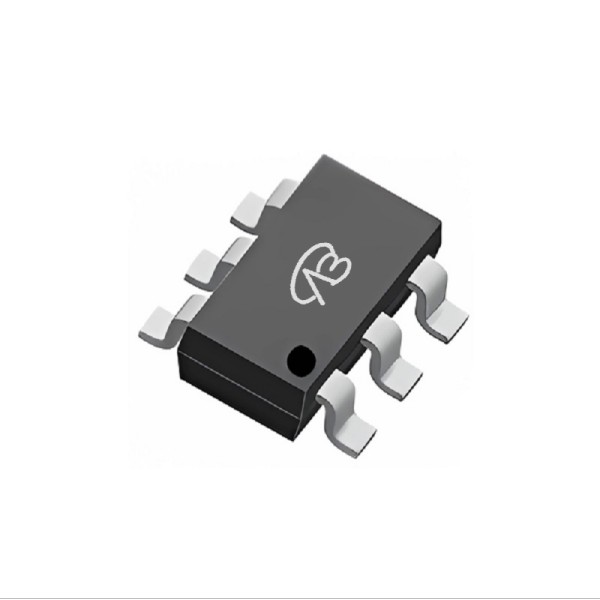
Comparative Analysis: SI1469DH-T1-GE3 (P-channel) vs. VBK8238
Analysis of the Original Model (SI1469DH-T1-GE3) Core:
This is a 20V P-channel MOSFET from VISHAY in an ultra-small SC-70-6 (SOT-363) package. Its design core is to provide reliable load switching in minimal space. Key advantages include a continuous drain current of 2.7A and an on-resistance of 80mΩ at 4.5V gate drive. It is halogen-free and compliant with environmental directives.
Compatibility and Differences of the Domestic Alternative (VBK8238):
VBsemi's VBK8238 is a pin-to-pin compatible alternative in the same SC70-6 package. The main differences are in electrical parameters: VBK8238 offers significantly lower on-resistance (34mΩ @4.5V) and a higher continuous current rating (-4A) compared to the original, while maintaining the same -20V voltage rating.
Key Application Areas:
Original Model SI1469DH-T1-GE3: Ideal for space-constrained load switching in portable devices, such as power management for modules and peripherals in battery-powered applications.
Alternative Model VBK8238: Suited for the same compact load-switch applications but offers improved efficiency and current handling (up to 4A) due to its lower on-resistance, providing a performance-enhanced drop-in replacement.
Comparative Analysis: SI7119DN-T1-E3 (P-channel) vs. VBQF2202K
This comparison focuses on P-channel MOSFETs for higher voltage applications, where the design pursuit is a balance of voltage rating, on-resistance, and thermal performance in a compact footprint.
Analysis of the Original Model (SI7119DN-T1-E3) Core:
This is a 200V P-channel MOSFET from VISHAY in a low-profile PowerPAK1212-8 package (1.07mm height). Its core advantages are a high voltage rating (200V), a continuous current of 3.8A, and an on-resistance of 1.1Ω at 6V drive. The PowerPAK package offers low thermal resistance for its size.
Compatibility and Differences of the Domestic Alternative (VBQF2202K):
VBsemi's VBQF2202K uses a DFN8(3x3) package and serves as a functional alternative for medium-voltage applications. Key parameter differences: VBQF2202K has a similar -200V voltage rating and a comparable continuous current (-3.6A). Its on-resistance is 2000mΩ @10V, which is higher than the original's specification, indicating a trade-off in conduction loss for the target voltage class.
Key Application Areas:
Original Model SI7119DN-T1-E3: Its high voltage rating and compact, thermally efficient package make it suitable for active clamp circuits in intermediate DC/DC power supplies and other medium-voltage power management applications.
Alternative Model VBQF2202K: Provides a domestic alternative for 200V-level applications such as active clamps or auxiliary switches where the specific on-resistance is acceptable, offering supply chain diversification.
Conclusion:
This analysis reveals two distinct selection paths:
For low-voltage, ultra-compact load switching, the original SI1469DH-T1-GE3 is a proven solution. Its domestic alternative VBK8238 offers a compelling, performance-enhanced option with lower RDS(on) and higher current capability in the same footprint.
For medium-voltage (200V) applications requiring a compact, thermally capable package, the original SI7119DN-T1-E3 is a strong candidate. The domestic alternative VBQF2202K provides a viable alternative for voltage-compatible designs, emphasizing supply chain resilience.
The core conclusion is that selection hinges on precise requirement matching. Domestic alternatives not only provide backup options but can also offer performance improvements or cost benefits, giving engineers greater flexibility in design trade-offs.

Download PDF document
 Download now


