 中文
中文 English
MOSFET Selection for Power Switching Applications: SI1079X-T1-GE3, IRFR420APBF vs. China Alternatives VBTA8338 and VBE155R02
Number of views:9999
 Back to previous page
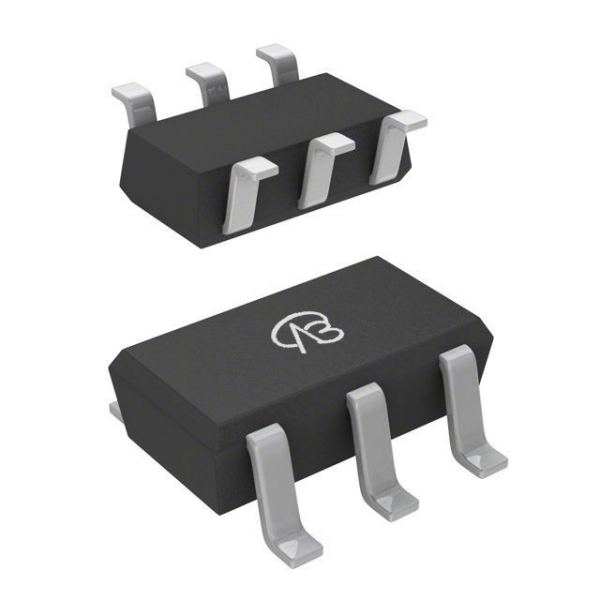
Comparative Analysis: SI1079X-T1-GE3 (P-channel) vs. VBTA8338
Analysis of the Original Model (SI1079X-T1-GE3) Core:
This is a 30V P-channel MOSFET from VISHAY in a compact SC-89-6 package. It is designed for low-power switching and signal control in space-constrained applications. Key features include a continuous drain current of 1.44A and an on-resistance of 100mΩ at 4.5V gate drive.
Compatibility and Differences of the Domestic Alternative (VBTA8338):
VBsemi’s VBTA8338 is a pin-to-pin compatible alternative in an SC75-6 package. It offers significant performance improvements: a lower on-resistance of 42mΩ at 4.5V (and 32mΩ at 10V) and a higher continuous current rating of -2.4A, while maintaining a -30V voltage rating.
Key Application Areas:
Original Model SI1079X-T1-GE3: Suitable for low-current load switching, power management, and signal isolation in portable electronics, IoT devices, or battery-powered systems where 30V voltage and ~1.5A current are sufficient.
Alternative Model VBTA8338: An enhanced drop-in replacement for applications requiring lower conduction loss and higher current handling (up to 2.4A) within the same voltage range, such as more efficient load switches or power path management.
Comparative Analysis: IRFR420APBF (N-channel) vs. VBE155R02
Analysis of the Original Model (IRFR420APBF) Core:
This is a 500V N-channel MOSFET from VISHAY in a DPAK (TO-252) package. It is designed for high-voltage, low-frequency switching with robustness. Its core advantages are a 500V drain-source voltage, 2.1A continuous current, and an on-resistance of 3Ω at 10V. It features low gate charge (Qg) for simple driving, along with improved ruggedness against avalanche and dV/dt stress.
Compatibility and Differences of the Domestic Alternative (VBE155R02):
VBsemi’s VBE155R02 is a direct alternative in a TO-252 package. It offers a higher voltage rating of 550V and a comparable continuous current of 2A. The on-resistance is similar at 3000mΩ (3Ω) at 10V. It utilizes planar technology suitable for high-voltage switching.
Key Application Areas:
Original Model IRFR420APBF: Ideal for high-voltage, medium-current switching applications such as switch-mode power supplies (SMPS), UPS systems, and other power conversion stages where 500V blocking voltage and ruggedness are required.
Alternative Model VBE155R02: A suitable domestic alternative for 500V+ circuit designs, offering a slightly higher voltage margin (550V) with similar current and on-resistance performance. It is a viable option for SMPS, lighting, and industrial controls, providing supply chain diversification.
Conclusion
This comparison reveals two distinct substitution strategies:
1. For low-power P-channel applications, the domestic alternative VBTA8338 not only offers direct package compatibility but also provides superior performance with significantly lower on-resistance and higher current capability compared to the original SI1079X-T1-GE3, making it an excellent upgrade choice.
2. For high-voltage N-channel applications, the domestic alternative VBE155R02 offers a comparable and reliable solution with a slightly higher voltage rating (550V vs. 500V) and similar current/on-resistance characteristics to the original IRFR420APBF, serving as a robust alternative for power supply and industrial systems.
The core takeaway is that selection depends on precise requirement matching. Domestic alternatives like VBTA8338 and VBE155R02 not only provide supply chain resilience but also offer performance enhancements or reliable parity, giving engineers greater flexibility in design and cost optimization. Understanding each device's parameters is essential to leverage its full potential in your circuit.

Download PDF document
 Download now


