 中文
中文 English
MOSFET Selection for Power Switching Solutions: IRL620PBF, SI2304DDS-T1-GE3 vs. China Alternatives VBM1203M, VB1330
Number of views:9999
 Back to previous page
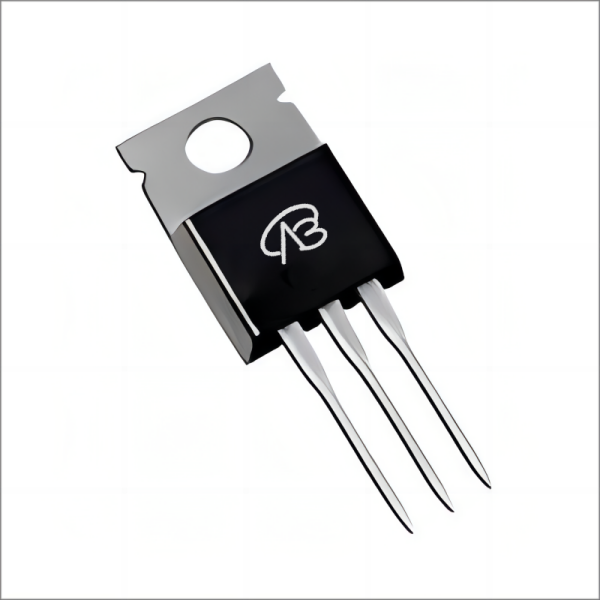
Comparative Analysis: IRL620PBF (N-channel) vs. VBM1203M
Analysis of the Original Model (IRL620PBF) Core:
This is a 200V N-channel MOSFET from VISHAY in a TO-220AB package. Its design core is to offer a cost-effective balance of fast switching, ruggedness, and low conduction loss for commercial and industrial applications. Key advantages include a 200V drain-source voltage rating, 5.2A continuous drain current, and an on-resistance of 800mΩ at 5V gate drive. The TO-220AB package provides good thermal performance for power dissipation up to around 50W.
Compatibility and Differences of the Domestic Alternative (VBM1203M):
VBsemi’s VBM1203M is a pin-to-pin compatible alternative in the same TO-220 package. It offers significant performance improvements: the same 200V voltage rating, but a higher continuous current of 10A and a much lower on-resistance of 270mΩ at 10V (310mΩ at 4.5V). This results in reduced conduction losses and better efficiency.
Key Application Areas:
Original Model IRL620PBF: Ideal for general-purpose medium-power switching where cost and reliability are key, such as in AC-DC power supplies, industrial controls, and motor drives within its 5.2A current range.
Alternative Model VBM1203M: Suited for upgraded designs requiring higher current capacity (up to 10A) and lower on-resistance for improved efficiency, potentially in higher-power SMPS, motor drives, or replacement scenarios seeking performance enhancement.
Comparative Analysis: SI2304DDS-T1-GE3 (N-channel) vs. VB1330
Analysis of the Original Model (SI2304DDS-T1-GE3) Core:
This is a 30V N-channel MOSFET from VISHAY in a compact SOT-23 package. It is designed for space-constrained, low-to-medium power applications requiring good switching performance. Its key parameters include a 30V drain-source voltage, 3.6A continuous drain current, and a low on-resistance of 60mΩ at 10V gate drive.
Compatibility and Differences of the Domestic Alternative (VB1330):
VBsemi’s VB1330 is a direct SOT-23-3 pin-to-pin compatible alternative. It provides enhanced performance: the same 30V voltage rating, but a higher continuous current of 6.5A and a lower on-resistance of 30mΩ at 10V (33mΩ at 4.5V). This translates to higher current handling and reduced power loss in a similarly compact footprint.
Key Application Areas:
Original Model SI2304DDS-T1-GE3: Excellent for load switching, power management, and DC-DC conversion in portable devices, IoT modules, and consumer electronics where board space is limited and current requirements are within 3.6A.
Alternative Model VB1330: A powerful upgrade for applications needing higher current capability (up to 6.5A) and lower conduction loss in the same small package, ideal for more demanding load switches, battery protection circuits, or efficient point-of-load converters.
Conclusion:
This comparison outlines two distinct selection paths:
For 200V medium-power applications in a TO-220 package, the original IRL620PBF offers a reliable, cost-effective solution. Its domestic alternative VBM1203M provides a significant performance boost with higher current and lower on-resistance, suitable for efficiency-focused upgrades.
For 30V low-power applications in a SOT-23 package, the original SI2304DDS-T1-GE3 is a solid choice for compact designs. Its domestic alternative VB1330 delivers superior current handling and lower on-resistance, enabling higher performance in the same footprint.
The core takeaway is that selection depends on precise requirement matching. Domestic alternatives like VBM1203M and VB1330 not only offer reliable compatibility but also provide performance advantages, giving engineers greater flexibility in design optimization and cost control. Understanding each device's parameter implications is key to maximizing circuit value.

Download PDF document
 Download now


