 中文
中文 English
MOSFET Selection for Industrial and Automotive Applications: IRFZ44PBF, SQ2337CES-T1_GE3 vs. China Alternatives VBM1638, VB2658
Number of views:9999
 Back to previous page
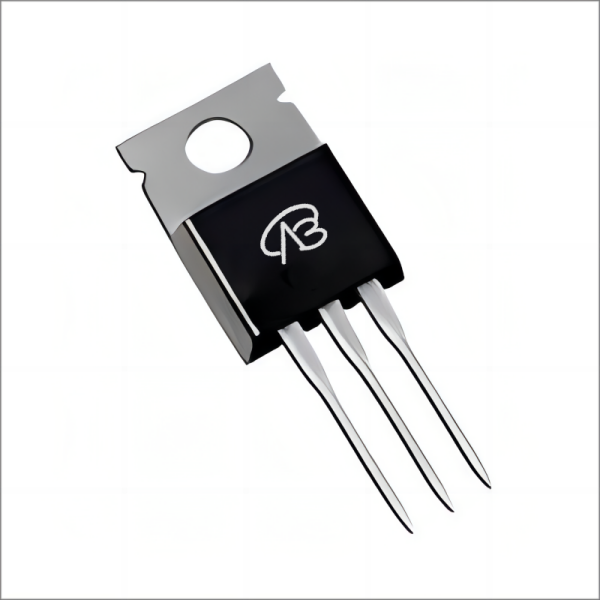
Comparative Analysis: IRFZ44PBF (N-channel, TO-220) vs. VBM1638
Analysis of the Original Model (IRFZ44PBF) Core:
This is a 60V N-channel MOSFET from VISHAY in a TO-220AB package. Its design core is to provide the best combination of fast switching, ruggedness, low on-resistance, and high cost-effectiveness for commercial-industrial applications with power dissipation up to about 50W. Key advantages include: a continuous drain current of 50A, an on-resistance of 28mΩ at 10V gate drive, and the low thermal resistance and widespread industry acceptance of the TO-220AB package, making it ideal for power stages requiring good heat dissipation.
Compatibility and Performance of the Domestic Alternative (VBM1638):
VBsemi's VBM1638 is a direct pin-to-pin compatible alternative in the TO-220 package. It matches or surpasses the original in key parameters: the same 60V voltage rating and 50A continuous current. Notably, its on-resistance is slightly improved at 24mΩ (@10V), potentially offering lower conduction losses. As a Trench MOSFET, it provides a robust and cost-effective alternative for high-current switching.
Key Application Areas:
Original Model IRFZ44PBF: Ideal for medium-power industrial applications such as motor drives, solenoid/valve control, DC-DC converters in power supplies, and general-purpose high-side/low-side switching where the TO-220 package's thermal performance is advantageous.
Alternative Model VBM1638: Perfectly suited as a drop-in replacement for the IRFZ44PBF in all the above applications. Its comparable or slightly better electrical performance and rugged Trench design make it a reliable choice for cost-optimized designs without sacrificing performance, also suitable for automotive auxiliary systems and power tool motor drives.
Comparative Analysis: SQ2337CES-T1_GE3 (N-channel, SOT-23) vs. VB2658
Analysis of the Original Model (SQ2337CES-T1_GE3) Core:
This is an 80V N-channel TrenchFET power MOSFET from VISHAY in a compact SOT-23 package, qualified to AEC-Q101. Its design pursues a balance of relatively high voltage capability, adequate current handling, and space savings for signal-level or low-power switching. Key features include: 80V drain-source voltage, 2.2A continuous current, 241mΩ on-resistance (@10V), and a power dissipation of 3W, making it suitable for protected, space-constrained automotive and industrial environments.
Compatibility and Differences of the Domestic Alternative (VB2658):
VBsemi's VB2658 is a P-channel MOSFET in an SOT-23-3 package. Therefore, it is not a direct functional pin-to-pin replacement for the N-channel SQ2337CES. Its key parameters are: -60V voltage rating, -5.2A continuous current, and a low on-resistance of 50mΩ (@10V). This makes VB2658 an excellent choice for P-channel applications requiring compact size and good performance, such as high-side load switching.
Key Application Areas:
Original Model SQ2337CES-T1_GE3: Its AEC-Q101 qualification and SOT-23 footprint make it ideal for automotive and industrial low-power applications: load switches for ECUs, sensor power management, LED driving, and signal switching in 12V/24V battery systems.
Alternative Model VB2658: As a P-channel device, it serves different circuit topologies. It is highly suitable for compact high-side switching applications requiring a negative gate drive, such as power rail isolation, battery reverse polarity protection, or load switching in portable devices and IoT modules where its low RDS(on) improves efficiency.
Summary and Selection Guide
This analysis reveals two distinct selection paths based on package and channel type:
1. For TO-220 N-channel applications demanding high current and robustness, the original IRFZ44PBF has long been a trusted industry workhorse. Its domestic alternative VBM1638 provides a highly competitive, performance-matched (even slightly better in RDS(on)) and cost-effective drop-in replacement, ensuring supply chain resilience for industrial and automotive power stages.
2. For compact SOT-23 applications, the choice depends on the required channel type. For N-channel needs with AEC-Q101 compliance, the original SQ2337CES-T1_GE3 remains a strong candidate. For designs requiring a P-channel switch in a miniaturized footprint, the domestic VB2658 emerges as an excellent solution with its low on-resistance and -60V rating, filling a specific need in high-side switch designs.
Core Conclusion: Selection is not about absolute superiority but precise requirement matching. In the context of supply chain diversification, domestic alternatives like VBM1638 offer reliable, performance-equivalent replacements for classic parts, while models like VB2658 address specific circuit needs with optimized parameters. Understanding the design intent and electrical parameters of each device is key to leveraging their full value in your circuit, providing engineers with greater flexibility and resilience in design trade-offs and cost control.

Download PDF document
 Download now


