 中文
中文 English
MOSFET Selection for High-Voltage and Multi-Channel Applications: IRFRC20PBF, SI6968BEDQ-T1-GE3 vs. China Alternatives VBE165R02, VBC6N2014
Number of views:9999
 Back to previous page
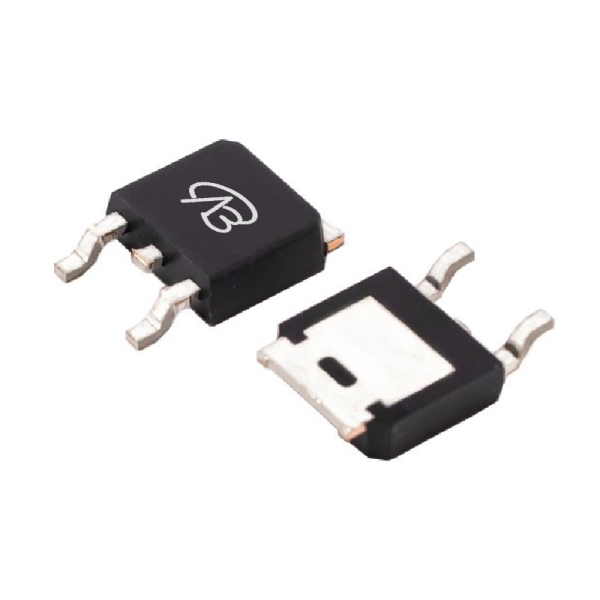
Comparative Analysis: IRFRC20PBF (N-channel) vs. VBE165R02
Analysis of the Original Model (IRFRC20PBF) Core:
This is a 600V N-channel MOSFET from VISHAY in a DPAK (TO-252) package. Its design core is to offer a cost-effective, robust high-voltage switching solution. Key advantages include: high drain-source voltage (600V) suitable for off-line applications, a continuous drain current of 1.3A, and an on-resistance of 4.4Ω at 10V drive. As a third-generation Power MOSFET, it provides a good balance of fast switching, durability, low conduction loss, and low cost. The DPAK package is designed for surface-mount soldering techniques like vapor phase, infrared, or wave soldering.
Compatibility and Differences of the Domestic Alternative (VBE165R02):
VBsemi's VBE165R02 is a pin-to-pin compatible alternative in TO-252 package. The main differences are in electrical parameters: VBE165R02 offers a higher voltage rating (650V vs. 600V) and a slightly higher continuous current (2A vs. 1.3A). However, its on-resistance is higher (4.3Ω @10V vs. 4.4Ω @10V of the original, but note the original is specified at 1.2A). The domestic alternative uses planar technology, providing a reliable high-voltage option.
Key Application Areas:
Original Model IRFRC20PBF: Ideal for cost-sensitive, high-voltage applications requiring moderate current. Typical uses include:
Off-line switch-mode power supplies (SMPS) in auxiliary or low-power sections.
Lighting ballasts and LED driver circuits.
Industrial controls and appliance power management where 600V rating is needed.
Alternative Model VBE165R02: Suitable for applications requiring a higher voltage margin (650V) and slightly higher current capability (up to 2A), such as enhanced reliability versions of the above applications or some inverter circuits.
Comparative Analysis: SI6968BEDQ-T1-GE3 (Dual N-channel) vs. VBC6N2014
This dual N-channel MOSFET focuses on space-saving integration and efficient power handling in low-voltage applications.
Analysis of the Original Model (SI6968BEDQ-T1-GE3) Core:
This VISHAY part integrates two N-channel MOSFETs in a compact TSSOP-8 package. Its core advantages are:
Space-Efficient Integration: Two 20V MOSFETs in one tiny package, saving board area.
Good Current Handling: Each channel supports 6.5A continuous current.
Low On-Resistance: 22mΩ at 4.5V drive, minimizing conduction losses.
Enhanced Robustness: TrenchFET technology with 3000V ESD protection.
Compatibility and Differences of the Domestic Alternative (VBC6N2014):
VBsemi's VBC6N2014 is a direct pin-to-pin compatible alternative in TSSOP-8, featuring a common-drain N+N configuration. It demonstrates performance enhancement in key areas: it supports a slightly higher continuous current (7.6A vs. 6.5A) and achieves a significantly lower on-resistance (14mΩ @4.5V vs. 22mΩ @4.5V). This translates to potentially lower power dissipation and higher efficiency. It also uses Trench technology.
Key Application Areas:
Original Model SI6968BEDQ-T1-GE3: Excellent for compact designs requiring dual low-side switches or load switches. Typical applications include:
Power management in portable devices, laptops, and SSDs.
DC-DC converter synchronous rectification stages (for low-voltage rails).
Motor drive circuits for small fans or actuators.
Load switching and power distribution in space-constrained PCBs.
Alternative Model VBC6N2014: Better suited for upgrade scenarios demanding higher current per channel and lower conduction loss, such as high-current point-of-load (POL) converters, more powerful motor drives, or applications where thermal performance is critical.
Conclusion
In summary, this analysis reveals two distinct selection paths:
For high-voltage, cost-effective N-channel applications, the original IRFRC20PBF, with its 600V rating and proven DPAK package, remains a strong choice for offline SMPS and industrial controls. Its domestic alternative VBE165R02 offers a higher voltage rating (650V) and slightly higher current (2A), making it a suitable alternative for designs requiring extra voltage margin or where supply chain diversification is needed.
For space-constrained, dual N-channel applications, the original SI6968BEDQ-T1-GE3 provides an excellent integrated solution with good performance in a TSSOP-8 package. Its domestic alternative VBC6N2014 presents a compelling performance-upgraded option, with lower on-resistance (14mΩ vs. 22mΩ) and higher current capability (7.6A vs. 6.5A), ideal for pushing efficiency and power density in next-generation compact designs.
The core takeaway: Selection is about precise requirement matching. Domestic alternatives like VBE165R02 and VBC6N2014 not only provide viable, pin-compatible replacements but also offer opportunities for parameter enhancement and supply chain resilience, giving engineers greater flexibility in design trade-offs and cost optimization. Understanding each device's design philosophy and parameter implications is key to unlocking its full potential in your circuit.

Download PDF document
 Download now


