 中文
中文 English
MOSFET Selection for Power Switching: IRFR9024PBF, SISA24DN-T1-GE3 vs. China Alternatives VBE2610N, VBQF1202
Number of views:9999
 Back to previous page
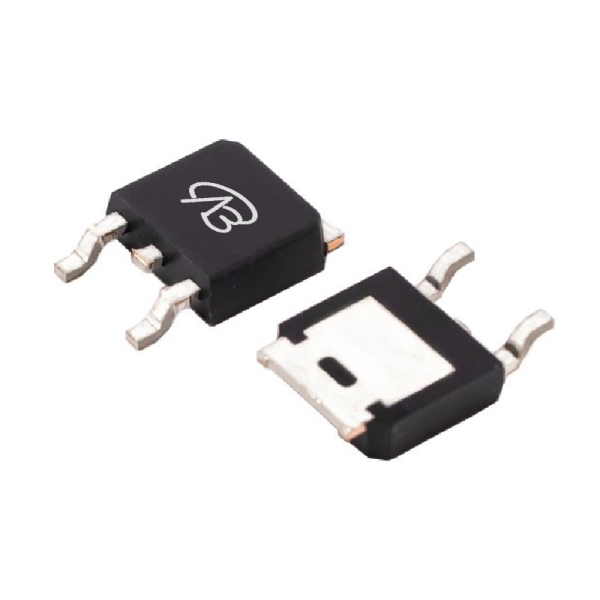
Comparative Analysis: IRFR9024PBF (P-channel) vs. VBE2610N
Analysis of the Original Model (IRFR9024PBF) Core:
This is a 60V P-channel MOSFET from VISHAY in a DPAK (TO-252) package. As a 3rd generation Power MOSFET, its design core offers a cost-effective combination of fast switching, ruggedness, and low on-resistance (280mΩ @10V). It supports a continuous drain current of 5.6A and is designed for surface-mount applications with a power dissipation up to 1.5W in typical use.
Compatibility and Differences of the Domestic Alternative (VBE2610N):
VBsemi's VBE2610N is also housed in a TO-252 package, ensuring form-factor compatibility. The key differences are in significantly enhanced electrical parameters: VBE2610N offers a much lower on-resistance of 61mΩ (@10V) and a substantially higher continuous current rating of -30A, while maintaining the same -60V voltage rating.
Key Application Areas:
Original Model IRFR9024PBF: Suitable for cost-sensitive, medium-power P-channel switching applications up to 60V, such as power management circuits, load switches, or low-side switches where its balance of performance and economy is valued.
Alternative Model VBE2610N: An excellent performance-upgrade alternative. Its ultra-low RDS(on) and high current capability make it ideal for applications demanding higher efficiency, lower conduction losses, and greater current handling within the same voltage range, such as in upgraded power supplies, motor drives, or battery protection circuits.
Comparative Analysis: SISA24DN-T1-GE3 (N-channel) vs. VBQF1202
Analysis of the Original Model (SISA24DN-T1-GE3) Core:
This is a 25V N-channel TrenchFET Gen IV MOSFET from VISHAY in a compact PowerPAK1212-8 package. Its design focuses on high power density and efficiency in DC/DC conversion. Key advantages include an extremely low on-resistance of 1.4mΩ (@10V) and a high continuous current rating of 60A. It features optimized gate charge for reduced switching losses, making it ideal for synchronous rectification.
Compatibility and Differences of the Domestic Alternative (VBQF1202):
VBsemi's VBQF1202 uses a DFN8(3x3) package and represents a highly competitive alternative. While the voltage rating is slightly lower at 20V, it offers a dramatically higher continuous current rating of 100A and a comparably low on-resistance of 2mΩ (@10V). This provides a significant margin in current-handling capability.
Key Application Areas:
Original Model SISA24DN-T1-GE3: Excels in high-current, high-frequency switching applications like synchronous rectification in high-power-density DC/DC converters (e.g., for servers, telecom), where its low RDS(on) and Gen IV optimized switching characteristics maximize efficiency.
Alternative Model VBQF1202: A powerful alternative for applications where maximizing current capacity is paramount, even with a slightly lower voltage rating. Its 100A rating and low RDS(on) make it suitable for demanding low-voltage, high-current scenarios such as high-performance VRMs, motor drives, or power distribution switches.
Conclusion:
This analysis reveals two distinct selection paths:
For P-channel applications, the original IRFR9024PBF provides a reliable, cost-effective solution for 60V systems. Its domestic alternative VBE2610N offers a substantial performance upgrade with significantly lower RDS(on) and higher current capability, enabling more efficient and robust designs in compatible footprints.
For N-channel high-current switching, the original SISA24DN-T1-GE3 is a benchmark for efficiency in compact 25V DC/DC applications. The domestic alternative VBQF1202 shifts the focus towards extreme current delivery (100A) at 20V, making it a compelling choice for ultra-high-current, low-voltage point-of-load applications.
The core takeaway is that selection hinges on precise requirement matching. Domestic alternatives like VBE2610N and VBQF1202 not only provide viable backups but also offer parameter-specific advantages—be it superior conduction performance or unmatched current rating—granting engineers greater flexibility in design trade-offs and cost optimization within a diversified supply chain.

Download PDF document
 Download now


