 中文
中文 English
MOSFET Selection for Medium-Voltage Applications: IRFR310TRPBF, SI2307BDS-T1-GE3 vs. China Alternatives VBE165R04, VB2355
Number of views:9999
 Back to previous page
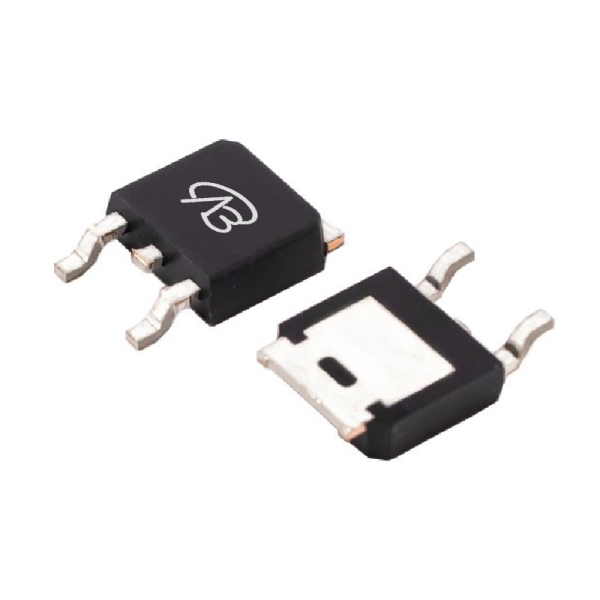
Comparative Analysis: IRFR310TRPBF (N-channel) vs. VBE165R04
Analysis of the Original Model (IRFR310TRPBF) Core:
This is a 400V N-channel MOSFET from Vishay, packaged in DPAK (TO-252). Its design core is to offer a cost-effective balance of fast switching, ruggedness, and low on-resistance for medium-voltage applications. Key advantages include: a high drain-source voltage rating of 400V, continuous drain current of 1.7A, and an on-resistance of 3.6Ω at 10V gate drive. The DPAK package is designed for surface-mount assembly and supports power dissipation up to 1.5W in typical SMT applications.
Compatibility and Differences of the Domestic Alternative (VBE165R04):
VBsemi’s VBE165R04 is offered in a compatible TO-252 package and serves as a functional alternative. The main differences are in electrical parameters: VBE165R04 features a significantly higher voltage rating of 650V and a higher continuous current rating of 4A. However, its on-resistance is higher at 2.2Ω (at 10V) compared to the original’s 3.6Ω.
Key Application Areas:
Original Model IRFR310TRPBF: Well-suited for medium-voltage, lower-current switching applications where 400V capability and cost efficiency are priorities. Typical uses include:
- Off-line switch-mode power supplies (SMPS) in auxiliary or low-power sections.
- Lighting ballasts and LED driver circuits.
- Relay or solenoid drivers in industrial controls.
Alternative Model VBE165R04: More appropriate for applications requiring higher voltage endurance (up to 650V) and higher current capability (up to 4A), such as higher-power offline converters or motor drives where voltage margin is critical.
Comparative Analysis: SI2307BDS-T1-GE3 (P-channel) vs. VB2355
Analysis of the Original Model (SI2307BDS-T1-GE3) Core:
This is a 30V P-channel MOSFET from Vishay in a compact SOT-23 package. It is designed for space-constrained, low-voltage power management tasks. Its key strengths are: a low on-resistance of 130mΩ at 4.5V gate drive, a continuous drain current of -3.2A, and the miniature SOT-23 footprint ideal for high-density PCB layouts.
Compatibility and Differences of the Domestic Alternative (VB2355):
VBsemi’s VB2355 is a pin-to-pin compatible alternative in SOT-23-3 package. It shows notable performance improvements: similar voltage rating (-30V), but a significantly lower on-resistance of 54mΩ (at 4.5V) and a higher continuous current rating of -5.6A.
Key Application Areas:
Original Model SI2307BDS-T1-GE3: Ideal for low-voltage, compact applications where board space is at a premium. Common applications include:
- Load switching and power distribution in portable devices, IoT modules.
- Battery management systems (e.g., discharge path control in single-cell Li-ion circuits).
- Level translation and interface switching in mixed-voltage systems.
Alternative Model VB2355: Better suited for upgraded scenarios demanding lower conduction loss and higher current capacity within the same small footprint, such as more efficient load switches or higher-current power path management in compact designs.
Conclusion
This comparison reveals two distinct selection paths:
For medium-voltage N-channel applications, the original IRFR310TRPBF offers a proven balance of 400V rating, 1.7A current, and 3.6Ω on-resistance in a cost-effective DPAK package, making it a reliable choice for auxiliary power stages and low-power offline switching. Its domestic alternative VBE165R04 provides a substantial upgrade in voltage (650V) and current (4A) ratings, suitable for designs requiring higher voltage margins and power handling, albeit with a slightly different on-resistance profile.
For low-voltage P-channel applications in space-constrained designs, the original SI2307BDS-T1-GE3 delivers a compact SOT-23 solution with 130mΩ on-resistance and -3.2A current capability, perfect for miniaturized power management. The domestic alternative VB2355 emerges as a performance-enhanced option, offering significantly lower on-resistance (54mΩ) and higher current (-5.6A), enabling higher efficiency and greater load capacity in the same footprint.
The core insight is that selection is not about absolute superiority but precise requirement matching. In an era of supply chain diversification, domestic alternatives like VBE165R04 and VB2355 not only provide viable backup options but also deliver parameter advancements in key areas, giving engineers greater flexibility and resilience in design trade-offs and cost optimization. Understanding each device’s design philosophy and parameter implications is essential to unlocking its full potential in your circuit.

Download PDF document
 Download now


