 中文
中文 English
MOSFET Selection for High-Power and High-Current Applications: IRFP340PBF, SQM40010EL_GE3 vs. China Alternatives VBP15R50S and VBL1401
Number of views:9999
 Back to previous page
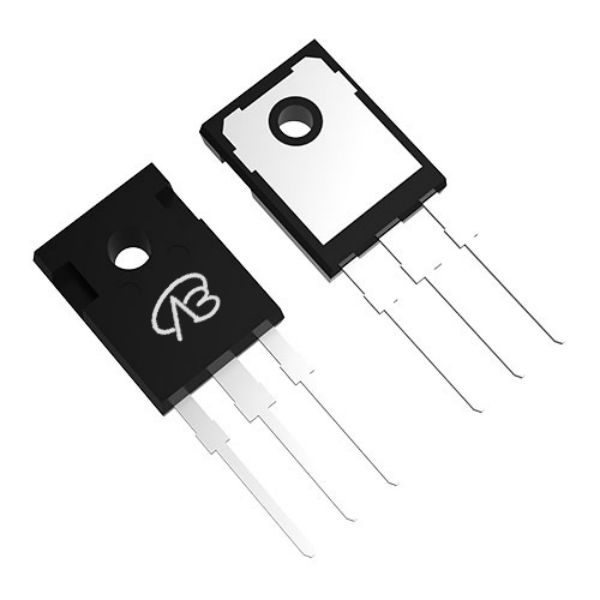
Comparative Analysis: IRFP340PBF (High-Voltage N-Channel) vs. VBP15R50S
Analysis of the Original Model (IRFP340PBF) Core:
This is a 400V N-channel MOSFET from VISHAY, packaged in the robust TO-247-3. Its design core is to deliver an optimal combination of fast switching, ruggedness, low on-resistance, and cost-effectiveness for high-power commercial-industrial applications. Key advantages include: a drain-source voltage (Vdss) of 400V, a continuous drain current (Id) of 6.9A, and an on-resistance (RDS(on)) of 550mΩ at 10V. The TO-247AC package is superior to TO-220AB for high-power levels, offering isolated mounting holes and greater creepage distance between pins to meet safety standards.
Compatibility and Differences of the Domestic Alternative (VBP15R50S):
VBsemi's VBP15R50S is also housed in a TO-247 package, providing good compatibility. The key differences lie in its significantly enhanced electrical parameters: VBP15R50S features a higher voltage rating of 500V, a much higher continuous current of 50A, and a drastically lower on-resistance of 80mΩ at 10V. This represents a substantial performance upgrade in terms of current handling and conduction loss.
Key Application Areas:
Original Model IRFP340PBF: Ideal for high-voltage, medium-current switching applications where cost-effectiveness and reliability in a TO-247 package are paramount. Typical uses include:
Switch-mode power supplies (SMPS) for industrial equipment.
Motor drives and inverters operating at several hundred volts.
Power factor correction (PFC) circuits.
Alternative Model VBP15R50S: Suited for applications requiring higher voltage margins (up to 500V) and significantly greater current capability (up to 50A) with much lower conduction losses. It is an excellent upgrade for high-power off-line SMPS, industrial motor drives, and high-voltage DC-DC converters where efficiency and power density are critical.
Comparative Analysis: SQM40010EL_GE3 (Low-Voltage High-Current N-Channel) vs. VBL1401
This comparison focuses on N-channel MOSFETs designed for low-voltage, very high-current applications, where the primary pursuit is minimizing conduction loss.
Analysis of the Original Model (SQM40010EL_GE3) Core:
This 40V N-channel MOSFET from VISHAY, in a TO-263 (D2PAK) package, is engineered for extreme current handling. Its core advantages are:
Exceptional Current Rating: A continuous drain current (Id) of 120A.
Very Low On-Resistance: RDS(on) as low as 1.9mΩ at 4.5V gate drive, minimizing conduction losses.
Power Package: The D2PAK package offers a good balance between current capability, thermal performance, and board space.
Compatibility and Differences of the Domestic Alternative (VBL1401):
VBsemi's VBL1401, also in a TO-263 package, is a direct and performance-competitive alternative. It matches the 40V voltage rating but offers even better parameters: a phenomenal continuous current rating of 280A and lower on-resistance values—1.68mΩ at 4.5V and 1.4mΩ at 10V. This translates to superior current handling and potentially lower operating temperatures under high load.
Key Application Areas:
Original Model SQM40010EL_GE3: Perfect for applications demanding very high current in low-voltage (e.g., 12V, 24V) systems. Typical applications include:
Synchronous rectification in high-current DC-DC converters (e.g., for servers, telecom).
High-current load switches and power distribution.
Motor drives for robotics, electric vehicles, or industrial machinery.
Alternative Model VBL1401: An ideal choice for the most demanding high-current scenarios where maximizing current capability and minimizing conduction loss are essential. It is exceptionally well-suited for next-generation high-efficiency VRMs (Voltage Regulator Modules), high-power motor controllers, and uninterruptible power supplies (UPS).
Conclusion
In summary, this analysis reveals two distinct upgrade paths through domestic alternatives:
For high-voltage applications traditionally served by the IRFP340PBF, the domestic alternative VBP15R50S provides a substantial performance leap. It offers a higher voltage rating (500V vs. 400V), a massively higher current capability (50A vs. 6.9A), and a drastically lower on-resistance (80mΩ vs. 550mΩ), making it a powerful upgrade for more efficient and compact high-power designs.
For low-voltage, ultra-high-current applications dominated by the SQM40010EL_GE3, the domestic alternative VBL1401 stands as a formidable competitor. It matches the voltage but doubles the current rating (280A vs. 120A) and achieves lower on-resistance, positioning it as a top-tier choice for pushing the limits of power density and efficiency in demanding circuits.
The core takeaway is that selection must be driven by precise application requirements. In the context of supply chain diversification, domestic alternatives like VBP15R50S and VBL1401 not only provide reliable backup options but often deliver significant parameter advantages, offering engineers greater flexibility in performance optimization and cost management. A deep understanding of each device's specifications is key to unlocking its full potential in your circuit.

Download PDF document
 Download now


