 中文
中文 English
MOSFET Selection for High-Voltage and High-Frequency Applications: IRFP26N60LPBF, SI7414DN-T1-GE3 vs. China Alternatives VBP165R20S, VBQF1615
Number of views:9999
 Back to previous page
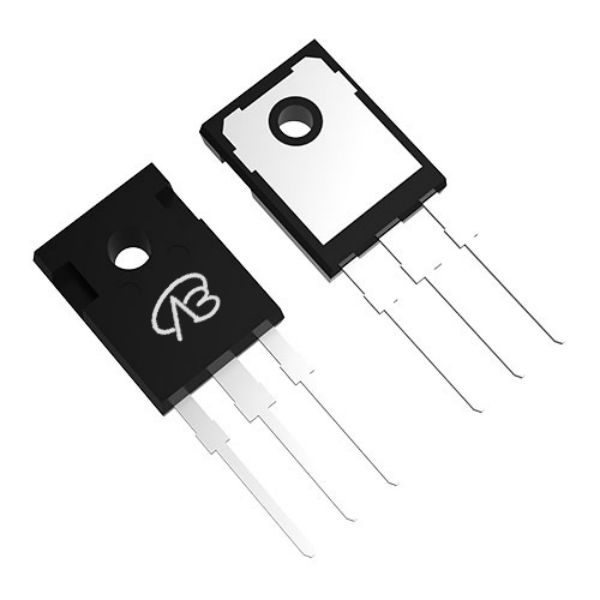
Comparative Analysis: IRFP26N60LPBF (N-channel) vs. VBP165R20S
Analysis of the Original Model (IRFP26N60LPBF) Core:
This is a 600V N-channel MOSFET from Vishay in a TO-247AC package. Its design core is to provide robust and efficient switching in high-voltage applications like SMPS. Key advantages include a 600V drain-source voltage rating and a continuous drain current of 26A. Its standout features are an ultra-fast body diode, which eliminates the need for an external diode in Zero Voltage Switching (ZVS) applications, and a lower gate charge that simplifies drive requirements. Enhanced dV/dt capability offers better ruggedness.
Compatibility and Differences of the Domestic Alternative (VBP165R20S):
VBsemi's VBP165R20S is a Super Junction MOSFET in a TO-247 package, serving as a functional alternative for high-voltage switching. The main differences are in the electrical parameters: VBP165R20S offers a higher voltage rating (650V vs. 600V) and a significantly lower on-resistance (160mΩ @10V vs. 250mΩ @10V of the original). However, its continuous current rating is 20A, which is lower than the original's 26A.
Key Application Areas:
Original Model IRFP26N60LPBF: Its combination of 600V rating, 26A current, and integrated ultra-fast diode makes it ideal for high-voltage, medium-power applications requiring reliable ZVS.
Zero Voltage Switching (ZVS) in SMPS (e.g., telecom/server PSUs).
High-voltage power conversion stages.
Alternative Model VBP165R20S: More suitable for applications requiring a higher voltage margin (650V) and lower conduction loss (160mΩ), where the 20A current capability is sufficient. It's a strong candidate for upgrading efficiency in similar high-voltage SMPS designs.
Comparative Analysis: SI7414DN-T1-GE3 (N-channel) vs. VBQF1615
This comparison shifts focus to high-frequency, low-voltage power conversion where low on-resistance and fast switching in a small package are critical.
Analysis of the Original Model (SI7414DN-T1-GE3) Core:
This is a 60V N-channel TrenchFET MOSFET from Vishay in a compact PowerPAK1212-8 package. Its design pursues high efficiency in high-frequency switching. Core advantages are a low on-resistance of 36mΩ at 4.5V gate drive and a continuous current of 8.7A. It is halogen-free and optimized for PWM applications, making it excellent for primary-side switching and synchronous rectification in isolated converters.
Compatibility and Differences of the Domestic Alternative (VBQF1615):
VBsemi's VBQF1615, in a DFN8(3x3) package, represents a "performance-enhanced" alternative. It achieves significant improvement in key parameters: the same 60V voltage rating, but a much higher continuous current of 15A and drastically lower on-resistance—13mΩ @4.5V and 10mΩ @10V. This translates to substantially lower conduction losses and higher current handling in a similarly compact footprint.
Key Application Areas:
Original Model SI7414DN-T1-GE3: Its low RDS(on) and PWM-optimized design make it a top choice for space-constrained, high-frequency power stages.
Primary-side switches in isolated DC-DC converters.
Synchronous rectifiers in low-voltage, high-current power supplies.
Alternative Model VBQF1615: Is superior for applications demanding maximum efficiency and power density. Its ultra-low 10mΩ RDS(on) and 15A rating make it ideal for next-generation synchronous rectification and high-current point-of-load (POL) converters where thermal performance and losses are critical.
Conclusion
In summary, this analysis reveals two distinct selection paths based on application voltage and frequency domains:
For high-voltage (600V) switching applications like ZVS SMPS, the original IRFP26N60LPBF, with its 26A rating and integrated ultra-fast diode, offers a proven, reliable solution. Its domestic alternative VBP165R20S provides a compelling upgrade path with a higher 650V rating and significantly lower 160mΩ on-resistance, ideal for designs prioritizing voltage margin and conduction loss reduction where the 20A current is adequate.
For high-frequency, low-voltage (60V) power conversion, the original SI7414DN-T1-GE3 delivers excellent performance in a miniaturized PowerPAK package for PWM applications. The domestic alternative VBQF1615 emerges as a clear performance leader in this category, offering a major leap in current capability (15A) and on-resistance (as low as 10mΩ), enabling higher efficiency and power density in synchronous rectification and primary switching.
The core takeaway is that selection is driven by precise requirement matching. In the context of supply chain diversification, domestic alternatives like VBP165R20S and VBQF1615 not only provide viable backups but also offer parametric advantages—higher voltage, lower RDS(on), or higher current—giving engineers greater flexibility in design optimization, thermal management, and cost control. Understanding the specific design philosophy and parametric implications of each device is key to unlocking its full potential in your circuit.

Download PDF document
 Download now


