 中文
中文 English
MOSFET Selection for High-Voltage Switching Applications: IRFI720GPBF, IRF740ASPBF vs. China Alternatives VBMB165R04, VBL165R12
Number of views:9999
 Back to previous page
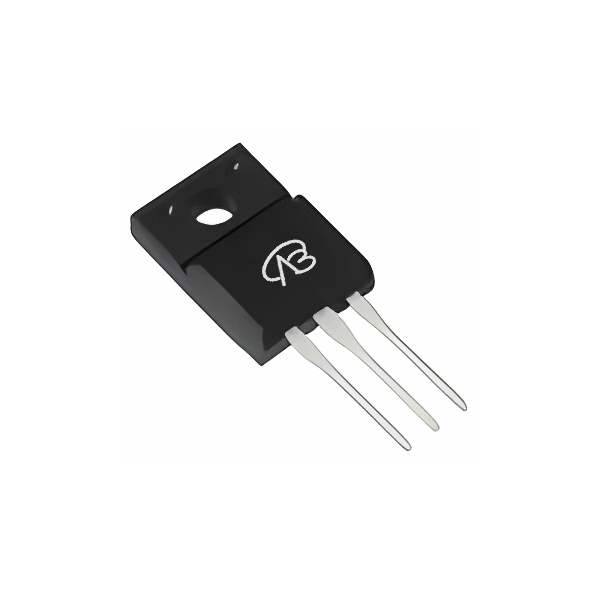
Comparative Analysis: IRFI720GPBF (TO-220F) vs. VBMB165R04
Analysis of the Original Model (IRFI720GPBF) Core:
This is a 400V N-channel MOSFET from Vishay in a TO-220 FullPAK (fully insulated) package. Its design core is to offer a cost-effective combination of fast switching, ruggedness, and low on-resistance (1.8Ω @10V) for commercial-industrial applications. The key advantage is the insulated package, which eliminates the need for additional insulating hardware between the die and heatsink, providing high isolation and low thermal resistance equivalent to a 100μm mica barrier in standard TO-220. It supports a continuous drain current of 2.6A.
Compatibility and Differences of the Domestic Alternative (VBMB165R04):
VBsemi's VBMB165R04 is also offered in a TO-220F package and serves as a pin-to-pin compatible alternative. The main differences are in the electrical parameters: VBMB165R04 features a significantly higher voltage rating (650V vs. 400V) and a slightly higher continuous current rating (4A vs. 2.6A). However, its on-resistance is higher (2560 mΩ @10V vs. 1800 mΩ @10V).
Key Application Areas:
Original Model IRFI720GPBF: Ideal for cost-sensitive, medium-power offline switching applications up to 400V where simplified, insulated mounting is desired. Typical uses include:
AC-DC power supplies (e.g., auxiliary power supplies).
Industrial controls requiring isolated switching.
Motor drives and solenoid drivers within its current range.
Alternative Model VBMB165R04: Better suited for applications requiring a higher voltage safety margin (650V) and slightly higher current capability (4A), but where higher conduction loss can be tolerated. Suitable for ruggedized industrial power stages or as a direct upgrade in designs moving to higher bus voltages.
Comparative Analysis: IRF740ASPBF (D2PAK) vs. VBL165R12
Analysis of the Original Model (IRF740ASPBF) Core:
This 400V N-channel MOSFET from Vishay in a D2PAK (TO-263) package is designed for higher-current switching applications. Its core advantages are:
Robust Performance: Features improved gate, avalanche, and dynamic dV/dt ruggedness.
Driver-Friendly: Low gate charge (Qg) simplifies drive requirements.
Efficient Switching: Characterized capacitances and effective Coss are specified for optimized performance.
Good Conduction: With an on-resistance of 550mΩ @10V and a continuous current rating of 10A, it offers solid performance for its class.
Key Application Areas:
Original Model IRF740ASPBF: A classic choice for medium-to-high power switching applications requiring robustness and reliability. Common uses include:
Switch Mode Power Supplies (SMPS) for servers, PCs, and industrial equipment.
Uninterruptible Power Supplies (UPS).
Power inverters and motor drives.
Compatibility and Differences of the Domestic Alternative (VBL165R12):
VBsemi's VBL165R12, also in a TO-263 (D2PAK) package, is a direct pin-to-pin compatible alternative that offers significant performance enhancement:
It features a much higher voltage rating (650V vs. 400V).
It offers a higher continuous current rating (12A vs. 10A).
Its on-resistance is substantially lower (800 mΩ @10V vs. 550 mΩ @10V), leading to reduced conduction losses.
Key Application Areas for VBL165R12:
This alternative is superior for applications demanding higher voltage capability, higher current throughput, and lower conduction losses. It is an excellent upgrade for:
High-efficiency SMPS designs targeting higher power density.
UPS and inverter systems operating at higher bus voltages.
Motor drives requiring higher current and ruggedness.
Conclusion:
This analysis reveals two distinct selection paths:
For insulated TO-220F applications, the original IRFI720GPBF offers a proven balance of 400V rating, 1.8Ω RDS(on), and cost-effective insulated mounting. Its domestic alternative VBMB165R04 provides higher voltage (650V) and current (4A) margins but with higher on-resistance, making it suitable for designs prioritizing voltage ruggedness over ultimate conduction efficiency.
For higher-power D2PAK applications, the original IRF740ASPBF is a reliable workhorse with 400V/10A rating and 550mΩ RDS(on). The domestic alternative VBL165R12 stands out as a performance-enhanced option, surpassing the original with a 650V rating, 12A current, and lower 800mΩ RDS(on), making it ideal for next-generation designs requiring higher efficiency and power capability.
The core takeaway is that selection depends on precise requirement matching. In the context of supply chain diversification, domestic alternatives like VBMB165R04 and VBL165R12 not only provide viable backups but also offer parameter advancements, giving engineers greater flexibility in design trade-offs and cost optimization. Understanding each device's design philosophy and parameter implications is key to unlocking its full potential in your circuit.

Download PDF document
 Download now


