 中文
中文 English
MOSFET Selection for High-Voltage Power Applications: IRFBE20PBF-BE3, SIHP050N60E-GE3 vs. China Alternatives VBM185R02 and VBM16R43S
Number of views:9999
 Back to previous page
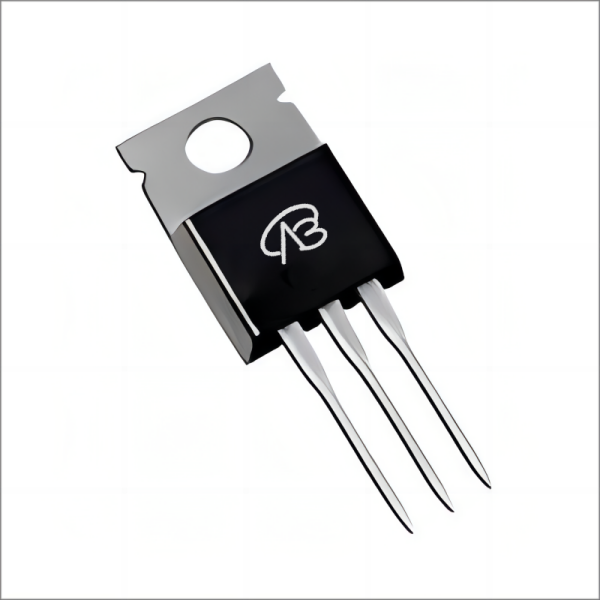
Comparative Analysis: IRFBE20PBF-BE3 (N-channel) vs. VBM185R02
Analysis of the Original Model (IRFBE20PBF-BE3) Core:
This is an 800V N-channel MOSFET from Vishay in a TO-220AB package. Its design core is to provide robust high-voltage switching in a standard package. Key advantages are a high drain-source voltage (Vdss) of 800V and a continuous drain current (Id) of 7.2A. Its on-resistance is 6.5Ω at a 10V gate drive.
Compatibility and Differences of the Domestic Alternative (VBM185R02):
VBsemi's VBM185R02 is a pin-to-pin compatible alternative in a TO-220 package. The main differences are in electrical parameters: VBM185R02 offers a slightly higher voltage rating (850V vs. 800V) but a significantly lower continuous current (2A vs. 7.2A). Its on-resistance is 6500mΩ (6.5Ω) at 10V, matching the original in specific on-resistance but for a lower current class.
Key Application Areas:
Original Model IRFBE20PBF-BE3: Suitable for medium-power offline switching power supplies, power factor correction (PFC) stages, and other applications requiring an 800V breakdown and several amps of current.
Alternative Model VBM185R02: More suitable for lower-current, high-voltage sensing, snubber circuits, or auxiliary power sections where the 850V rating provides extra margin, but the load current is below 2A.
Comparative Analysis: SIHP050N60E-GE3 (N-channel) vs. VBM16R43S
This comparison focuses on high-current, medium-voltage power switching.
Analysis of the Original Model (SIHP050N60E-GE3) Core:
This Vishay MOSFET is a 600V, 51A device in a TO-220AB package. Its design pursues a balance of high current handling and low conduction loss. Core advantages are a low on-resistance of 50mΩ at 10V gate drive and a high continuous current of 51A, supported by a 278W power dissipation rating.
Compatibility and Differences of the Domestic Alternative (VBM16R43S):
VBsemi's VBM16R43S is a direct pin-to-pin alternative. It matches the 600V voltage rating and offers a competitive parameter set: a slightly lower continuous current of 43A (vs. 51A) and a slightly higher on-resistance of 60mΩ at 10V (vs. 50mΩ). It uses a Super Junction Multi-EPI process.
Key Application Areas:
Original Model SIHP050N60E-GE3: Ideal for high-current switching applications like motor drives (e.g., for appliances, industrial controls), high-power DC-DC converters, and UPS systems operating around 600V.
Alternative Model VBM16R43S: A strong alternative for similar 600V applications where the 43A current and 60mΩ on-resistance are sufficient, offering a cost-effective and supply-chain-resilient option for motor drives, SMPS primary sides, and inverter circuits.
Conclusion:
This analysis reveals two distinct selection paths for high-voltage applications:
1. For 800V-class switching, the original IRFBE20PBF-BE3 offers a 7.2A current capability for medium-power designs. Its alternative, VBM185R02, provides a higher 850V rating but is suited for lower-current (<2A) applications within that voltage range.
2. For 600V, high-current switching, the original SIHP050N60E-GE3 sets a benchmark with 51A and 50mΩ. The domestic alternative VBM16R43S presents a compelling, performance-close substitute with 43A and 60mΩ, suitable for a wide range of high-power applications.
The core conclusion is that selection depends on precise requirement matching. Domestic alternatives like VBM185R02 and VBM16R43S provide viable, pin-compatible options that enhance supply chain resilience. For designs where the alternative's parameters (voltage, current, RDS(on)) meet the application needs, they offer a valuable balance of performance and cost.

Download PDF document
 Download now


