 中文
中文 English
MOSFET Selection for High-Voltage and Compact Power Applications: IRFBC40STRLPBF, SIA469DJ-T1-GE3 vs. China Alternatives VBL165R10, VBQG2317
Number of views:9999
 Back to previous page
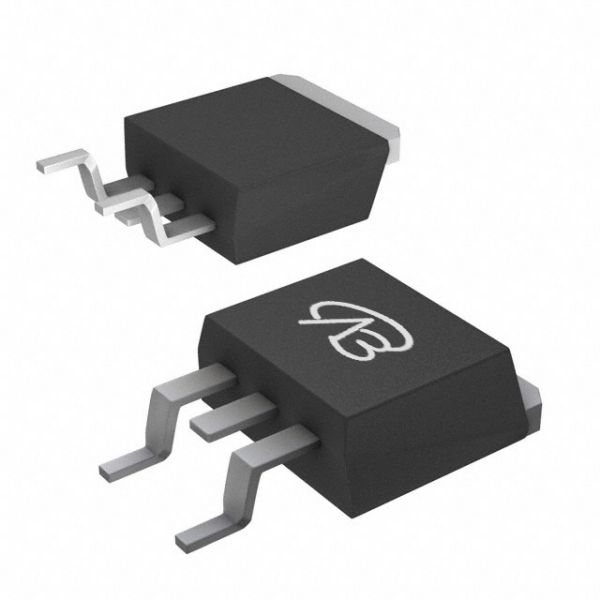
Comparative Analysis: IRFBC40STRLPBF (N‑channel) vs. VBL165R10
Analysis of the Original Model (IRFBC40STRLPBF) Core:
This is a 600V N‑channel MOSFET from VISHAY in a D²PAK (TO‑263) package. Its design core is to deliver robust high‑voltage switching with an excellent balance of fast switching, low on‑resistance (1.2 Ω @ 10 V), and high power‑handling capability. The continuous drain current is rated 6.2 A. The D²PAK package offers superior thermal performance, making it suitable for high‑power applications where heat dissipation is critical.
Compatibility and Differences of the Domestic Alternative (VBL165R10):
VBsemi’s VBL165R10 is offered in a TO‑263 package and serves as a functional alternative for high‑voltage circuits. Key differences: VBL165R10 features a higher voltage rating (650 V) and higher continuous current (10 A), but its on‑resistance is slightly higher at 1100 mΩ (@ 10 V). This makes it a viable option where higher voltage margin and current capability are prioritized over the lowest conduction loss.
Key Application Areas:
Original Model IRFBC40STRLPBF: Ideal for 600V‑class switching power supplies, motor drives, and inverters requiring a robust, cost‑effective solution with good thermal performance.
Alternative Model VBL165R10: Suited for high‑voltage applications up to 650 V where higher current capability (up to 10 A) is needed, such as in industrial SMPS or motor control with increased margin.
Comparative Analysis: SIA469DJ-T1-GE3 (P‑channel) vs. VBQG2317
Analysis of the Original Model (SIA469DJ-T1-GE3) Core:
This is a 30V P‑channel MOSFET from VISHAY in a thermally enhanced PowerPAK SC‑70‑6 package. It targets space‑constrained, efficiency‑sensitive applications. With a low on‑resistance of 26.5 mΩ (@ 10 V, 5 A) and a continuous current rating of 12 A, it offers excellent power density and switching performance for load‑switch and DC‑DC converter duties.
Compatibility and Differences of the Domestic Alternative (VBQG2317):
VBsemi’s VBQG2317 comes in a compact DFN6 (2×2) package and is a pin‑to‑pin compatible alternative. Its key parameters: voltage rating ‑30 V, continuous current ‑10 A, and on‑resistance of 17 mΩ (@ 10 V). While the current rating is slightly lower, the on‑resistance is improved, offering lower conduction loss in compatible footprint applications.
Key Application Areas:
Original Model SIA469DJ-T1-GE3: Perfect for load switching, power‑path management, and DC‑DC conversion in portable devices, IoT modules, and battery‑powered systems where small size and high efficiency are critical.
Alternative Model VBQG2317: A suitable drop‑in replacement for P‑channel applications requiring up to ‑30 V operation and improved on‑resistance, ideal for compact power‑management circuits with moderate current demands (up to ‑10 A).
Conclusion
This comparison reveals two distinct selection paths:
For high‑voltage N‑channel applications, the original IRFBC40STRLPBF provides a proven 600 V, 6.2 A solution with low on‑resistance and excellent thermal performance in D²PAK. Its domestic alternative VBL165R10 offers higher voltage (650 V) and current (10 A) ratings, suitable for designs needing extra margin.
For compact P‑channel applications, the original SIA469DJ‑T1‑GE3 delivers high current density and low on‑resistance in a tiny PowerPAK SC‑70‑6 package. The domestic alternative VBQG2317 matches the footprint with improved on‑resistance and ‑30 V capability, providing an efficient replacement for space‑constrained designs.
The core insight: selection depends on precise requirement matching. Domestic alternatives not only offer supply‑chain resilience but also bring parameter enhancements in certain aspects, giving engineers greater flexibility in design trade‑offs and cost optimization. Understanding each device’s design philosophy and parameter implications is key to maximizing its value in your circuit.

Download PDF document
 Download now


