 中文
中文 English
MOSFET Selection for Power Switching and Compact Load Switches: IRFBC20PBF, SI2301CDS-T1-BE3 vs. China Alternatives VBM165R02, VB2212N
Number of views:9999
 Back to previous page
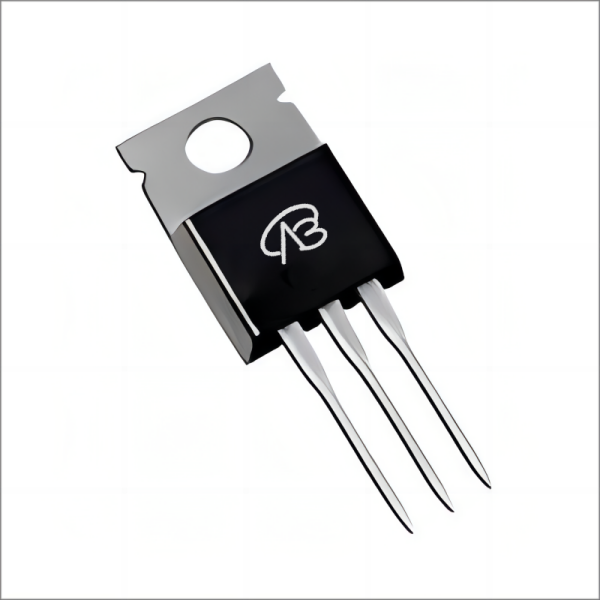
Comparative Analysis: IRFBC20PBF (N-channel) vs. VBM165R02
Analysis of the Original Model (IRFBC20PBF) Core:
This is a 600V N-channel MOSFET from Vishay in a standard TO-220AB package. As a 3rd generation Power MOSFET, its design core is to offer an optimal combination of fast switching, ruggedness, low on-resistance (4.4Ω @ 10V), and cost-effectiveness. Its key advantages are a high voltage rating suitable for off-line applications, a continuous drain current of 2.2A, and a power dissipation capability of 50W. The TO-220AB package provides low thermal resistance and is widely recognized across the industry for commercial-industrial applications with power dissipation around 50W.
Compatibility and Differences of the Domestic Alternative (VBM165R02):
VBsemi's VBM165R02 is also offered in a TO-220 package and serves as a functional alternative. The main differences lie in the electrical parameters: VBM165R02 features a higher voltage rating (650V vs. 600V) and a significantly lower on-resistance (3.12Ω @ 10V vs. 4.4Ω @ 10V). Its continuous current rating is slightly lower (2A vs. 2.2A).
Key Application Areas:
Original Model IRFBC20PBF: Its characteristics make it well-suited for general-purpose, cost-sensitive medium-voltage switching applications requiring robustness, such as:
SMPS (Switched-Mode Power Supplies) for consumer electronics and industrial controls.
AC-DC converter stages, power factor correction (PFC) circuits.
Motor drives, relay replacements, and inductive load switching.
Alternative Model VBM165R02: With its higher voltage rating and lower on-resistance, it is suitable for applications requiring enhanced efficiency and voltage margin within its current capability. It can be a compelling alternative in 600V+ switching circuits where lower conduction loss is desired.
Comparative Analysis: SI2301CDS-T1-BE3 (P-channel) vs. VB2212N
This comparison shifts focus to low-voltage, space-constrained applications. The design pursuit for this P-channel MOSFET is efficient power management in a minimal footprint.
Analysis of the Original Model (SI2301CDS-T1-BE3) Core:
This is a -20V P-channel TrenchFET power MOSFET from Vishay in a compact SOT-23 package. Its core advantages are:
Compact Solution: The SOT-23 package is ideal for high-density PCB designs.
Good Conduction Performance: It offers a low on-resistance of 112mΩ @ 4.5V, supporting a continuous drain current of -2.3A.
Halogen-Free & RoHS Compliant: Meets modern environmental and regulatory standards.
Compatibility and Differences of the Domestic Alternative (VB2212N):
VBsemi's VB2212N is a direct pin-to-pin compatible alternative in the SOT-23-3 package. It shows a performance enhancement in key parameters: it offers a significantly lower on-resistance (90mΩ @ 4.5V vs. 112mΩ) and a higher continuous current rating (-3.5A vs. -2.3A), while maintaining the same -20V voltage rating.
Key Application Areas:
Original Model SI2301CDS-T1-BE3: Its low RDS(on) and small size make it an excellent choice for load switching and power management in portable devices, such as:
Load switches for peripherals, modules, or power rails in IoT devices, smartphones, and tablets.
Battery-powered device power path management.
General-purpose low-side or high-side switching in space-limited designs.
Alternative Model VB2212N: With its superior current capability and lower on-resistance, it is even more suitable for applications demanding higher efficiency, lower voltage drop, and higher load current within the same compact footprint. It is an ideal upgrade for load switches and power distribution circuits.
Conclusion
In summary, this analysis reveals two distinct selection paths:
For general-purpose, cost-effective high-voltage (600V) switching, the original IRFBC20PBF, with its proven ruggedness and industry-standard package, remains a reliable choice. Its domestic alternative VBM165R02 offers a compelling option with a higher voltage rating and lower on-resistance for designs prioritizing efficiency gains.
For compact, low-voltage P-channel load switch applications, the original SI2301CDS-T1-BE3 provides a solid, halogen-free solution. Its domestic alternative VB2212N presents a clear performance-enhanced choice, offering lower resistance and higher current capability in the same package, making it an excellent upgrade for maximizing efficiency and power handling in space-constrained designs.
The core takeaway is that selection is about precise requirement matching. In the context of supply chain diversification, domestic alternatives like VBM165R02 and VB2212N not only provide viable backup options but also offer performance advantages in specific areas, giving engineers greater flexibility and resilience in design trade-offs and cost optimization. Understanding the design philosophy and parametric implications of each device is key to unlocking its full potential in your circuit.

Download PDF document
 Download now


