 中文
中文 English
MOSFET Selection for High-Voltage Power Applications: IRFB9N60APBF, SIHB22N60E-GE3 vs. China Alternatives VBM165R12, VBL16R20S
Number of views:9999
 Back to previous page
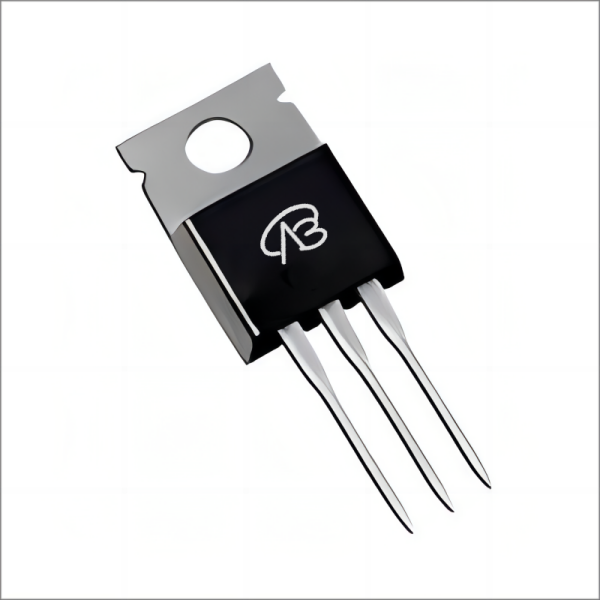
Comparative Analysis: IRFB9N60APBF (TO-220 N-channel) vs. VBM165R12
Analysis of the Original Model (IRFB9N60APBF) Core:
This is a 600V N-channel MOSFET from VISHAY in a standard TO-220AB package. Its design focuses on robust performance in high-voltage switching with simplified drive requirements. Key advantages include: a drain-source voltage (Vdss) of 600V, continuous drain current (Id) of 9.2A, and an on-resistance (RDS(on)) of 750mΩ at 10V gate drive. It features low gate charge (Qg) for easy driving, along with enhanced robustness in gate handling, avalanche capability, and dynamic dV/dt tolerance. It is fully characterized for capacitance, avalanche voltage, and current.
Compatibility and Differences of the Domestic Alternative (VBM165R12):
VBsemi’s VBM165R12 is offered in a TO-220 package and serves as a functional alternative. The main differences in electrical parameters are: VBM165R12 has a higher voltage rating (650V vs. 600V) and a higher continuous current rating (12A vs. 9.2A). However, its on-resistance is slightly higher at 800mΩ (at 10V) compared to the original’s 750mΩ. It utilizes a planar technology structure.
Key Application Areas:
Original Model IRFB9N60APBF: Well-suited for medium-power high-voltage switching applications where drive simplicity and proven robustness are valued. Typical uses include:
Switch-mode power supplies (SMPS) for industrial and consumer electronics.
Uninterruptible power supplies (UPS).
Power factor correction (PFC) stages.
Alternative Model VBM165R12: A suitable alternative for applications requiring a higher voltage margin (650V) and slightly higher current capability (12A), even with a modestly higher on-resistance. It fits similar SMPS, UPS, or lighting ballast circuits where the package and pin compatibility are beneficial.
Comparative Analysis: SIHB22N60E-GE3 (D2PAK N-channel) vs. VBL16R20S
This comparison shifts to higher-current applications where lower conduction loss and efficient thermal performance in a compact footprint are key.
Analysis of the Original Model (SIHB22N60E-GE3) Core:
This 600V N-channel MOSFET from VISHAY uses a D2PAK (TO-263) package, targeting higher power density. Its core advantages are:
Lower Conduction Loss: Features an on-resistance of 180mΩ at 10V gate drive, significantly lower than the TO-220 benchmark, supporting a continuous current of 13A.
Package Advantage: The D2PAK package offers better thermal performance and power handling than TO-220, suitable for space-constrained, higher-power designs.
Compatibility and Differences of the Domestic Alternative (VBL16R20S):
VBsemi’s VBL16R20S, also in a TO-263 (D2PAK) package, presents a performance-enhanced alternative. It matches the 600V voltage rating but offers substantially improved key parameters: a much higher continuous current of 20A and a comparable, slightly lower on-resistance of 190mΩ (at 10V). It employs a Super Junction Multi-EPI technology, which typically enables lower switching losses.
Key Application Areas:
Original Model SIHB22N60E-GE3: Ideal for high-voltage applications requiring a balance of moderate current (13A), low on-resistance, and the thermal benefits of a D2PAK package. Applications include:
Higher-power SMPS and UPS systems.
Motor drives for industrial equipment.
Solar inverters and energy conversion systems.
Alternative Model VBL16R20S: Excellent for upgrade scenarios demanding higher current capability (20A) and potentially lower switching losses. It is suitable for next-generation SMPS designs, high-performance motor drives, and other power stages where increased power density and efficiency are critical.
Conclusion
In summary, this analysis outlines two distinct selection pathways for high-voltage MOSFETs:
For medium-power, cost-effective applications using a TO-220 package, the original IRFB9N60APBF offers a reliable 600V/9.2A solution with robust characteristics. Its domestic alternative VBM165R12 provides a compatible option with higher voltage (650V) and current (12A) ratings, making it a viable choice for designs needing extra margin, despite a slight increase in on-resistance.
For higher-power, higher-density applications utilizing a D2PAK/TO-263 package, the original SIHB22N60E-GE3 delivers solid performance with 600V, 13A, and 180mΩ RDS(on). The domestic alternative VBL16R20S emerges as a compelling performance-enhanced option, matching the voltage while significantly boosting current handling to 20A and maintaining a low on-resistance (190mΩ), facilitated by advanced Super Junction technology.
The core takeaway is that selection hinges on precise requirement matching. In the context of supply chain diversification, domestic alternatives like VBM165R12 and VBL16R20S not only provide feasible backups but also offer parameter enhancements in specific areas, granting engineers greater flexibility and resilience in design trade-offs and cost optimization. Understanding each device's design philosophy and parameter implications is essential to unlocking its full potential within your circuit.

Download PDF document
 Download now


