 中文
中文 English
MOSFET Selection for Power Switching Solutions: IRF9Z14SPBF, SISA12BDN-T1-GE3 vs. China Alternatives VBL2610N, VBQF1303
Number of views:9999
 Back to previous page
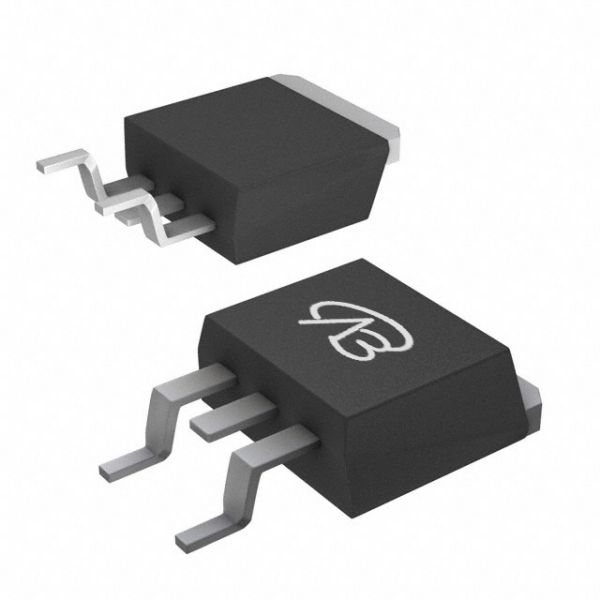
Comparative Analysis: IRF9Z14SPBF (P-channel) vs. VBL2610N
Analysis of the Original Model (IRF9Z14SPBF) Core:
This is a -60V P-channel MOSFET from VISHAY in a TO-263-2 package. Its design focuses on providing robust voltage handling and reliable performance in standard power applications. Key features include a drain current of -4.7A and an on-resistance of 500mΩ at -10V gate drive. It serves as a dependable switch for medium-power circuits requiring a -60V rating.
Compatibility and Differences of the Domestic Alternative (VBL2610N):
VBsemi’s VBL2610N is also a P-channel MOSFET in a TO-263 package, offering pin-to-pin compatibility. The key differences are in electrical performance: VBL2610N significantly improves on-resistance, with 77mΩ at -4.5V and 64mΩ at -10V, and supports a much higher continuous current of -30A compared to the original’s -4.7A, while maintaining the same -60V voltage rating.
Key Application Areas:
- Original Model IRF9Z14SPBF: Suitable for -60V systems with moderate current needs, such as power switches in industrial controls, low-power motor drives, or auxiliary power management.
- Alternative Model VBL2610N: Ideal for applications demanding lower conduction loss and higher current capability within the same voltage range, like higher-power load switches, battery protection circuits, or upgraded power supplies.
Comparative Analysis: SISA12BDN-T1-GE3 (N-channel) vs. VBQF1303
Analysis of the Original Model (SISA12BDN-T1-GE3) Core:
This N-channel MOSFET from VISHAY uses a PowerPAK1212-8 package, emphasizing high current and low on-resistance in a compact form. It features a 30V voltage rating, an impressive continuous drain current of 104A, and an on-resistance of 5mΩ at 4.5V gate drive. Its design targets high-efficiency, high-current switching in space-constrained applications.
Compatibility and Differences of the Domestic Alternative (VBQF1303):
VBsemi’s VBQF1303 is an N-channel MOSFET in a DFN8 (3x3) package. It matches the original’s 30V rating and low on-resistance—5mΩ at 4.5V and 3.9mΩ at 10V—while offering a continuous current of 60A. Although its current rating is lower than the original’s 104A, it provides excellent switching performance and thermal characteristics in a small footprint.
Key Application Areas:
- Original Model SISA12BDN-T1-GE3: Perfect for high-current applications such as synchronous rectification in DC-DC converters, motor drives in automotive or robotics, and power distribution in servers, where maximum current handling is critical.
- Alternative Model VBQF1303: A strong choice for designs prioritizing compact size and low on-resistance with moderate current needs, suitable for point-of-load converters, compact motor controllers, or portable high-power devices.
Conclusion:
This comparison highlights two distinct selection paths:
- For P-channel applications at -60V, the original IRF9Z14SPBF offers reliable performance for medium-current uses, while the domestic alternative VBL2610N provides a major upgrade in on-resistance and current capability, making it ideal for higher-efficiency designs.
- For N-channel applications at 30V, the original SISA12BDN-T1-GE3 excels in ultra-high-current scenarios, whereas the domestic alternative VBQF1303 delivers excellent performance in a compact package for applications where space and low loss are key.
The core takeaway is that selection depends on precise requirement matching. Domestic alternatives like VBL2610N and VBQF1303 not only offer reliable compatibility but also enhance specific parameters, giving engineers flexible, cost-effective options for diverse power design challenges.

Download PDF document
 Download now


