 中文
中文 English
MOSFET Selection for Medium to High Power Applications: IRF9640SPBF, SQS142ELNW-T1_GE3 vs. China Alternatives VBL2205M, VBQF1402
Number of views:9999
 Back to previous page
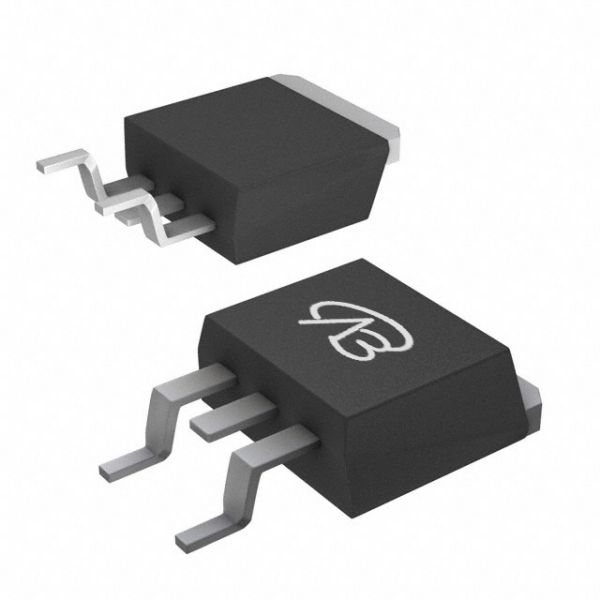
Comparative Analysis: IRF9640SPBF (P-channel) vs. VBL2205M
Analysis of the Original Model (IRF9640SPBF) Core:
This is a 200V P-channel MOSFET from VISHAY, housed in the robust D2PAK (TO-263) surface-mount package. Its design core is to provide a best-in-class combination of fast switching, ruggedness, low on-resistance, and cost-effectiveness for higher voltage applications. Key advantages include: a high drain-source voltage (Vdss) of 200V, a continuous drain current (Id) of -6.8A, and an on-resistance (RDS(on)) of 500mΩ at 10V gate drive. The D2PAK package offers superior power handling and thermal dissipation capabilities among surface-mount options.
Compatibility and Differences of the Domestic Alternative (VBL2205M):
VBsemi's VBL2205M is a direct functional alternative in the TO-263 package. It matches the original's key voltage rating (-200V) and offers identical on-resistance (500mΩ @10V). The main difference lies in the continuous current rating: VBL2205M is rated for -11A, which is significantly higher than the original's -6.8A, potentially offering more margin in current-demanding applications.
Key Application Areas:
Original Model IRF9640SPBF: Ideal for P-channel applications in circuits requiring high voltage blocking (up to 200V) and moderate current switching. Typical uses include:
High-side switches in offline or high-voltage DC-DC converters.
Polarity protection and load switching in industrial controls, power supplies.
Motor drive circuits and inverter applications requiring a high-voltage P-channel device.
Alternative Model VBL2205M: Suitable for the same high-voltage P-channel applications as the original but is particularly advantageous where higher continuous current capability (up to 11A) is needed, providing a performance upgrade or additional design margin.
Comparative Analysis: SQS142ELNW-T1_GE3 (N-channel) vs. VBQF1402
This comparison shifts focus to high-current, low-voltage N-channel MOSFETs where ultra-low on-resistance and high power density are paramount.
Analysis of the Original Model (SQS142ELNW-T1_GE3) Core:
This is a 40V N-channel TrenchFET Gen IV power MOSFET from VISHAY, in a compact PowerPAK® 1212-8S package. Its design pursues extreme efficiency in a small footprint. Core advantages are:
Exceptional Current Handling: An extremely high continuous drain current rating of 86A.
Ultra-Low Conduction Loss: A very low on-resistance of 4.5mΩ at 10V gate drive.
Advanced Package: The 0.75mm thin PowerPAK 1212-8S offers a low thermal resistance and solderable side terminals for improved reliability and heat dissipation, making it AEC-Q101 qualified for automotive applications.
Compatibility and Differences of the Domestic Alternative (VBQF1402):
VBsemi's VBQF1402, in a DFN8(3x3) package, serves as a high-performance alternative. It matches the 40V voltage rating. While its continuous current rating (60A) is lower than the original's exceptional 86A, it boasts an even lower on-resistance of 2mΩ at 10V gate drive. This translates to potentially lower conduction losses in many high-current scenarios.
Key Application Areas:
Original Model SQS142ELNW-T1_GE3: Its ultra-high current (86A) and low RDS(on) make it ideal for the most demanding high-current, compact applications:
Synchronous rectification in high-current DC-DC converters (e.g., for servers, telecom).
Motor drives for high-power brushed/brushless DC motors.
Battery protection circuits and power distribution in electric vehicles/e-bikes.
Any application requiring maximum current in a minimal PCB area.
Alternative Model VBQF1402: An excellent choice for high-efficiency, high-current switching where the lowest possible on-resistance (2mΩ) is critical to minimize losses, even if the peak current requirement is below 86A. Suitable for upgrade paths in DC-DC converters and motor drives focusing on peak efficiency.
Conclusion:
In summary, this analysis reveals two distinct selection strategies:
For high-voltage (200V) P-channel applications, the original IRF9640SPBF offers a proven balance of voltage rating, current (6.8A), and on-resistance in a thermally capable D2PAK package. Its domestic alternative VBL2205M provides a pin-compatible replacement with a significant upgrade in current handling (11A) at the same voltage and on-resistance, making it a powerful choice for enhancing current margin or upgrading existing designs.
For high-current, low-voltage N-channel applications, the original SQS142ELNW-T1_GE3 sets a benchmark with its extraordinary 86A current rating and low 4.5mΩ RDS(on) in an advanced, thin package. The domestic alternative VBQF1402 takes a different approach, offering an even lower on-resistance (2mΩ) which can lead to superior efficiency in many high-current use cases, albeit with a lower continuous current rating (60A).
The core takeaway is that selection depends on precise requirement matching. In the context of supply chain diversification, domestic alternatives like VBL2205M and VBQF1402 not only provide reliable backup options but also offer specific parameter advantages—be it higher current or lower resistance—giving engineers greater flexibility in design optimization and cost control. Understanding the specific strengths of each device is key to unlocking its full potential in your circuit.

Download PDF document
 Download now


