 中文
中文 English
MOSFET Selection for Medium to High Voltage Switching: IRF830SPBF, SIRA16DP-T1-GE3 vs. China Alternatives VBL165R07, VBGQA1307
Number of views:9999
 Back to previous page
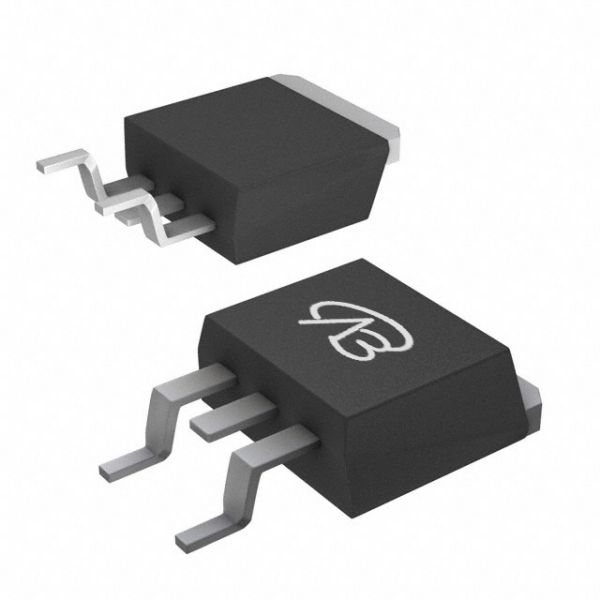
Comparative Analysis: IRF830SPBF (N-channel) vs. VBL165R07
Analysis of the Original Model (IRF830SPBF) Core:
This is a 500V N-channel MOSFET from VISHAY, housed in a D2PAK (TO-263) package. Its design core is to provide a cost-effective combination of fast switching, ruggedness, and low on-resistance for high-voltage applications. Key advantages include a high drain-source voltage (Vdss) of 500V, a continuous drain current (Id) of 4.5A, and an on-resistance (RDS(on)) of 1.5Ω at 10V gate drive. The D2PAK package offers excellent power dissipation capability (up to 2.0W) and low internal connection resistance, making it suitable for medium-power, high-voltage switching.
Compatibility and Differences of the Domestic Alternative (VBL165R07):
VBsemi's VBL165R07 is also offered in a TO-263 package, providing good physical compatibility. The key differences are in the electrical parameters: VBL165R07 features a higher voltage rating of 650V (vs. 500V) and a significantly higher continuous current rating of 7A (vs. 4.5A). However, its on-resistance is 1200 mΩ (1.2Ω) at 10V, which is slightly lower than the 1.5Ω of the IRF830SPBF, indicating potentially lower conduction losses. It is a planar technology device.
Key Application Areas:
Original Model IRF830SPBF: Ideal for cost-sensitive, medium-power applications requiring up to 500V blocking. Typical uses include:
Off-line SMPS (Switched-Mode Power Supplies) for auxiliary power.
Power factor correction (PFC) stages in lower-power designs.
High-voltage switching in industrial controls and lighting ballasts.
Alternative Model VBL165R07: Suited for applications requiring a higher voltage margin (650V) and higher continuous current (7A) where slightly lower on-resistance is beneficial. It serves as a robust alternative or upgrade for similar high-voltage switching circuits, including higher-power SMPS and PFC stages.
Comparative Analysis: SIRA16DP-T1-GE3 (N-channel) vs. VBGQA1307
This comparison shifts focus to low-voltage, high-current applications where ultra-low on-resistance is paramount.
Analysis of the Original Model (SIRA16DP-T1-GE3) Core:
This VISHAY MOSFET is a 30V N-channel device in an SO-8 package. Its design pursues an optimal balance of high current capacity and very low conduction loss in a compact footprint. Core advantages include a high continuous current of 16A and an exceptionally low on-resistance of 6.8mΩ at 10V gate drive. The SO-8 package makes it suitable for space-constrained, high-efficiency DC-DC applications.
Compatibility and Differences of the Domestic Alternative (VBGQA1307):
VBsemi's VBGQA1307 comes in a DFN8(5x6) package, which is more compact than SO-8 but may require layout adjustment. It represents a significant "performance-enhanced" alternative. While the voltage rating matches at 30V, the VBGQA1307 boasts a dramatically higher continuous current rating of 40A (vs. 16A) and achieves an equally low on-resistance of 6.8mΩ at 10V. Furthermore, it specifies an on-resistance of 9.5mΩ at 4.5V gate drive, highlighting its effectiveness in lower drive voltage scenarios. It utilizes SGT (Shielded Gate Trench) technology for improved performance.
Key Application Areas:
Original Model SIRA16DP-T1-GE3: An excellent choice for high-current, low-voltage switching where board space is a consideration. Typical applications include:
Synchronous rectification in low-voltage, high-current DC-DC converters (e.g., for point-of-load regulation).
Load switches and power distribution in servers, telecom, and computing hardware.
Motor drive and control circuits for brushed DC motors.
Alternative Model VBGQA1307: Ideal for next-generation designs demanding even higher current density and maximum efficiency. Its 40A rating and ultra-low RDS(on) make it suitable for:
Upgraded synchronous rectifier stages handling very high output currents.
High-performance motor drives requiring minimal conduction loss.
Advanced power management modules where thermal performance and power density are critical.
Conclusion
In summary, this analysis reveals two distinct selection pathways based on voltage and current needs:
For high-voltage (500V) medium-current switching, the original IRF830SPBF offers a proven, cost-effective solution in a robust D2PAK package. Its domestic alternative, VBL165R07, provides a compelling option with higher voltage (650V) and current (7A) ratings, along with slightly lower on-resistance, making it suitable for more demanding or upgraded high-voltage circuits.
For low-voltage (30V) high-current switching, the original SIRA16DP-T1-GE3 delivers excellent performance with 16A current and 6.8mΩ RDS(on) in an SO-8 package. Its domestic alternative, VBGQA1307, emerges as a superior performance choice, offering a massive 40A current rating while maintaining the same ultra-low 6.8mΩ RDS(on) in a more compact DFN package, enabled by SGT technology.
The core takeaway is that selection hinges on precise requirement matching. In the landscape of supply chain diversification, domestic alternatives like VBL165R07 and VBGQA1307 not only provide reliable backup options but also offer parameter enhancements—higher voltage/current ratings or significantly increased current density. This grants engineers greater flexibility and resilience in design trade-offs, cost optimization, and performance maximization. A deep understanding of each device's specifications and underlying technology is key to unlocking its full potential in your circuit.

Download PDF document
 Download now


