 中文
中文 English
MOSFET Selection for Medium-Voltage and Low-Voltage Switching: IRF820APBF, SI2312CDS-T1-GE3 vs. China Alternatives VBM165R04, VB1240
Number of views:9999
 Back to previous page
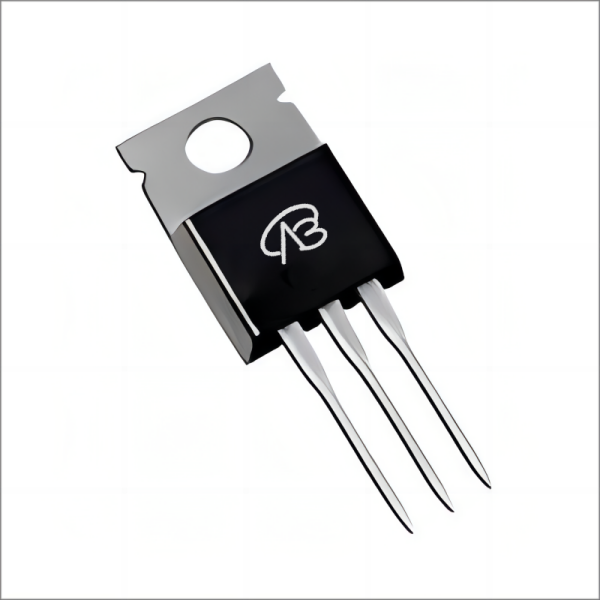
Comparative Analysis: IRF820APBF (N-channel) vs. VBM165R04
Analysis of the Original Model (IRF820APBF) Core:
This is a 500V N-channel MOSFET from VISHAY in a TO-220AB package. Its design focuses on robust performance in medium-voltage switching applications. Key advantages include a high drain-source voltage (Vdss) of 500V, a continuous drain current (Id) of 2.5A, and an on-resistance (RDS(on)) of 3Ω at 10V. It features low gate charge (Qg) for reduced drive requirements, and enhanced ruggedness concerning gate handling, avalanche, and dynamic dV/dt. It is fully characterized for capacitance, avalanche voltage, and current, with specified effective Coss, and is RoHS compliant.
Compatibility and Differences of the Domestic Alternative (VBM165R04):
VBsemi's VBM165R04 is also offered in a TO-220 package and serves as a functional alternative. The main differences are in electrical parameters: VBM165R04 has a higher voltage rating (650V vs. 500V) and a higher continuous current rating (4A vs. 2.5A). However, its on-resistance is 2200 mΩ (2.2Ω) at 10V, which is lower than the original's 3Ω, indicating potentially lower conduction loss. It uses a planar technology.
Key Application Areas:
Original Model IRF820APBF: Ideal for medium-voltage, medium-current applications requiring proven ruggedness. Typical uses include:
Switch-Mode Power Supplies (SMPS)
Uninterruptible Power Supplies (UPS)
Other offline power conversion circuits.
Alternative Model VBM165R04: Suitable for applications requiring a higher voltage margin (up to 650V) and slightly higher current capability (up to 4A), where its lower on-resistance can improve efficiency, such as in upgraded or new SMPS designs.
Comparative Analysis: SI2312CDS-T1-GE3 (N-channel) vs. VB1240
This comparison shifts to low-voltage, high-current applications where efficiency in a small footprint is paramount.
Analysis of the Original Model (SI2312CDS-T1-GE3) Core:
This is a 20V N-channel MOSFET from VISHAY in a compact SOT-23 package. Its design pursues a balance of low on-resistance and good current handling in a minimal space. Core advantages are a continuous drain current of 6A and an on-resistance of 41.4mΩ at a low gate drive of 1.8V, making it excellent for battery-powered or low-voltage logic-controlled circuits.
Compatibility and Differences of the Domestic Alternative (VB1240):
VBsemi's VB1240 is a direct pin-to-pin compatible alternative in the SOT-23-3 package. It matches the original's voltage (20V) and current (6A) ratings closely. Its key performance feature is a very low on-resistance: 42mΩ at 2.5V gate drive and 28mΩ at 4.5V gate drive, which is competitive with or better than the original part across typical drive voltages. It utilizes trench technology.
Key Application Areas:
Original Model SI2312CDS-T1-GE3: Excellent for space-constrained, low-voltage applications requiring several amps of current. Typical uses include:
Load switching in portable devices
Power management in battery-powered systems (e.g., 1-2 cell Li-ion)
DC-DC converter synchronous rectification (low-side)
Alternative Model VB1240: A strong alternative for the same low-voltage, high-current applications, offering potentially lower conduction losses due to its very low RDS(on), especially when driven with gate voltages above 2.5V. It is suitable for demanding efficiency scenarios in compact designs.
Summary
This analysis reveals two distinct selection paths based on voltage class:
For medium-voltage applications (e.g., offline SMPS), the original IRF820APBF offers a proven, rugged 500V/2.5A solution. Its domestic alternative VBM165R04 provides a higher-voltage (650V), higher-current (4A) option with lower on-resistance, suitable for designs needing increased margin or performance.
For low-voltage, high-current applications in compact spaces, the original SI2312CDS-T1-GE3 delivers solid performance with 6A capability in a SOT-23 package. Its domestic alternative VB1240 offers direct compatibility with potentially superior on-resistance performance, making it an attractive choice for maximizing efficiency in new designs.
The core conclusion is that selection depends on precise requirement matching. In the context of supply chain diversification, domestic alternatives like VBM165R04 and VB1240 not only provide viable backup options but can also offer enhanced parameters, giving engineers more flexibility and resilience in design trade-offs and cost control. Understanding each device's specifications and design philosophy is key to leveraging its full value in the circuit.

Download PDF document
 Download now


