 中文
中文 English
MOSFET Selection for High-Voltage and High-Current Applications: IRF740SPBF, SISH103DN-T1-GE3 vs. China Alternatives VBL165R12, VBQF2305
Number of views:9999
 Back to previous page
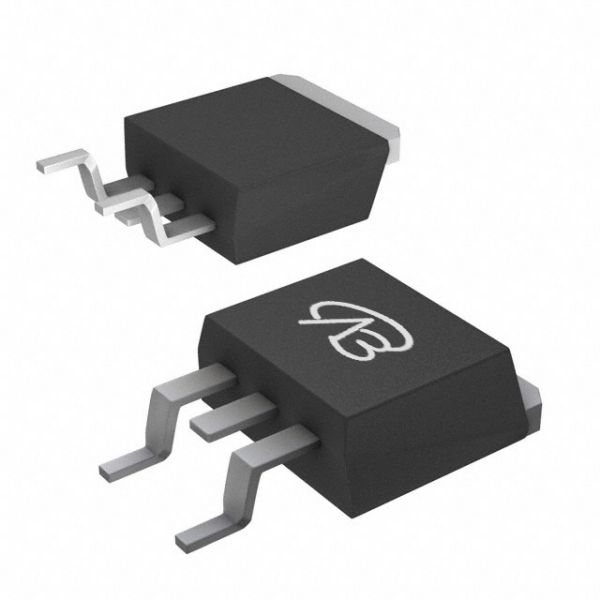
Comparative Analysis: IRF740SPBF (N-channel, High-Voltage) vs. VBL165R12
Analysis of the Original Model (IRF740SPBF) Core:
This is a 400V N-channel MOSFET from VISHAY, in a D2PAK (TO-263) package. Its design core is to offer an optimal combination of fast switching, ruggedness, low on-resistance, and cost-effectiveness for high-voltage applications. Key advantages include: a drain-source voltage (Vdss) of 400V, continuous drain current (Id) of 6.3A, and an on-resistance (RDS(on)) of 550mΩ at 10V gate drive. The D2PAK package provides high power capability and low thermal resistance, suitable for dissipating up to 2.0W in typical surface-mount applications, making it ideal for high-voltage, medium-current circuits.
Compatibility and Differences of the Domestic Alternative (VBL165R12):
VBsemi's VBL165R12 is also offered in a TO-263 package and serves as a functional alternative. The main differences are in electrical parameters: VBL165R12 features a higher voltage rating of 650V (vs. 400V) and a higher continuous current of 12A (vs. 6.3A). However, its on-resistance is 800mΩ at 10V, which is higher than the original's 550mΩ. This makes it a suitable alternative where higher voltage withstand and current capability are prioritized, albeit with slightly higher conduction losses.
Key Application Areas:
Original Model IRF740SPBF: Ideal for cost-sensitive, high-voltage switching applications requiring a balance of performance and ruggedness. Typical uses include:
Switch-mode power supplies (SMPS) in AC-DC converters.
Motor drives and inverters for appliances and industrial controls.
Power factor correction (PFC) circuits.
Alternative Model VBL165R12: Better suited for applications demanding higher voltage margins (up to 650V) and higher current capability (up to 12A), such as:
Higher-power offline SMPS and inverters.
Industrial power systems requiring enhanced voltage ruggedness.
Comparative Analysis: SISH103DN-T1-GE3 (N-channel, High-Current) vs. VBQF2305
This comparison shifts focus to high-current, low-voltage applications where low on-resistance and high efficiency are paramount.
Analysis of the Original Model (SISH103DN-T1-GE3) Core:
This is a 30V N-channel TrenchFET power MOSFET from VISHAY, in a compact PowerPAK1212-8 package. Its design pursues ultra-low conduction loss and high current density. Core advantages include: an exceptionally low on-resistance of 15mΩ at 4.5V gate drive, a very high continuous drain current of 54A, and a power dissipation capability of 41.6W. It is 100% tested for gate resistance (Rg) and unclamped inductive switching (UIS), ensuring reliability in demanding applications.
Compatibility and Differences of the Domestic Alternative (VBQF2305):
VBsemi's VBQF2305 is a P-channel MOSFET in a DFN8(3x3) package, making it a complementary alternative rather than a direct N-channel replacement for SISH103DN-T1-GE3. Its key parameters are impressive for a P-channel device: a voltage rating of -30V, a very low on-resistance of 5mΩ at 4.5V (4mΩ at 10V), and a high continuous current of -52A. This represents a "performance-enhanced" option for P-channel circuits requiring minimal voltage drop and high current handling.
Key Application Areas:
Original Model SISH103DN-T1-GE3: Its ultra-low RDS(on) and high current make it perfect for high-efficiency, high-current load switching in compact spaces. Typical applications include:
Load switches and battery management in notebooks and high-end adapters.
Point-of-load (POL) converters and synchronous rectification in low-voltage, high-current DC-DC systems.
Power management units (PMUs) for servers and networking equipment.
Alternative Model VBQF2305: As a high-performance P-channel MOSFET, it is ideal for applications requiring efficient high-side switching or power path management with minimal loss. Examples include:
High-current load switches and reverse polarity protection.
High-efficiency power path management in battery-powered devices.
Complementary high-side switches in synchronous buck converters.
Conclusion
This analysis reveals two distinct selection paths based on application needs:
For high-voltage (400V) switching with a focus on cost-effectiveness and proven ruggedness, the original IRF740SPBF remains a strong choice for SMPS and motor drives. Its domestic alternative VBL165R12 offers a significant upgrade in voltage rating (650V) and current (12A), making it suitable for more demanding high-voltage environments, though with a trade-off in slightly higher on-resistance.
For high-current, low-voltage switching, the original SISH103DN-T1-GE3 is exceptional for N-channel applications requiring ultra-low loss (15mΩ) and very high current (54A) in a small package, ideal for advanced notebook power systems. The domestic alternative VBQF2305, while a P-channel device, provides a top-tier solution for high-current P-channel needs with its remarkably low 5mΩ on-resistance and -52A current capability, enabling high-efficiency high-side switching.
The core takeaway is that selection hinges on precise requirement matching. In the context of supply chain diversification, domestic alternatives like VBL165R12 and VBQF2305 not only provide viable backup options but also offer parameter enhancements in specific areas, giving engineers greater flexibility and resilience in design trade-offs and cost optimization. Understanding the design philosophy and parameter implications of each device is key to unlocking its full potential in your circuit.

Download PDF document
 Download now


