 中文
中文 English
MOSFET Selection for High-Voltage and Compact Power Applications: IRF740APBF, SQ2389ES-T1_GE3 vs. China Alternatives VBM165R09S, VB2470
Number of views:9999
 Back to previous page
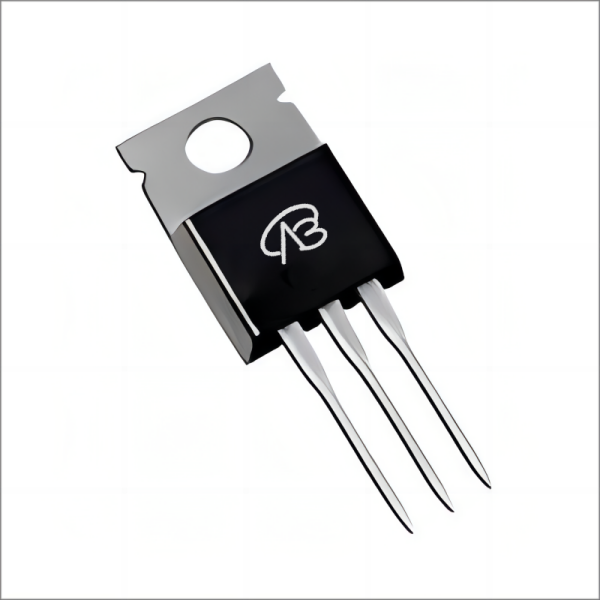
Comparative Analysis: IRF740APBF (N-channel) vs. VBM165R09S
Analysis of the Original Model (IRF740APBF) Core:
This is a 400V N-channel MOSFET from VISHAY in a TO-220AB package. Its design focuses on robust performance in high-voltage switching applications. Key advantages include: a drain-source voltage (Vdss) of 400V, continuous drain current (Id) of 6.3A, and an on-resistance (RDS(on)) of 550mΩ at 10V. It features low gate charge (Qg) for simplified drive requirements, along with improved gate, avalanche, and dynamic dV/dt robustness. It is fully characterized for capacitance, avalanche voltage, and current, with specified effective Coss, and is RoHS compliant.
Compatibility and Differences of the Domestic Alternative (VBM165R09S):
VBsemi's VBM165R09S is an N-channel MOSFET in a TO-220 package, serving as a functional alternative. The main differences are in electrical parameters: VBM165R09S offers a higher voltage rating (650V vs. 400V) and a lower on-resistance (500mΩ at 10V vs. 550mΩ). It also supports a higher continuous drain current of 9A (compared to 6.3A). It utilizes a SJ_Multi-EPI process.
Key Application Areas:
Original Model IRF740APBF: Well-suited for high-voltage, medium-current switching applications such as switch-mode power supplies (SMPS) and uninterruptible power supplies (UPS), where 400V rating and 6.3A current are adequate.
Alternative Model VBM165R09S: More suitable for applications requiring higher voltage withstand (up to 650V) and lower conduction loss, offering an upgrade path in SMPS, UPS, or other high-voltage circuits where enhanced current capability (9A) and lower RDS(on) are beneficial.
Comparative Analysis: SQ2389ES-T1_GE3 (P-channel) vs. VB2470
Analysis of the Original Model (SQ2389ES-T1_GE3) Core:
This is a 40V P-channel TrenchFET power MOSFET from VISHAY in a compact SOT-23 package. Its design pursues a balance of low on-resistance and small size for space-constrained applications. Key features include: a drain-source voltage (Vdss) of -40V, continuous drain current (Id) of -4.1A, and an on-resistance (RDS(on)) of 84mΩ at 10V. It is AEC-Q101 qualified and undergoes 100% Rg and UIS testing.
Compatibility and Differences of the Domestic Alternative (VB2470):
VBsemi's VB2470 is a P-channel MOSFET in an SOT23-3 package, offering a pin-to-pin compatible alternative. Key parameter differences: VB2470 has a comparable voltage rating (-40V) but features a significantly lower on-resistance: 100mΩ at 4.5V and 71mΩ at 10V (vs. 84mΩ at 10V for the original). Its continuous drain current is -3.6A. It uses a Trench process.
Key Application Areas:
Original Model SQ2389ES-T1_GE3: Ideal for compact circuits requiring P-channel switching with moderate current, such as load switches, power management in portable devices, or battery protection circuits, benefiting from its small SOT-23 footprint and AEC-Q101 qualification.
Alternative Model VB2470: Offers superior conduction performance (lower RDS(on)) in a compatible package, making it suitable for applications where lower power loss and higher efficiency are desired in similar space-constrained, low-to-medium voltage P-channel switching roles.
Summary
This comparative analysis reveals two distinct selection paths:
For high-voltage N-channel applications like SMPS and UPS, the original IRF740APBF provides reliable 400V/6.3A performance. Its domestic alternative VBM165R09S offers a performance-enhanced option with higher voltage rating (650V), higher current (9A), and lower on-resistance (500mΩ), suitable for designs requiring greater margin or efficiency.
For compact P-channel applications, the original SQ2389ES-T1_GE3 delivers a good balance of size and performance (40V, 4.1A, 84mΩ). Its domestic alternative VB2470 provides a compatible solution with improved conduction characteristics (lower RDS(on) of 71mΩ@10V), beneficial for reducing losses in space-limited designs.
The core conclusion is that selection hinges on precise requirement matching. Domestic alternatives like VBM165R09S and VB2470 not only provide viable backup options but also offer parameter enhancements in some cases, giving engineers greater flexibility and resilience in design trade-offs and cost control. Understanding each device's design philosophy and parameter implications is key to maximizing its value in the circuit.

Download PDF document
 Download now


