 中文
中文 English
MOSFET Selection for Power Conversion: IRF540SPBF, SUM60020E-GE3 vs. China Alternatives VBL1104N, VBL1803
Number of views:9999
 Back to previous page
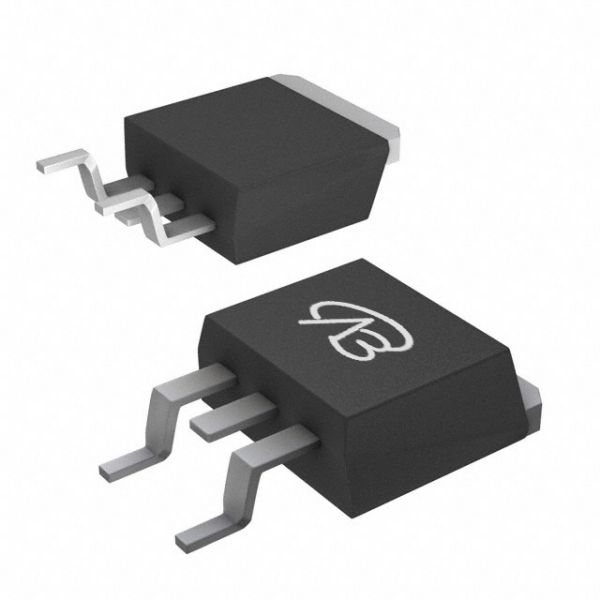
Comparative Analysis: IRF540SPBF (N-channel) vs. VBL1104N
Analysis of the Original Model (IRF540SPBF) Core:
This is a classic 100V N-channel MOSFET from Vishay in a D2PAK (TO-263) package. Its design represents a reliable, industry-standard solution for medium-power switching. Key advantages include a robust 100V drain-source voltage (Vdss) rating and a continuous drain current (Id) of 28A. Its on-resistance (RDS(on)) is 77mΩ at a 10V gate drive.
Compatibility and Differences of the Domestic Alternative (VBL1104N):
VBsemi's VBL1104N is a direct pin-to-pin compatible alternative in the TO-263 package. The key differences are in electrical performance: while maintaining the same 100V voltage rating, the VBL1104N offers significantly improved conduction characteristics. It features a much lower on-resistance of 30mΩ @10V (compared to 77mΩ) and a higher continuous current rating of 45A (compared to 28A).
Key Application Areas:
Original Model IRF540SPBF: A versatile choice for general-purpose medium-power switching applications requiring 100V capability, such as:
Motor drives for appliances and industrial controls.
Power supplies and DC-DC converters.
Automotive and industrial switching.
Alternative Model VBL1104N: Ideal for applications where an upgrade in efficiency and current handling is desired within the same footprint. Its lower RDS(on) reduces conduction losses, and its higher current rating provides a greater safety margin or enables handling of heavier loads. Suitable for enhanced versions of the above applications or new designs seeking higher performance.
Comparative Analysis: SUM60020E-GE3 (N-channel) vs. VBL1803
This comparison shifts to high-current, low-loss applications, where the design pursuit is minimizing conduction resistance in synchronous rectification and high-power DC-DC conversion.
Analysis of the Original Model (SUM60020E-GE3) Core:
This Vishay MOSFET in a TO-263 package is engineered for high-efficiency power conversion. Its core advantages are:
High Current Capability: A continuous drain current of 150A at 80V Vdss.
Low Conduction Loss: An exceptionally low on-resistance of 2.47mΩ at 7.5V gate drive.
Optimized Switching: Features like low gate charge (Qgd) reduce switching losses across the Miller plateau.
Compatibility and Differences of the Domestic Alternative (VBL1803):
VBsemi's VBL1803 is a pin-to-pin compatible alternative that represents a significant "performance-enhanced" option. It matches the 80V voltage rating but offers substantially improved key parameters: an ultra-low on-resistance of 5mΩ @10V (and 10mΩ @4.5V) and a remarkably high continuous current rating of 215A.
Key Application Areas:
Original Model SUM60020E-GE3: An excellent choice for high-efficiency, high-current applications,典型应用包括:
Secondary-side synchronous rectification in switch-mode power supplies (SMPS).
High-current DC-DC converters for servers, telecom, and computing.
Motor drives and power management modules requiring low loss.
Alternative Model VBL1803: Suited for applications demanding the highest possible current capability and lowest possible conduction losses within this package. Its 215A rating and very low RDS(on) make it ideal for next-generation, high-power-density designs, upgraded systems, or scenarios where thermal performance and efficiency are paramount.
Summary
This analysis reveals two distinct selection pathways based on performance needs:
For 100V-rated, general-purpose medium-power switching, the original IRF540SPBF offers proven reliability. Its domestic alternative, VBL1104N, provides a compelling upgrade within the same footprint, delivering significantly lower on-resistance (30mΩ vs. 77mΩ) and higher current handling (45A vs. 28A), enabling greater efficiency and power density in new or upgraded designs.
For 80V-rated, high-current, low-loss applications like synchronous rectification, the original SUM60020E-GE3 sets a high standard with its 150A current and 2.47mΩ RDS(on). The domestic alternative VBL1803 pushes the boundaries further, offering an exceptional 215A current rating and very low on-resistance (5mΩ @10V), making it a superior choice for designs prioritizing maximum current capacity and minimal conduction loss.
The core conclusion is that selection hinges on precise requirement matching. In the context of supply chain diversification, domestic alternatives like VBL1104N and VBL1803 not only provide viable, pin-compatible replacements but also offer substantial performance gains in key parameters. This gives engineers greater flexibility, resilience, and potential for enhanced performance in their design trade-offs and cost optimization strategies. Understanding the parameter implications of each device is essential to leveraging its full value in the circuit.

Download PDF document
 Download now


