 中文
中文 English
MOSFET Selection for Power Switching: BUK9875-100A/CUX, PSMN2R5-30YL,115 vs. China Alternatives VBJ1104N, VBED1303
Number of views:9999
 Back to previous page
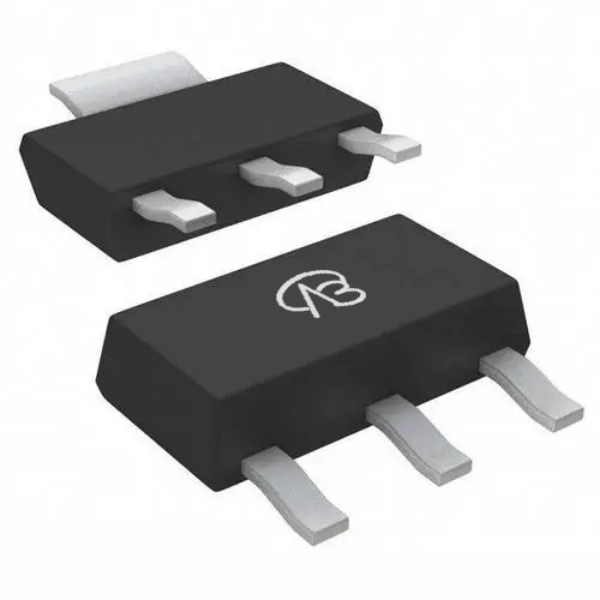
Comparative Analysis: BUK9875-100A/CUX (N-channel) vs. VBJ1104N
Analysis of the Original Model (BUK9875-100A/CUX) Core:
This is a 100V N-channel MOSFET from Nexperia in a compact SOT-223-3 package. Its design core is to provide robust power switching in a space-efficient footprint. Key advantages include a high drain-source voltage rating of 100V, a continuous drain current of 7A, and a standard threshold voltage of 2V, making it suitable for various medium-voltage applications.
Compatibility and Differences of the Domestic Alternative (VBJ1104N):
VBsemi’s VBJ1104N is a pin-to-pin compatible alternative in the same SOT-223 package. The main differences are in electrical parameters: VBJ1104N offers the same 100V voltage rating and a similar threshold voltage of 1.8V. However, its on-resistance is 36mΩ @ 10V, and its continuous current rating is 6.4A, which is slightly lower than the original’s 7A.
Key Application Areas:
Original Model BUK9875-100A/CUX: Ideal for applications requiring a 100V rating and around 7A current in a compact package. Typical uses include:
Power switches in 48V-60V systems (e.g., telecom, industrial power supplies).
DC-DC converters and motor drives in medium-voltage ranges.
Load switching and protection circuits.
Alternative Model VBJ1104N: A suitable alternative for applications where the 100V rating is critical, but the current requirement is slightly lower (around 6.4A). It provides a cost-effective and supply-chain-resilient option for similar circuit topologies.
Comparative Analysis: PSMN2R5-30YL,115 (N-channel) vs. VBED1303
This comparison focuses on high-current, low-voltage switching performance. The original model is designed for extremely low conduction loss in a small package.
Analysis of the Original Model (PSMN2R5-30YL,115) Core:
This Nexperia MOSFET features a 30V drain-source voltage and an impressive continuous drain current of 100A. Its standout feature is the very low on-resistance of 2.4mΩ @ 10V, which minimizes conduction losses. Packaged in SOT-669 (LFPAK), it offers excellent thermal performance for its size.
Compatibility and Differences of the Domestic Alternative (VBED1303):
VBsemi’s VBED1303 is a direct pin-to-pin alternative in the SOT-669 package. It matches the 30V voltage rating and offers competitive performance: an on-resistance of 2.8mΩ @ 10V (slightly higher than the original's 2.4mΩ) and a high continuous current rating of 90A. It also features a lower gate threshold voltage of 0.8V, which can be beneficial for low-voltage drive scenarios.
Key Application Areas:
Original Model PSMN2R5-30YL,115: Excels in high-current, low-voltage applications where minimizing conduction loss is paramount. Typical applications include:
Synchronous rectification in high-current DC-DC converters (e.g., for servers, GPUs).
Motor drives for power tools, e-bikes, or robotics.
Battery management systems (BMS) and power distribution switches.
Alternative Model VBED1303: A strong performance-oriented alternative. Its 90A current capability and 2.8mΩ on-resistance make it suitable for the same high-current applications, offering a reliable option with a lower threshold voltage for design flexibility.
Conclusion:
This analysis reveals two distinct selection paths:
1. For medium-voltage (100V) switching in a compact SOT-223 package, the original BUK9875-100A/CUX provides a solid 7A solution. Its domestic alternative VBJ1104N offers a compatible and viable option, especially when the full 7A is not strictly required, balancing cost and supply chain needs.
2. For high-current, low-voltage (30V) switching where ultra-low on-resistance is critical, the original PSMN2R5-30YL,115 sets a high benchmark with 100A and 2.4mΩ. The domestic alternative VBED1303 presents a compelling "performance-enhanced" choice with 90A and 2.8mΩ, along with a lower gate threshold, making it an excellent upgrade or alternative for efficiency-driven designs like synchronous rectifiers and motor drives.
The core takeaway is that selection depends on precise requirement matching. In the context of supply chain diversification, domestic alternatives like VBJ1104N and VBED1303 not only provide feasible backups but also offer competitive or enhanced parameters, giving engineers greater flexibility in design trade-offs and cost control. Understanding each device's design philosophy and parameter implications is key to maximizing its value in your circuit.

Download PDF document
 Download now


