 中文
中文 English
MOSFET Selection for Power Management: BUK98180-100A/CU115, BUK7611-55A,118 vs. China Alternatives VBJ1101M and VBL1606
Number of views:9999
 Back to previous page
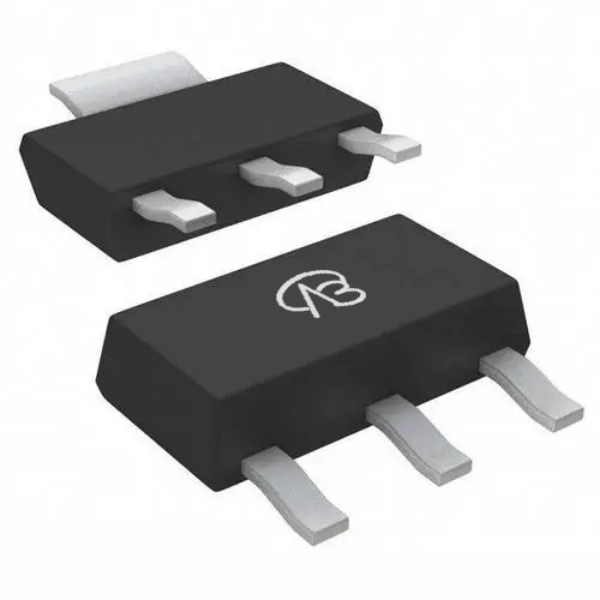
Comparative Analysis: BUK98180-100A/CU115 (N-channel) vs. VBJ1101M
Original Model (BUK98180-100A/CU115) Core Analysis:
This N-channel MOSFET from Nexperia is rated for 100V and 4.6A continuous current, with an on-resistance of 201mΩ at 4.5V gate drive. Its design focuses on reliable switching in medium-voltage applications where moderate current handling and compact power dissipation (8W) are required. The package is tailored for space-conscious designs needing stable 100V operation.
Compatibility and Differences of the Domestic Alternative (VBJ1101M):
VBsemi’s VBJ1101M is an SOT223-packaged N-channel MOSFET that offers a direct functional alternative. Key differences lie in its improved conduction performance: it features a significantly lower on-resistance of 120mΩ at 4.5V (100mΩ at 10V) and supports a similar 100V voltage rating with a 5A continuous current. This results in lower conduction losses and better efficiency in comparable applications.
Key Application Areas:
- Original BUK98180-100A/CU115: Suitable for 100V-level power switching, load control, or auxiliary power circuits where voltage endurance is critical and current demands are moderate (around 4-5A). Typical uses include industrial controls, power supplies, and automotive auxiliary systems.
- Alternative VBJ1101M: Ideal for designs that benefit from lower on-resistance at similar voltage ratings, such as efficient DC-DC converters, motor drivers, or power management modules requiring up to 5A current in a compact SOT223 footprint.
Comparative Analysis: BUK7611-55A,118 (N-channel) vs. VBL1606
Original Model (BUK7611-55A,118) Core Analysis:
This Nexperia N-channel MOSFET in a D2PAK package is built for high-current applications, with a 55V voltage rating, 75A continuous current, and a low on-resistance of 9mΩ at 10V gate drive. Its design emphasizes high power handling, robust thermal performance, and efficiency in demanding circuits like motor drives or high-current converters.
Compatibility and Differences of the Domestic Alternative (VBL1606):
VBsemi’s VBL1606, in a TO263 package, offers a performance-enhanced alternative. It features a higher continuous current rating of 150A and an exceptionally low on-resistance of 4mΩ at 10V, albeit with a slightly lower voltage rating of 60V. This translates to superior current capability and reduced conduction losses for high-power applications.
Key Application Areas:
- Original BUK7611-55A,118: Optimized for high-current, medium-voltage scenarios such as motor drives (e.g., automotive, industrial), high-power DC-DC conversion, and uninterruptible power supplies (UPS) where 55V and up to 75A current are required.
- Alternative VBL1606: Suited for even higher-current demands (up to 150A) where lower on-resistance and enhanced thermal performance are critical, such as in high-efficiency server power supplies, electric vehicle subsystems, or heavy-duty industrial inverters.
Conclusion:
The selection between these MOSFETs hinges on specific design priorities:
- For 100V-level applications with moderate current, the original BUK98180-100A/CU115 provides reliable performance, while VBJ1101M offers a lower-resistance alternative for improved efficiency in similar voltage ranges.
- For high-current, medium-voltage applications, the BUK7611-55A,118 delivers robust 75A capability, whereas VBL1606 steps up with higher current (150A) and lower on-resistance, making it a powerful upgrade for demanding power stages.
Domestic alternatives like VBJ1101M and VBL1606 not only serve as viable replacements but also bring enhanced parameters—such as reduced RDS(on) and higher current ratings—giving engineers flexible, cost-effective options without compromising performance. Understanding each device’s core strengths ensures the best match for your power design needs.

Download PDF document
 Download now


