 中文
中文 English
MOSFET Selection for Signal-Level Switching: BSS84AK/B2215, BSS138BKVL vs. China Alternatives VB262K, VB162K
Number of views:9999
 Back to previous page
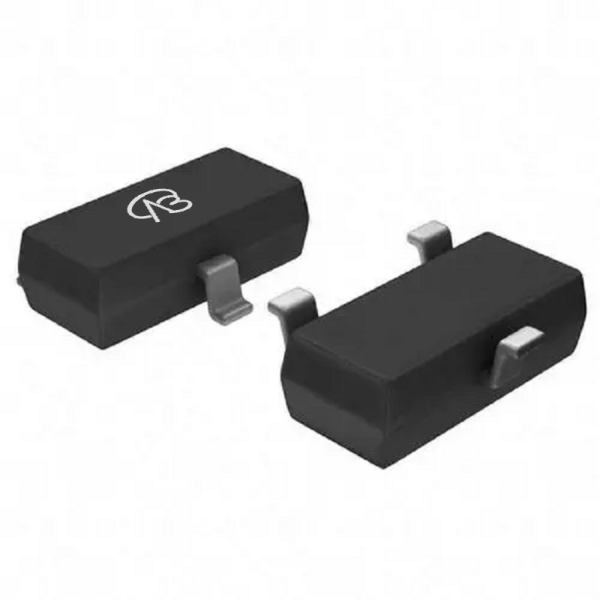
Comparative Analysis: BSS84AK / B2215 (P-channel) vs. VB262K
Analysis of the Original Model (BSS84AK/B2215) Core:
This is a 50V P-channel MOSFET from Nexperia in a compact SOT23 package. Its design core is to provide reliable signal-level switching and isolation with very low gate charge. Key advantages include a high drain-source voltage (Vdss) of -50V, a continuous drain current (Id) of -130mA, and a moderate on-resistance of 10Ω at 10V gate drive. Its low threshold voltage and minimal leakage make it ideal for battery-powered and portable applications.
Compatibility and Differences of the Domestic Alternative (VB262K):
VBsemi's VB262K is a direct pin-to-pin compatible alternative in an SOT23-3 package. The main differences are in electrical parameters: VB262K offers a higher voltage rating (-60V vs. -50V) and significantly lower on-resistance (2Ω @10V vs. 10Ω @10V). However, its continuous current rating is -0.5A, which is higher than the original's -130mA, providing a greater current margin in switching applications.
Key Application Areas:
Original Model BSS84AK/B2215: Perfect for low-power P-channel switching where 50V rating suffices, such as:
Load switching for low-current peripherals in portable devices.
Power rail selection and isolation in mixed-voltage systems (e.g., 3.3V/5V).
Interface protection and level shifting circuits.
Alternative Model VB262K: Suitable for applications requiring a higher voltage safety margin (up to -60V) and lower conduction loss due to its lower RDS(on). It can directly replace the original in most circuits while offering potential performance benefits.
Comparative Analysis: BSS138BKVL (N-channel) vs. VB162K
Analysis of the Original Model (BSS138BKVL) Core:
This is a widely used 60V N-channel MOSFET from Nexperia in an SOT-23 package. Its design pursues an optimal balance of voltage capability, low on-resistance, and fast switching for signal-level applications. Core advantages include a 60V drain-source voltage, 360mA continuous current, and a low on-resistance of 1.6Ω at 10V gate drive. Its small size and excellent performance make it a go-to choice for countless designs.
Compatibility and Differences of the Domestic Alternative (VB162K):
VBsemi's VB162K is a pin-to-pin compatible N-channel alternative in an SOT23-3 package. It matches the original's 60V voltage rating. While its rated continuous current (0.3A) is slightly lower than the BSS138BKVL's 360mA, it remains suitable for similar current ranges. Its on-resistance is slightly higher (2.8Ω @10V vs. 1.6Ω @10V), which is a consideration for applications with stringent conduction loss requirements.
Key Application Areas:
Original Model BSS138BKVL: The industry standard for 60V-level small-signal switching, ideal for:
Level translation and interface circuits (I2C, GPIO, etc.).
Driving small relays, LEDs, or other low-current loads.
Protection switches and load switches in low-power subsystems.
Alternative Model VB162K: A viable domestic alternative for most applications where the BSS138BKVL is used, especially when supply chain diversification is a priority. It is suitable for similar signal switching and level translation tasks within its current and RDS(on) specifications.
Conclusion
This analysis reveals two clear substitution paths for common small-signal MOSFETs:
For P-channel applications like load switching and level shifting, the original BSS84AK/B2215 offers proven reliability with 50V/130mA capability. Its domestic alternative, VB262K, provides a compelling upgrade with a higher voltage rating (-60V), significantly lower on-resistance (2Ω), and higher current capability (-0.5A), making it a strong, performance-enhanced replacement.
For N-channel applications such as interface control and low-side switching, the ubiquitous BSS138BKVL sets the benchmark with its 60V/360mA/1.6Ω performance. The domestic alternative VB162K offers a direct pin-compatible solution with the same 60V rating. While its current (0.3A) is slightly lower and RDS(on) (2.8Ω) is slightly higher, it remains a fully viable alternative for many standard signal-level switching circuits.
The core takeaway is that selection depends on precise requirement matching. In the context of supply chain diversification, domestic alternatives like VB262K and VB162K not only provide reliable backup options but also, in the case of VB262K, offer potential performance gains. They give engineers greater flexibility and resilience in design trade-offs and cost control. Understanding the specific parameter implications of each device is key to leveraging its full value in your circuit.

Download PDF document
 Download now


