 中文
中文 English
MOSFET Selection for High-Power and Compact Dual Applications: SUM110N10-09-E3, SiZ918DT-T1-GE3 vs. China Alternatives VBL1105, VBQA3303G
 Back to previous page
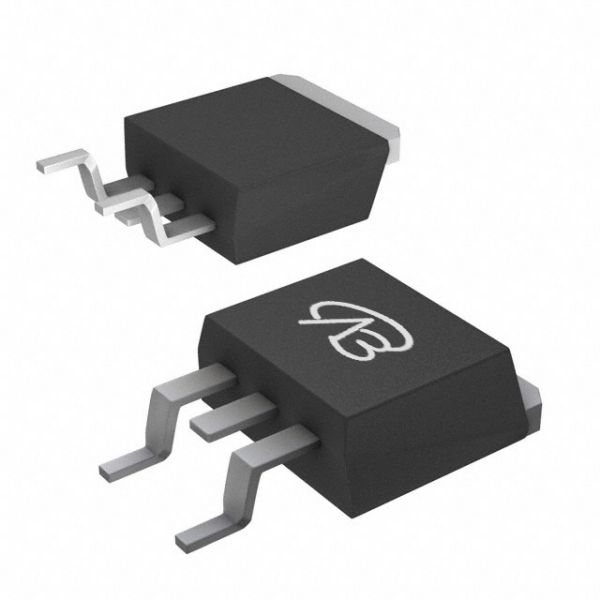
MOSFET Selection for High-Power and Compact Dual Applications: SUM110N10-09-E3, SiZ918DT-T1-GE3 vs. China Alternatives VBL1105, VBQA3303G
In modern power design, engineers often face dual challenges: achieving high current handling and efficiency in main power paths, while also pursuing miniaturization and high density in board-level power management. Selecting the right MOSFETs for these distinct scenarios requires a careful balance of performance, size, and cost. This article uses two representative MOSFETs from Vishay—the high-power SUM110N10-09-E3 (single N-channel) and the compact dual N-channel SiZ918DT-T1-GE3—as benchmarks. We will deeply analyze their design cores and application contexts, and provide a comparative evaluation of two domestic alternative solutions: VBL1105 and VBQA3303G. By clarifying their parameter differences and performance orientations, we aim to offer a clear selection guide to help you find the most matching power switching solutions for your next design.
Comparative Analysis: SUM110N10-09-E3 (Single N-channel) vs. VBL1105
Analysis of the Original Model (SUM110N10-09-E3) Core:
This is a 100V single N-channel TrenchFET power MOSFET from Vishay in a TO-263-3 (D²PAK) package. Its design core is to deliver robust power handling and high efficiency in high-current applications. Key advantages include: a high continuous drain current rating of 110A, a low on-resistance of 9.5mΩ at a 10V gate drive, and a high power dissipation capability of 375W supported by a low thermal resistance package. It features 100% Rg testing for consistency.
Compatibility and Differences of the Domestic Alternative (VBL1105):
VBsemi's VBL1105 is also a 100V single N-channel MOSFET in a TO-263 package, offering a direct pin-to-pin compatible alternative. The main differences are significant performance enhancements: VBL1105 features a much lower on-resistance of 4mΩ (at 10V) and a higher continuous current rating of 140A. This represents a substantial improvement in conduction loss and current-handling capability over the original model.
Key Application Areas:
Original Model SUM110N10-09-E3: Ideal for high-power, high-voltage applications requiring reliable performance and good thermal management. Typical uses include:
High-current DC-DC converters and power supplies (e.g., in server, telecom, or industrial equipment).
Motor drives and inverters.
Automotive systems and battery management.
Alternative Model VBL1105: Suited as a performance-upgrade replacement in the same high-power applications. Its lower RDS(on) and higher current rating make it excellent for designs seeking higher efficiency, lower thermal stress, or increased power density, especially in space-constrained high-power modules.
Comparative Analysis: SiZ918DT-T1-GE3 (Dual N-channel) vs. VBQA3303G
This dual N-channel MOSFET focuses on achieving efficient, compact power management in space-limited applications.
Analysis of the Original Model (SiZ918DT-T1-GE3) Core:
This Vishay component integrates two 30V N-channel TrenchFETs in a compact DFN-8 package. Its design pursues a balance of moderate current capability, low on-resistance, and a small footprint for board-level power management. Key features include: a continuous drain current of 14.3A per channel, an on-resistance of 14.5mΩ at 4.5V gate drive, and 100% Rg and UIS testing for reliability.
Compatibility and Differences of the Domestic Alternative (VBQA3303G):
VBsemi's VBQA3303G is a half-bridge configured dual N-channel MOSFET (N+N) in a compatible DFN8(5x6) package. It offers a significant "performance-enhanced" alternative: it boasts a dramatically lower on-resistance of 4mΩ at 4.5V (3.4mΩ at 10V) and a vastly higher combined continuous current rating of 60A. This translates to much lower conduction losses and the ability to handle higher power in a similarly compact footprint.
Key Application Areas:
Original Model SiZ918DT-T1-GE3: Well-suited for compact, medium-current power management applications. Typical uses include:
Notebook system power management and POL (Point-of-Load) synchronous buck converters.
Low-voltage DC-DC conversion in portable devices, networking hardware.
Power switching for peripherals and modules.
Alternative Model VBQA3303G: An ideal choice for upgraded scenarios demanding higher efficiency, higher current capability, and lower losses in a compact form factor. It is excellent for:
High-density, high-efficiency POL converters with larger output currents.
Advanced notebook power systems and high-performance computing boards.
Any application where the original model's performance is limiting and a drop-in, superior alternative is needed.
Summary
This analysis reveals two distinct selection paths with clear upgrade potential from domestic alternatives:
For high-power, high-voltage single MOSFET applications, the original SUM110N10-09-E3 offers reliable 110A/100V performance with 9.5mΩ RDS(on). Its domestic alternative VBL1105 provides a direct package-compatible replacement with superior performance: a lower 4mΩ RDS(on) and a higher 140A current rating, making it an excellent choice for efficiency-driven upgrades or new designs requiring maximum performance from a TO-263 package.
For compact, dual N-channel applications in board-level power management, the original SiZ918DT-T1-GE3 provides a solid solution with 14.3A per channel and 14.5mΩ RDS(on). Its domestic alternative VBQA3303G represents a major performance leap, offering a drastically lower 4mΩ RDS(on) and a much higher 60A current rating in a similar DFN package, enabling significantly higher power density and efficiency.
The core conclusion is: Selection depends on precise requirement matching. In the context of supply chain diversification, these domestic alternative models not only provide reliable, pin-to-pin compatible options but also offer substantial performance enhancements in key parameters like on-resistance and current handling. This gives engineers greater flexibility, resilience, and potential for performance optimization in their design trade-offs and cost-control strategies. Understanding the specific design goals and parameter implications of each device is key to unlocking its full value in the circuit.

Download PDF document
 Download now


