 中文
中文 English
MOSFET Selection for High-Power & Compact Power Applications: STW70N60DM2, STL150N3LLH5 vs. China Alternatives VBP16R67S, VBQA1302
 Back to previous page
MOSFET Selection for High-Power & Compact Power Applications: STW70N60DM2, STL150N3LLH5 vs. China Alternatives VBP16R67S, VBQA1302
In the design of power systems, whether for high-voltage switching or low-voltage high-current applications, selecting a MOSFET that delivers optimal performance, reliability, and thermal management is a critical engineering decision. This involves a careful balance of voltage rating, current capability, on-resistance, package, and cost. This article takes two highly representative MOSFETs from STMicroelectronics—the high-voltage STW70N60DM2 and the compact high-current STL150N3LLH5—as benchmarks. We will delve into their design cores and application scenarios, and provide a comparative evaluation of their domestic alternative solutions from VBsemi: VBP16R67S and VBQA1302. By clarifying their parameter differences and performance orientations, we aim to offer a clear selection guide for your next power design.
Comparative Analysis: STW70N60DM2 (High-Voltage N-Channel) vs. VBP16R67S
Analysis of the Original Model (STW70N60DM2) Core:
This is a 600V N-channel MOSFET from STMicroelectronics, utilizing the robust TO-247 package. It is part of the MDmesh DM2 series, designed for high-voltage, high-efficiency switching. Its key advantages are a high drain-source voltage (Vdss) of 600V, a continuous drain current (Id) of 66A, and a low typical on-resistance (RDS(on)) of 37mΩ. The specified RDS(on) is 42mΩ at 10V gate drive and 33A, showcasing its strong performance in high-voltage applications.
Compatibility and Differences of the Domestic Alternative (VBP16R67S):
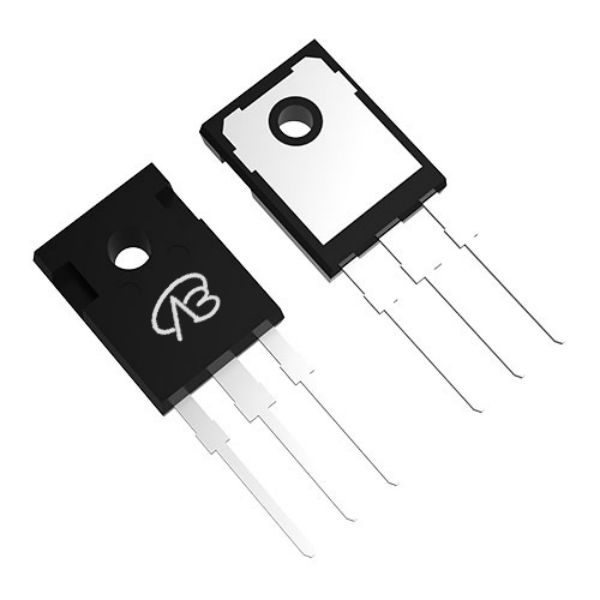
VBsemi's VBP16R67S is a direct pin-to-pin compatible alternative in the TO-247 package. It matches the 600V voltage rating and offers a slightly higher continuous current rating of 67A. Crucially, it features a lower on-resistance of 34mΩ at 10V gate drive. This indicates a potential for reduced conduction losses compared to the original part.
Key Application Areas:
Original Model STW70N60DM2: Ideal for high-voltage, medium-to-high power switching applications requiring robustness and efficiency.
Switch-Mode Power Supplies (SMPS): PFC (Power Factor Correction) stages, flyback/forward converters in server, industrial, and telecom power supplies.
Motor Drives: Inverters for industrial motor control, appliance motors.
Solar Inverters: High-voltage DC-AC conversion stages.
Alternative Model VBP16R67S: A suitable performance-matched or enhanced alternative for the same high-voltage applications, potentially offering lower conduction loss and improved efficiency due to its lower RDS(on). It is an excellent choice for designs seeking supply chain diversification without compromising performance.
Comparative Analysis: STL150N3LLH5 (Low-Voltage High-Current N-Channel) vs. VBQA1302
This comparison shifts focus to low-voltage, high-current applications where minimizing conduction loss and managing heat in a small footprint are paramount.
Analysis of the Original Model (STL150N3LLH5) Core:
This is a 30V N-channel MOSFET from ST in a compact PowerFLAT 5x6 package. Its design pursues the ultimate balance of very low on-resistance and high current capability in a small space. Its core advantages are an extremely low RDS(on) of 1.75mΩ at 10V gate drive and a high continuous drain current of 150A (195A pulsed), making it exceptional for high-current switching.
Compatibility and Differences of the Domestic Alternative (VBQA1302):
VBsemi's VBQA1302 comes in a DFN8(5x6) package, which is typically compatible with PowerFLAT footprints. It matches the 30V voltage rating. While its rated continuous current (160A) is different, it remains in the very high-current category. Its key strength is an even lower on-resistance: 1.8mΩ at 10V and 2.5mΩ at 4.5V gate drive, indicating excellent conduction performance even at lower gate voltages.
Key Application Areas:
Original Model STL150N3LLH5: Perfect for space-constrained, high-current, low-voltage applications where efficiency and thermal performance are critical.
Synchronous Rectification: In high-current DC-DC converters (buck, boost) for servers, GPUs, and telecom equipment.
Battery Management Systems (BMS): High-side or low-side protection switches in electric vehicles, power tools, and energy storage.
High-Current Load Switching: Power distribution in automotive systems, industrial controls.
Alternative Model VBQA1302: A powerful alternative for similar high-current, low-voltage applications. Its ultra-low RDS(on) can lead to further reductions in conduction loss and temperature rise. It is particularly attractive for designs requiring high efficiency at standard gate drive voltages (4.5V-10V) and offers a resilient supply chain option.
Conclusion
In summary, this analysis reveals two distinct selection paths for different power domains:
For high-voltage (600V) switching applications, the original STW70N60DM2 offers proven reliability and performance in the TO-247 package. Its domestic alternative, VBP16R67S, provides a compelling option with comparable voltage/current ratings and a lower on-resistance (34mΩ vs. 42mΩ), promising potential efficiency gains in PFC, motor drives, and inverters.
For ultra-high-current, low-voltage (30V) applications in compact packages, the original STL150N3LLH5 sets a high bar with its 1.75mΩ RDS(on) and 150A current rating. Its domestic alternative, VBQA1302, stands out by offering an even lower on-resistance (1.8mΩ @10V) and a formidable 160A current rating, making it a performance-enhanced choice for the most demanding synchronous rectification, BMS, and power distribution tasks.
The core takeaway is that selection is driven by precise application requirements. In the current landscape, domestic alternatives like VBP16R67S and VBQA1302 not only provide viable second-source options but also demonstrate competitive or superior performance in key parameters such as on-resistance. This gives engineers greater flexibility, resilience, and potential for optimization in their power design trade-offs.

Download PDF document
 Download now


