 中文
中文 English
MOSFET Selection for High-Voltage Power Applications: STW40N60M2, STF8NM60ND vs. China Alternatives VBP16R32S, VBMB165R12
 Back to previous page
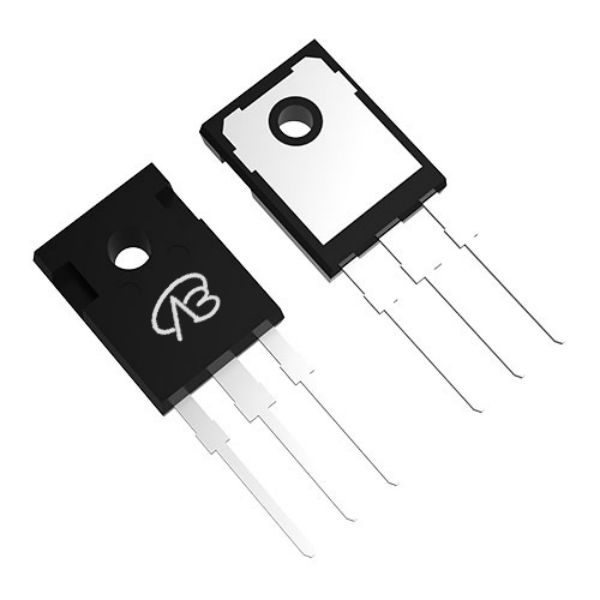
MOSFET Selection for High-Voltage Power Applications: STW40N60M2, STF8NM60ND vs. China Alternatives VBP16R32S, VBMB165R12
In high-voltage power conversion and motor control designs, selecting a MOSFET that balances voltage rating, conduction loss, and switching performance is critical for system efficiency and reliability. This is not a simple part substitution but a strategic balance among ruggedness, cost, and supply chain diversity. This article takes two representative high-voltage MOSFETs from STMicroelectronics—STW40N60M2 (TO-247) and STF8NM60ND (TO-220FP)—as benchmarks. We will analyze their design cores and typical applications, then evaluate two domestic alternative solutions: VBP16R32S and VBMB165R12. By clarifying parameter differences and performance orientations, we provide a clear selection guide to help you find the optimal power switching solution in your next high-voltage design.
Comparative Analysis: STW40N60M2 (N-channel, TO-247) vs. VBP16R32S
Analysis of the Original Model (STW40N60M2) Core:
This is a 600V N-channel MOSFET from STMicroelectronics, featuring the MDmesh M2 technology in a TO-247 package. Its design core is to deliver high voltage capability with low conduction loss and robust switching performance in power applications. Key advantages include: a low typical on-resistance of 78mΩ (88mΩ max @10V, 17A), a continuous drain current rating of 34A, and optimized dynamic characteristics for reduced switching losses.
Compatibility and Differences of the Domestic Alternative (VBP16R32S):
VBsemi's VBP16R32S is a direct pin-to-pin compatible alternative in the same TO-247 package. The main differences in electrical parameters are minimal: VBP16R32S offers a similar 600V voltage rating and an on-resistance of 85mΩ (@10V), which is nearly identical to the original's maximum rating. Its continuous current rating is 32A, slightly lower than the original's 34A, but remains in the same high-performance tier.
Key Application Areas:
Original Model STW40N60M2: Its combination of 600V rating, low RDS(on), and 34A current makes it ideal for high-power, high-voltage applications requiring efficiency and robustness.
Switched-Mode Power Supplies (SMPS): PFC (Power Factor Correction) stages, hard-switched or resonant converters (LLC) in server, telecom, and industrial power supplies.
Motor Drives & Inverters: High-power motor control for industrial automation, appliances, and fans.
Solar Inverters & UPS: Power switching stages requiring high voltage blocking and efficient conduction.
Alternative Model VBP16R32S: An excellent high-performance domestic alternative, suitable for the same demanding 600V applications where the original model is used, providing a reliable and efficient option with nearly identical electrical characteristics.
Comparative Analysis: STF8NM60ND (N-channel, TO-220FP) vs. VBMB165R12
This comparison focuses on a mid-power, high-voltage MOSFET in a compact, isolated TO-220FP package, where the design pursuit is a balance of voltage withstand, adequate current capability, and thermal performance in a space-saving format.
Analysis of the Original Model (STF8NM60ND) Core:
The STF8NM60ND is a 600V, 7A N-channel MOSFET in a TO-220FP (fully isolated) package. Its core advantages are:
High Voltage in Compact Package: Provides 600V isolation in a space-efficient TO-220FP, suitable for designs requiring creepage/clearance distances.
Balanced Performance: With an on-resistance of 700mΩ (@10V, 3.5A) and 7A continuous current, it meets the needs of medium-power offline applications.
Isolated Package: The fully isolated package simplifies thermal interface and mounting, enhancing design safety and flexibility.
Compatibility and Differences of the Domestic Alternative (VBMB165R12):
VBsemi's VBMB165R12 serves as a "performance-enhanced" pin-to-pin alternative. It offers a higher voltage rating (650V vs. 600V), a significantly higher continuous current (12A vs. 7A), and a lower on-resistance (680mΩ @10V vs. 700mΩ). This represents a comprehensive upgrade in key parameters while maintaining package compatibility.
Key Application Areas:
Original Model STF8NM60ND: Its isolated package and 600V/7A rating make it a reliable choice for medium-power applications requiring safety isolation.
Auxiliary Power Supplies: Standby or control power circuits in larger SMPS.
Lighting: Ballasts and drivers for LED lighting systems.
Appliance Control: Motor drives and switching in home appliances (e.g., washing machines, air conditioners).
Industrial Controls: Low to medium power relays, solenoid drivers, and I/O modules.
Alternative Model VBMB165R12: More suitable for upgraded scenarios demanding higher current capability (12A), higher voltage margin (650V), and lower conduction loss, offering a direct performance boost in the same applications or enabling more robust designs.
Summary
This comparative analysis reveals two clear selection paths for high-voltage applications:
For high-power, high-performance applications using a TO-247 package, the original model STW40N60M2, with its 600V rating, 34A current, and low RDS(on) from MDmesh M2 technology, is a benchmark for efficiency in SMPS and motor drives. Its domestic alternative VBP16R32S provides a nearly equivalent, pin-to-pin compatible solution with excellent parameter matching, offering a reliable and efficient domestic sourcing option.
For medium-power applications requiring an isolated package (TO-220FP), the original model STF8NM60ND offers a proven balance of 600V isolation and 7A capability. Its domestic alternative VBMB165R12 presents a significant "performance-enhanced" upgrade with higher voltage (650V), higher current (12A), and lower RDS(on), making it an ideal choice for design upgrades or new projects requiring higher margins.
The core conclusion is: Selection depends on precise requirement matching. In the context of supply chain diversification, domestic alternatives like VBP16R32S and VBMB165R12 not only provide viable, high-quality backups but also offer opportunities for parameter enhancement, giving engineers greater flexibility and resilience in design trade-offs and cost optimization. Understanding the design philosophy and parameter implications of each device is key to maximizing its value in the circuit.

Download PDF document
 Download now


