 中文
中文 English
MOSFET Selection for High-Voltage and Medium-Voltage Switching: STW35N60DM2, STD12NF06L-1 vs. China Alternatives VBP16R26S, VBFB1630
 Back to previous page
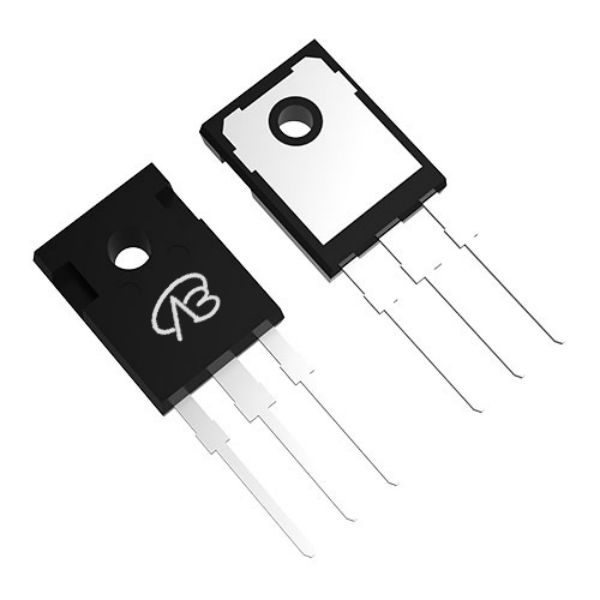
MOSFET Selection for High-Voltage and Medium-Voltage Switching: STW35N60DM2, STD12NF06L-1 vs. China Alternatives VBP16R26S, VBFB1630
In the design of power switching circuits, selecting a MOSFET that balances high voltage capability, switching efficiency, and cost is a critical task for engineers. This is not a simple substitution exercise, but a careful evaluation of voltage rating, conduction loss, switching performance, and supply chain stability. This article takes two representative MOSFETs from STMicroelectronics—STW35N60DM2 (600V N-channel) and STD12NF06L-1 (60V N-channel)—as benchmarks. It delves into their design focus and application scenarios, and provides a comparative assessment of two Chinese alternative solutions: VBP16R26S and VBFB1630. By clarifying their parameter differences and performance orientations, we aim to offer a clear selection guide to help you find the most suitable power switching solution for your next design.
Comparative Analysis: STW35N60DM2 (600V N-channel) vs. VBP16R26S
Analysis of the Original Model (STW35N60DM2) Core:
This is a 600V N-channel MOSFET from STMicroelectronics, utilizing the MDmesh DM2 technology in a TO-247 package. Its design core is to achieve high-voltage switching with low conduction loss and good switching performance in applications like power supplies and motor drives. Key advantages include: a high drain-source voltage (Vdss) of 600V, a continuous drain current (Id) of 28A, and a typical on-resistance (RDS(on)) of 94mΩ (110mΩ max @ 10V gate drive). The MDmesh DM2 structure offers a good balance between low on-resistance and reduced gate charge, contributing to efficiency in hard-switching topologies.
Compatibility and Differences of the Domestic Alternative (VBP16R26S):
VBsemi's VBP16R26S is a direct pin-to-pin compatible alternative in a TO-247 package. The main differences in electrical parameters are: it offers the same 600V voltage rating, a slightly lower continuous current rating of 26A (vs. 28A), and a very comparable on-resistance of 115mΩ (@10V). It utilizes a Super Junction Multi-EPI process, targeting similar high-voltage, high-efficiency switching applications.
Key Application Areas:
Original Model STW3560DM2: Its high voltage rating and robust current handling make it suitable for:
Switch-Mode Power Supplies (SMPS): PFC (Power Factor Correction) stages, flyback or forward converter primary switches in offline power supplies (85-265V AC input).
Motor Drives: Inverter stages for driving motors in appliances, fans, or industrial controls.
High-Voltage DC-DC Converters: Power conversion in renewable energy systems or industrial equipment.
Alternative Model VBP16R26S: A viable alternative for the same 600V application spaces where the slightly lower current rating (26A) is acceptable. It is well-suited for high-voltage switching requiring a reliable second source or cost-optimized design without significant performance compromise.
Comparative Analysis: STD12NF06L-1 (60V N-channel) vs. VBFB1630
This comparison shifts to medium-voltage applications where low on-resistance and fast switching are paramount for efficiency.
Analysis of the Original Model (STD12NF06L-1) Core:
This 60V N-channel MOSFET from ST uses STripFET™ technology in an IPAK (TO-251) package. Its design pursuit is minimizing input capacitance and gate charge for very fast switching and low drive loss. Key advantages are: a drain-source voltage of 60V, a continuous current of 12A, and an on-resistance of 90mΩ (@10V). The low gate charge makes it excellent for high-frequency switching applications.
Compatibility and Differences of the Domestic Alternative (VBFB1630):
VBsemi's VBFB1630 is a pin-to-pin compatible alternative in a TO-251 package that represents a significant "performance-enhanced" option. Key parameter comparisons show: the same 60V voltage rating, but a much higher continuous current rating of 35A (vs. 12A), and a drastically lower on-resistance of 32mΩ (@10V) compared to the original's 90mΩ. It employs a Trench technology process, enabling much lower conduction losses.
Key Application Areas:
Original Model STD12NF06L-1: Its low gate charge and fast switching characteristics make it ideal for:
Isolated DC-DC Converters: Primary-side switching in telecom or computing power modules where high-frequency operation is key.
Low-Voltage Motor Drives: Control of small brushed DC motors or as a switch in low-power motor drives.
Synchronous Rectification: Secondary-side rectification in lower-voltage, high-frequency DC-DC converters.
Alternative Model VBFB1630: This model is superior for applications demanding much higher current capability and lower conduction loss within the same 60V range. It is an excellent upgrade choice for:
High-Current DC-DC Converters: Synchronous buck or boost converters requiring high efficiency at higher load currents.
More Demanding Motor Drives: Driving larger brushed DC motors or serving in higher-power motor control circuits.
Power Distribution Switches: Where low voltage drop and high current handling are critical.
Conclusion:
In summary, this analysis reveals two distinct selection paths:
For high-voltage (600V) switching applications like offline SMPS and motor inverters, the original STW35N60DM2 offers a robust combination of 600V rating, 28A current, and low on-resistance via MDmesh DM2 technology. Its domestic alternative VBP16R26S provides a highly compatible replacement with very similar specifications (600V, 26A, 115mΩ), serving as a reliable second source or cost-effective option for most 600V designs.
For medium-voltage (60V) fast-switching applications, the original STD12NF06L-1 excels with its low gate charge and fast switching speed, making it a classic choice for high-frequency primary switching. However, the domestic alternative VBFB1630 presents a substantial performance upgrade, offering dramatically higher current (35A vs. 12A) and significantly lower on-resistance (32mΩ vs. 90mΩ). This makes VBFB1630 an attractive choice for designs needing higher power density, lower conduction losses, or an upgrade path within the same footprint.
The core conclusion is that selection depends on precise requirement matching. In the context of supply chain diversification, domestic alternatives like VBP16R26S and VBFB1630 not only provide viable backup options but also offer competitive or superior performance in key parameters, giving engineers greater flexibility and resilience in design trade-offs and cost control. Understanding the design focus and parameter implications of each device is essential to maximize its value in the circuit.

Download PDF document
 Download now


