 中文
中文 English
MOSFET Selection for High-Voltage Power Applications: STW28NM50N, STP17NK40ZFP vs. China Alternatives VBP15R50S and VBMB165R20S
 Back to previous page
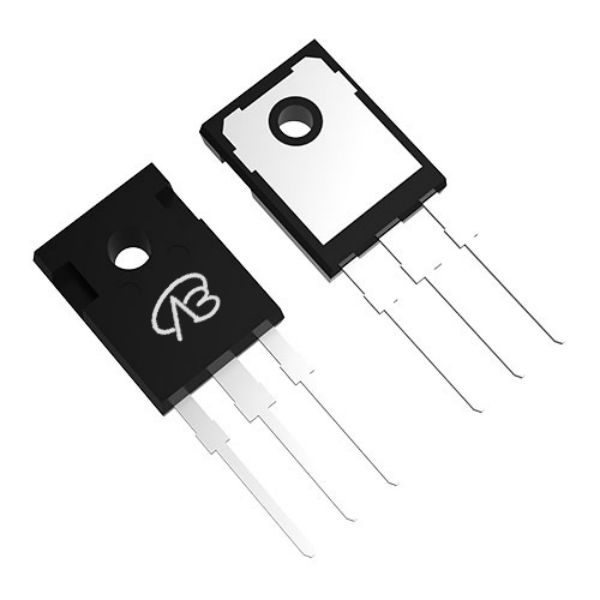
MOSFET Selection for High-Voltage Power Applications: STW28NM50N, STP17NK40ZFP vs. China Alternatives VBP15R50S and VBMB165R20S
In high-voltage power conversion and motor drive applications, selecting a MOSFET that balances ruggedness, efficiency, and cost is a critical engineering challenge. This is not a simple drop-in replacement exercise, but a strategic evaluation of voltage rating, current capability, switching performance, and thermal management. This article takes two established high-voltage MOSFETs from STMicroelectronics—STW28NM50N (N-channel) and STP17NK40ZFP (N-channel)—as benchmarks. We will delve into their design cores and typical applications, followed by a comparative assessment of two domestic alternative solutions: VBP15R50S and VBMB165R20S. By clarifying their parameter differences and performance orientations, we aim to provide a clear selection guide to help you identify the most suitable power switching solution for your next high-voltage design.
Comparative Analysis: STW28NM50N (N-channel) vs. VBP15R50S
Analysis of the Original Model (STW28NM50N) Core:
This is a 500V N-channel MOSFET from STMicroelectronics in a TO-247 package. Its design core is to provide a robust and reliable high-voltage switching solution. Key advantages include a high voltage rating of 500V, a continuous drain current of 21A, and an on-resistance (RDS(on)) of 135mΩ at 10V gate drive. This combination makes it suitable for applications requiring good voltage blocking and moderate current handling in a standard high-power package.
Compatibility and Differences of the Domestic Alternative (VBP15R50S):
VBsemi's VBP15R50S is also offered in a TO-247 package, providing direct pin-to-pin compatibility. The key differences are in the electrical parameters: while maintaining the same 500V voltage rating, the VBP15R50S offers significantly enhanced performance. It features a much lower on-resistance of 80mΩ (@10V) and a substantially higher continuous drain current rating of 50A.
Key Application Areas:
Original Model STW28NM50N: Its 500V/21A rating makes it a solid choice for standard high-voltage, medium-power applications such as:
Switch-Mode Power Supplies (SMPS): PFC stages, flyback, or forward converters in industrial power supplies.
Motor Drives: Inverter stages for driving motors in appliances, fans, or pumps.
Lighting: Ballast control and power conversion in HID or LED lighting systems.
Alternative Model VBP15R50S: With its superior current capability (50A) and lower conduction loss (80mΩ), it is an excellent choice for performance-upgraded or higher-power-density versions of the above applications. It is particularly suitable for designs where lower RDS(on) is critical for efficiency or where higher output current is required.
Comparative Analysis: STP17NK40ZFP (N-channel) vs. VBMB165R20S
Analysis of the Original Model (STP17NK40ZFP) Core:
This 400V N-channel MOSFET from ST's SuperMESH series in a TO-220FP package represents an optimized design for high dv/dt capability and reduced conduction loss. Its core advantages are:
Optimized High-Voltage Performance: Part of the SuperMESH series, it features an optimized cell structure that significantly lowers on-resistance (250mΩ @10V) while ensuring robust performance in demanding applications with high voltage slew rates (dv/dt).
Balanced Specifications: With a 400V drain-source voltage and 15A continuous current, it offers a good balance for many offline power applications.
Thermal Package: The TO-220FP package provides good thermal dissipation for its power level.
Compatibility and Differences of the Domestic Alternative (VBMB165R20S):
The domestic alternative VBMB165R20S presents a "voltage-and-performance enhanced" option. It uses a TO-220F package and offers key parameter advancements: a higher voltage rating of 650V, a higher continuous current of 20A, and a lower on-resistance of 160mΩ (@10V) compared to the original model.
Key Application Areas:
Original Model STP17NK40ZFP: Its 400V rating, 15A current, and optimized SuperMESH technology make it ideal for efficient and robust switching in:
Offline Power Supplies: Main switches in flyback converters for adapters, chargers, and auxiliary power units (AUX).
Industrial Controls: Switching circuits in relays, contactors, and solenoid drivers.
Appliances: Power stages in motor control for white goods.
Alternative Model VBMB165R20S: With its higher 650V voltage rating, 20A current, and lower 160mΩ RDS(on), it is well-suited for applications requiring greater voltage margin and improved efficiency. This includes higher-power offline SMPS, motor drives operating from rectified mains, or any application where enhanced ruggedness and lower conduction loss are beneficial.
Conclusion
In summary, this comparative analysis reveals two distinct selection pathways:
For standard 500V applications, the original STW28NM50N provides a reliable 21A solution with 135mΩ RDS(on). Its domestic alternative, VBP15R50S, offers a significant performance upgrade with 50A current capability and 80mΩ RDS(on) in the same package, making it an excellent choice for demanding designs requiring higher efficiency and current handling.
For 400V applications prioritizing optimized switching ruggedness, the original STP17NK40ZFP with its SuperMESH technology and 250mΩ RDS(on) is a strong candidate. Its domestic alternative, VBMB165R20S, provides a substantial upgrade with a 650V rating, 20A current, and 160mΩ RDS(on), offering greater design headroom and efficiency for next-generation power systems.
The core conclusion is that selection is driven by precise requirement matching. In the context of supply chain diversification, domestic alternatives not only provide viable backup options but can also offer superior parameters in key areas, giving engineers greater flexibility and resilience in design trade-offs and cost optimization. Understanding the design philosophy and parameter implications of each device is essential to unlocking its full potential within your circuit.

Download PDF document
 Download now


