 中文
中文 English
MOSFET Selection for High-Voltage Power Applications: STU3LN62K3, STW13N60M2 vs. China Alternatives VBFB165R04 and VBP16R11S
Number of views:9999
 Back to previous page
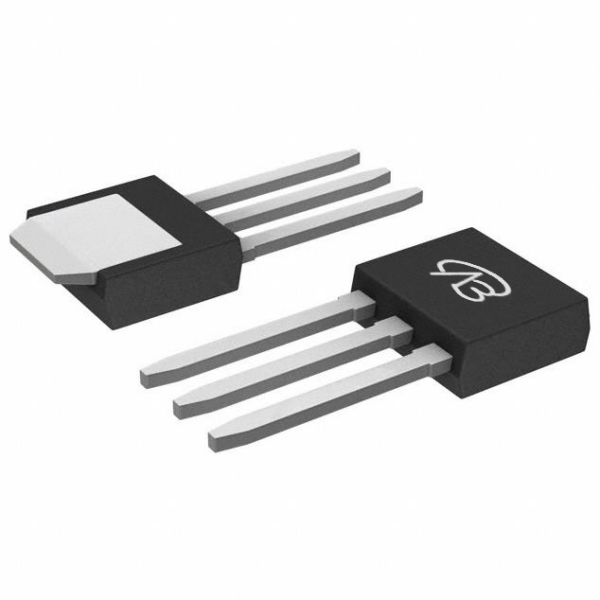
In high-voltage power conversion and switching designs, selecting a MOSFET that balances voltage rating, current capability, and switching efficiency is a critical engineering decision. This involves careful trade-offs among ruggedness, conduction loss, thermal performance, and cost. This article uses two established high-voltage MOSFETs—STU3LN62K3 and STW13N60M2 from STMicroelectronics—as benchmarks, analyzing their design focus and typical applications. It then evaluates two domestic alternative solutions, VBFB165R04 and VBP16R11S from VBsemi, providing a clear comparison to help identify the most suitable power switching solution for your next high-voltage design.
Comparative Analysis: STU3LN62K3 (N-channel) vs. VBFB165R04
Analysis of the Original Model (STU3LN62K3) Core:
This is a 620V N-channel MOSFET from STMicroelectronics in a TO-251 (IPAK) package. Its design core is to provide robust high-voltage switching in a cost-effective, compact through-hole package. Key advantages include a high drain-source voltage (Vdss) of 620V, a continuous drain current (Id) of 2.5A, and a power dissipation (Pd) of 45W. With a gate threshold voltage (Vgs(th)) of 3V, it offers standard drive compatibility.
Compatibility and Differences of the Domestic Alternative (VBFB165R04):
VBsemi's VBFB165R04 is offered in the same TO-251 package, providing a form-factor compatible alternative. The main differences are in the electrical parameters: VBFB165R04 features a slightly higher voltage rating of 650V and a higher continuous current rating of 4A. However, its on-resistance is significantly higher at 2200mΩ @ 10V compared to the original, and it has a slightly higher gate threshold of 3.5V.
Key Application Areas:
Original Model STU3LN62K3: Its combination of 620V rating and 2.5A current makes it suitable for medium-power off-line applications. Typical uses include:
Switched-Mode Power Supplies (SMPS): Primary-side switching in flyback converters for adapters, LED drivers, and auxiliary power.
Power Factor Correction (PFC): In low-to-medium power PFC stages.
Industrial controls: Relays, solenoid drivers, and other high-voltage switching circuits.
Alternative Model VBFB165R04: More suitable for applications requiring a higher voltage margin (650V) and slightly higher current capability (4A), but where higher conduction loss from its elevated RDS(on) is acceptable or manageable, such as in certain auxiliary power circuits or lighting ballasts.
Comparative Analysis: STW13N60M2 (N-channel) vs. VBP16R11S
This comparison shifts to higher-power applications. The design pursuit for the original N-channel MOSFET here is a balance of high voltage, current capability, and low conduction loss in a robust package.
Analysis of the Original Model (STW13N60M2) Core:
This MOSFET from STMicroelectronics uses the high-power TO-247 package. Its core advantages are:
Robust Power Handling: A 600V voltage rating combined with an 11A continuous drain current and 110W power dissipation makes it suitable for demanding circuits.
Low Conduction Loss: An on-resistance of 350mΩ @ 10V (at 5.5A test condition) ensures efficient power transfer in the on-state.
Proven Package: The TO-247 package offers excellent thermal performance for its power class.
The domestic alternative VBP16R11S presents itself as a highly competitive, direct-performance alternative:
It matches the TO-247 package and key ratings closely: a 600V Vdss and an 11A continuous current. Its on-resistance is comparable at 380mΩ @ 10V. It uses a Super Junction Multi-Epitaxial process, similar to the technology in many modern high-voltage MOSFETs, aiming for good switching performance and ruggedness.
Key Application Areas:
Original Model STW13N60M2: An excellent choice for higher-power offline switching applications. For example:
SMPS Primary-Side Switching: In forward, half-bridge, or LLC resonant converters for servers, telecom, and industrial power supplies.
Motor Drives: Inverter stages for driving higher-power AC motors or BLDC motors.
UPS and Inverter Systems: Power switching stages requiring 600V rating and ~10A current.
Alternative Model VBP16R11S: Serves as a strong pin-to-pin compatible alternative for the same application spaces as STW13N60M2. Its similar voltage, current, and RDS(on) ratings make it a viable substitute in designs requiring a second source or cost-optimized component, particularly in PFC circuits, motor drives, and medium-power inverters.
Summary
This analysis outlines two distinct selection scenarios for high-voltage designs:
For medium-power, cost-sensitive applications around 600V, the original model STU3LN62K3, with its 620V rating and 2.5A capability in a compact TO-251 package, is a reliable choice for primary-side switching in adapters and auxiliary power. Its domestic alternative VBFB165R04 offers a higher voltage rating (650V) and current (4A) but with significantly higher on-resistance, making it suitable for applications where voltage margin is prioritized over minimal conduction loss.
For higher-power applications demanding robust 600V/10A+ performance, the original model STW13N60M2 in a TO-247 package provides a proven balance of voltage, current, low RDS(on), and thermal capability for demanding SMPS and motor drives. The domestic alternative VBP16R11S emerges as a compelling direct pin-to-pin replacement, matching the key specifications closely and offering a viable alternative for supply chain diversification and cost optimization in the same application spaces.
The core conclusion is that selection is application-defined. In the context of supply chain resilience, domestic alternatives like VBFB165R04 and VBP16R11S provide valuable options, whether for parameter-specific upgrades (higher voltage) or as direct functional replacements. Understanding the specific voltage, current, loss, and thermal requirements of your circuit is essential to leverage the right device for optimal performance and reliability.

Download PDF document
 Download now


