 中文
中文 English
MOSFET Selection for High-Voltage Low-Current Applications: STQ2LN60K3-AP, STN1HNK60 vs. China Alternatives VBR165R01, VBJ165R01
Number of views:9999
 Back to previous page
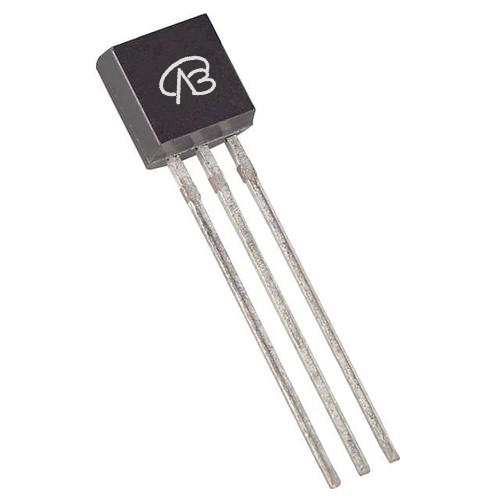
In high-voltage, low-current switching applications, selecting a MOSFET that balances voltage rating, conduction loss, and package size is a critical task for engineers. This is not merely a component substitution but a careful consideration of performance, reliability, and supply chain diversity. This article takes two representative high-voltage MOSFETs, STQ2LN60K3-AP (TO-92) and STN1HNK60 (SOT-223), as benchmarks. It delves into their design cores and application scenarios, while providing a comparative evaluation of two domestic alternative solutions, VBR165R01 and VBJ165R01. By clarifying their parameter differences and performance orientations, we aim to offer a clear selection guide to help you find the most suitable power switching solution in the complex component landscape.
Comparative Analysis: STQ2LN60K3-AP (TO-92) vs. VBR165R01
Analysis of the Original Model (STQ2LN60K3-AP) Core:
This is a 600V N-channel MOSFET from STMicroelectronics, utilizing the classic through-hole TO-92-3 package. Its design core is the improved MDmesh technology, featuring an optimized vertical structure. The key advantages are: a high voltage rating of 600V, a continuous drain current of 600mA, and a relatively low on-resistance of 4.5Ω at a 10V gate drive. It offers excellent dynamic performance and high avalanche capability, making it suitable for demanding applications.
Compatibility and Differences of the Domestic Alternative (VBR165R01):
VBsemi's VBR165R01 is also offered in a TO-92 package, providing direct pin-to-pin compatibility. The main differences lie in the electrical parameters: VBR165R01 has a higher voltage rating (650V) and a higher continuous current rating (1A). However, its on-resistance (6.667Ω @10V) is higher than that of the original model.
Key Application Areas:
Original Model STQ2LN60K3-AP: Its combination of 600V rating, 600mA current, and low RDS(on) in a TO-92 package makes it ideal for cost-sensitive, high-voltage, low-power applications. Typical uses include:
Off-line switchers for low-power AC-DC power supplies (e.g., chargers, adapters).
Snubber circuits, startup circuits, or auxiliary switches in power supplies.
High-voltage switching in industrial controls and home appliances.
Alternative Model VBR165R01: More suitable for applications requiring a higher voltage margin (650V) and slightly higher current capability (up to 1A), even with a trade-off in slightly higher conduction resistance. It's a robust alternative for designs needing extra voltage headroom.
Comparative Analysis: STN1HNK60 (SOT-223) vs. VBJ165R01
This comparison focuses on high-voltage MOSFETs in surface-mount packages, where the balance between voltage withstand, current capability, and thermal performance in a small footprint is key.
Analysis of the Original Model (STN1HNK60) Core:
This is a 600V N-channel MOSFET from ST in a compact SOT-223 surface-mount package. Its core advantages are:
High-Voltage Operation: A 600V drain-source voltage rating suitable for off-line applications.
Compact Power Package: The SOT-223 offers a good compromise between size and power handling/thermal performance compared to smaller SMD packages.
Balanced Parameters: With a continuous current of 400mA and an on-resistance of 8.5Ω @10V, it is designed for efficient switching in space-constrained, medium-power high-voltage circuits.
The domestic alternative VBJ165R01 presents a "parameter-enhanced" option: It uses a compatible SOT-223 package but offers significantly improved key specifications: a higher voltage rating of 650V, double the continuous current at 1A, and a lower on-resistance of 8Ω @10V (and 10Ω @4.5V). This translates to potentially lower conduction losses and higher current capability in a similar footprint.
Key Application Areas:
Original Model STN1HNK60: Its 600V rating and SOT-223 package make it a reliable choice for space-constrained, high-voltage, low-to-medium current switching. For example:
Compact AC-DC power modules and auxiliary power supplies.
Switching in power factor correction (PFC) stages for low-power systems.
High-voltage side switching in LED drivers.
Alternative Model VBJ165R01: Is better suited for upgraded scenarios demanding higher voltage margin (650V), higher current (1A), and lower conduction loss. It's an excellent choice for next-generation designs requiring increased power density and efficiency in a compact SMD format.
Conclusion
In summary, this comparative analysis reveals two distinct selection paths for high-voltage, low-current applications:
For through-hole (TO-92) applications, the original model STQ2LN60K3-AP, with its 600V rating, 600mA current, and low 4.5Ω RDS(on), demonstrates strong performance in cost-sensitive, high-voltage designs. Its domestic alternative VBR165R01 offers pin compatibility with higher voltage (650V) and current (1A) ratings, making it a suitable choice for designs prioritizing voltage headroom and current margin over minimal on-resistance.
For surface-mount (SOT-223) applications, the original model STN1HNK60 provides a proven 600V, 400mA solution in a compact power package. The domestic alternative VBJ165R01 delivers clear "performance enhancement" with its 650V rating, 1A current, and lower 8Ω RDS(on), making it a compelling upgrade for designs seeking higher efficiency and power capability in the same board space.
The core conclusion is: Selection hinges on precise requirement matching. In the context of supply chain diversification, domestic alternatives like VBR165R01 and VBJ165R01 not only provide viable backup options but also offer parameter advantages in key areas, giving engineers greater flexibility and resilience in design trade-offs and cost control. Understanding the design philosophy and parameter implications of each device is essential to maximize its value in the circuit.

Download PDF document
 Download now
Next chapter:STS14N3LLH5 vs. VBA1311


