 中文
中文 English
MOSFET Selection for High-Voltage and Compact Power Applications: STP7N52K3, STL6N2VH5 vs. China Alternatives VBM15R13, VBQG7322
Number of views:9999
 Back to previous page
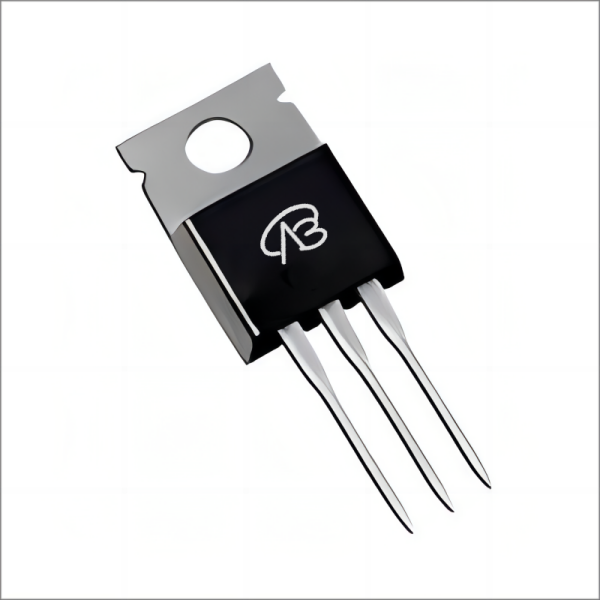
In power design, balancing high-voltage handling, efficient switching, and space constraints is a key challenge. This article uses two representative MOSFETs, STP7N52K3 (high-voltage N-channel) and STL6N2VH5 (low-voltage N-channel), as benchmarks. We analyze their design cores and application scenarios, and evaluate the domestic alternative solutions VBM15R13 and VBQG7322. By clarifying parameter differences and performance orientations, we provide a clear selection map to help you find the optimal power switching solution.
Comparative Analysis: STP7N52K3 (N-channel) vs. VBM15R13
Analysis of the Original Model (STP7N52K3) Core:
This is a 525V N-channel MOSFET from STMicroelectronics in a TO-220 package. Its design core is robust high-voltage switching. Key advantages are: a high drain-source voltage rating of 525V, continuous drain current of 6A, and an on-resistance of 720mΩ at 10V gate drive. It suits applications requiring high voltage blocking.
Compatibility and Differences of the Domestic Alternative (VBM15R13):
VBsemi's VBM15R13 is a pin-to-pin compatible alternative in a TO-220 package. The main differences are: a slightly lower voltage rating (500V vs. 525V), but a significantly higher continuous current (13A vs. 6A) and a lower on-resistance (660mΩ@10V vs. 720mΩ@10V). This offers improved current handling and conduction loss.
Key Application Areas:
Original Model STP7N52K3: Ideal for high-voltage, medium-current switching. Typical applications include offline SMPS (e.g., flyback converters), power factor correction (PFC) stages, and industrial controls within its voltage/current limits.
Alternative Model VBM15R13: Better suited for applications needing similar high-voltage capability but higher current capacity (up to 13A) and lower conduction loss, such as upgraded SMPS designs or motor drives requiring 500V rating.
Comparative Analysis: STL6N2VH5 (N-channel) vs. VBQG7322
This comparison focuses on low-voltage, high-efficiency switching in minimal space.
Analysis of the Original Model (STL6N2VH5) Core:
This is a 20V N-channel MOSFET from ST in a compact PowerFLAT 2x2 package. Its core advantages are:
Low On-Resistance: 40mΩ at 2.5V gate drive, enabling efficient power handling.
Good Current Capacity: 6A continuous drain current.
Compact Package: The PowerFLAT 2x2 is designed for space-constrained, high-density PCB designs.
Compatibility and Differences of the Domestic Alternative (VBQG7322):
VBsemi's VBQG7322 is a compatible alternative in a DFN6(2x2) package. It offers a performance enhancement: a higher voltage rating (30V vs. 20V), similar current (6A), and significantly lower on-resistance (27mΩ@4.5V, 23mΩ@10V vs. 40mΩ@2.5V). This means better efficiency, lower heat generation, and a wider safe operating area.
Key Application Areas:
Original Model STL6N2VH5: Excellent for space-constrained, efficiency-critical 12V-20V systems. Typical uses include load switches, battery management, and point-of-load (POL) converters in portable devices, laptops, and IoT.
Alternative Model VBQG7322: Ideal for upgraded designs requiring higher voltage margin (up to 30V), superior efficiency from lower RDS(on), and compact footprint. Suitable for advanced battery-powered devices, high-density DC-DC conversion, and motor drives in low-voltage systems.
Summary
This analysis reveals two selection paths:
1. For high-voltage (500V+) applications, the original STP7N52K3 offers a 525V rating for robust blocking. Its alternative VBM15R13 provides a compelling upgrade with higher current (13A) and lower on-resistance at a slightly reduced voltage (500V), ideal for efficiency-focused redesigns.
2. For low-voltage, compact applications, the original STL6N2VH5 delivers good performance in a tiny PowerFLAT package. Its alternative VBQG7322 stands out as a superior performer with higher voltage rating (30V), much lower on-resistance, and similar compact size, enabling next-generation power density and efficiency.
Core Conclusion: Selection depends on precise requirement matching. Domestic alternatives like VBM15R13 and VBQG7322 provide not just backup options but also performance enhancements in key areas—higher current, lower RDS(on), and sometimes higher voltage—offering engineers greater flexibility in design trade-offs, cost control, and supply chain resilience. Understanding each device's parameters is key to maximizing circuit performance.

Download PDF document
 Download now


