 中文
中文 English
MOSFET Selection for High-Voltage and Low-Voltage Switching: STP4N80K5, STN4NF03L vs. China Alternatives VBM18R05S, VBJ1322
Number of views:9999
 Back to previous page
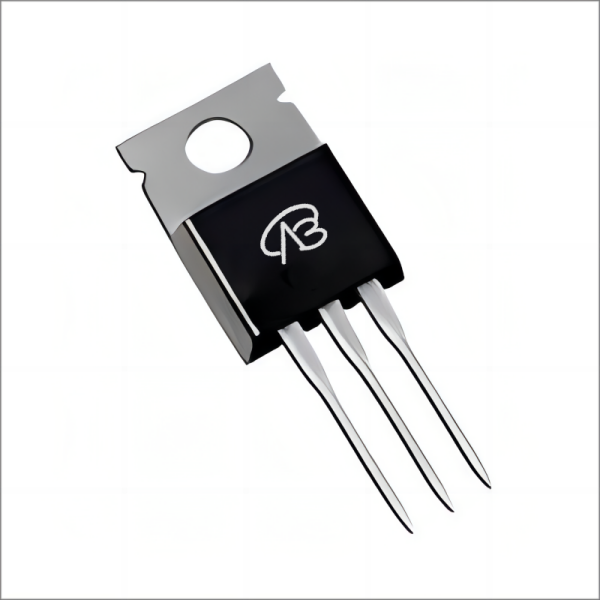
In power design, balancing high-voltage blocking capability with efficient low-voltage switching is a common challenge. Selecting the right MOSFET requires careful consideration of voltage rating, current handling, conduction loss, and package constraints. This article takes two representative MOSFETs from STMicroelectronics—the high-voltage STP4N80K5 (N-channel) and the low-voltage STN4NF03L (N-channel)—as benchmarks. We will delve into their design cores and application scenarios, and provide a comparative evaluation of two domestic alternative solutions: VBM18R05S and VBJ1322. By clarifying parameter differences and performance orientations, this analysis aims to offer a clear selection map to help you identify the most suitable power switching solution for your next design.
Comparative Analysis: STP4N80K5 (High-Voltage N-channel) vs. VBM18R05S
Analysis of the Original Model (STP4N80K5) Core:
This is an 800V N-channel MOSFET from STMicroelectronics, utilizing the standard through-hole TO-220 package. Its design core is to provide robust high-voltage switching capability with good power dissipation. Key advantages include a high drain-source voltage (Vdss) of 800V, a continuous drain current (Id) of 3A, and a typical on-resistance (RDS(on)) of 2.1Ω. Its 60W power dissipation rating makes it suitable for linear or switching applications requiring significant thermal headroom.
Compatibility and Differences of the Domestic Alternative (VBM18R05S):
VBsemi's VBM18R05S is a direct pin-to-pin compatible alternative in the TO-220 package. The main differences lie in the electrical parameters: VBM18R05S matches the 800V voltage rating but offers a slightly higher continuous current of 5A. Crucially, its on-resistance is significantly lower at 1.3Ω (measured at 10V gate drive), compared to the original's 2.5Ω. This indicates potentially lower conduction losses. It utilizes a Super Junction Multi-EPI process.
Key Application Areas:
Original Model STP4N80K5: Its high voltage rating and TO-220 package make it suitable for offline power supplies, power factor correction (PFC) stages, and other mains-derived circuits (e.g., 110VAC/220VAC input). Typical applications include:
Switched-Mode Power Supply (SMPS) primary-side switches.
Lighting ballasts and electronic transformer circuits.
Low-to-medium power offline converters requiring 800V withstand capability.
Alternative Model VBM18R05S: With its lower on-resistance and higher current rating, it is well-suited for enhanced-efficiency versions of the above applications. It can be a drop-in upgrade for designs where reduced conduction loss and higher current capacity are desired within the same 800V/TO-220 footprint, potentially allowing for cooler operation or higher output power.
Comparative Analysis: STN4NF03L (Low-Voltage N-channel) vs. VBJ1322
This comparison shifts focus to low-voltage, high-efficiency switching applications. The design pursuit for this category is minimizing conduction and switching losses in compact spaces.
Analysis of the Original Model (STN4NF03L) Core:
This is a 30V N-channel MOSFET from STMicroelectronics in a space-saving SOT-223 surface-mount package. Its core advantages are:
Good Conduction Performance: It features a low on-resistance of 50mΩ (at 10V gate drive, 2A) and can handle a continuous current of 6.5A.
Compact Power Package: The SOT-223 offers a good compromise between footprint, power handling, and thermal performance for board-space-constrained designs.
Compatibility and Differences of the Domestic Alternative (VBJ1322):
VBsemi's VBJ1322 is a compatible alternative in the SOT-223 package and represents a significant "performance-enhanced" choice. It matches the 30V voltage rating but offers superior key parameters: a higher continuous current of 7A and a drastically lower on-resistance of 19mΩ (at 10V gate drive). This translates to substantially lower conduction losses and higher efficiency.
Key Application Areas:
Original Model STN4NF03L: Its combination of low RDS(on), moderate current rating, and compact package makes it ideal for power management in low-voltage systems. Typical applications include:
Load switches and power distribution in 12V/24V systems.
DC-DC converter synchronous rectification (low-side switch).
Motor drive for small fans, pumps, or other peripherals.
Battery management system (BMS) discharge control.
Alternative Model VBJ1322: With its superior current capability (7A) and remarkably low on-resistance (19mΩ), it is an excellent choice for upgraded scenarios demanding higher efficiency, higher power density, or lower thermal stress. It is perfectly suited for next-generation designs in the same application spaces where maximizing performance within the SOT-223 footprint is critical.
Conclusion
In summary, this comparative analysis reveals two distinct selection paths based on voltage requirements:
For high-voltage (800V) switching applications using the TO-220 package, the original STP4N80K5 provides reliable 800V/3A capability. Its domestic alternative VBM18R05S offers a compelling upgrade path with a higher current rating (5A) and significantly lower on-resistance (1.3Ω vs. 2.5Ω), enabling higher efficiency and potentially greater output power in compatible designs.
For low-voltage (30V) switching applications where space and efficiency are paramount, the original STN4NF03L in SOT-223 is a solid choice. Its domestic alternative VBJ1322 delivers a substantial performance boost with higher current (7A) and dramatically lower on-resistance (19mΩ vs. 50mΩ), making it an ideal candidate for enhancing the power density and efficiency of new designs or direct replacements.
The core conclusion is that selection hinges on precise requirement matching. In the context of supply chain diversification, these domestic alternative models not only provide viable backup options but also offer performance advantages in key parameters. This gives engineers greater flexibility and resilience in making design trade-offs and managing cost, provided the design philosophy and parameter implications of each device are thoroughly understood to unlock its full potential in the circuit.

Download PDF document
 Download now


