 中文
中文 English
MOSFET Selection for High-Power & Automotive Applications: STP33N60DM6, STB80N4F6AG vs. China Alternatives VBM165R25S, VBL1405
Number of views:9999
 Back to previous page
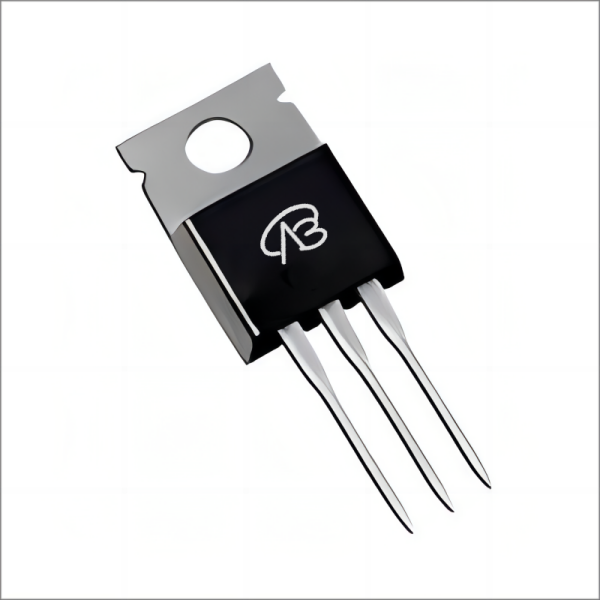
In the design of high-power and automotive-grade systems, selecting a MOSFET that balances high voltage, high current, low loss, and reliability is a critical challenge for engineers. This goes beyond simple part substitution; it requires a precise trade-off among performance, ruggedness, cost, and supply chain security. This article takes two highly representative MOSFETs—STP33N60DM6 (High-Voltage N-channel) and STB80N4F6AG (Automotive-Grade N-channel)—as benchmarks. It delves into their design cores and application scenarios, while providing a comparative evaluation of two domestic alternative solutions: VBM165R25S and VBL1405. By clarifying their parameter differences and performance orientations, we aim to provide a clear selection roadmap to help you find the most suitable power switching solution in the complex world of components.
Comparative Analysis: STP33N60DM6 (High-Voltage N-channel) vs. VBM165R25S
Analysis of the Original Model (STP33N60DM6) Core:
This is a 600V N-channel MOSFET from STMicroelectronics, utilizing the classic TO-220 package. Its design core is to achieve efficient power switching and control in high-voltage applications. Key advantages include: a high drain-source voltage (Vdss) of 600V, a continuous drain current (Id) of 25A, and a typical on-resistance (RDS(on)) of 115mΩ. It features ST's MDmesh DM6 technology, which offers a good balance between low conduction loss and fast switching performance, making it suitable for various off-line power applications.
Compatibility and Differences of the Domestic Alternative (VBM165R25S):
VBsemi's VBM165R25S is a direct pin-to-pin compatible alternative in a TO-220 package. The main differences and enhancements in electrical parameters are: a slightly higher voltage rating (650V vs. 600V), the same continuous current rating of 25A, and a comparable typical on-resistance of 115mΩ (@10V). It utilizes a Super Junction Multi-EPI process, aiming to provide similar or potentially improved switching performance and ruggedness.
Key Application Areas:
Original Model STP33N60DM6: Its high voltage and robust current handling make it ideal for mains-powered applications.
Switch Mode Power Supplies (SMPS): Used in PFC stages, flyback, or forward converters.
Motor Drives: Controlling motors in industrial appliances, fans, and pumps.
Lighting: High-power LED driving and HID ballast circuits.
Alternative Model VBM165R25S: Perfectly suited as a high-reliability, cost-effective drop-in replacement for the STP33N60DM6 in the above 600V-650V high-voltage applications, offering supply chain diversification without compromising performance.
Comparative Analysis: STB80N4F6AG (Automotive N-channel) vs. VBL1405
This comparison focuses on high-current, low-voltage switching crucial for automotive and industrial power systems, where the design pursuit is "ultra-low resistance and high current capability."
Analysis of the Original Model (STB80N4F6AG) Core:
This automotive-grade N-channel MOSFET from STMicroelectronics in a D2PAK package is designed for demanding environments. Its core advantages are:
Exceptional Current Handling: A very high continuous drain current of 80A at 40V Vdss.
Minimized Conduction Loss: An extremely low on-resistance of 5.5mΩ typical (6mΩ @10V), significantly reducing power loss in the on-state.
Automotive Ruggedness: Qualified for automotive applications, ensuring high reliability under stringent operating conditions.
The domestic alternative VBL1405 is a "performance-matched and enhanced" choice: It matches or exceeds key parameters: the same 40V voltage rating, a higher continuous current of 100A, and an even lower on-resistance of 5mΩ (@10V). This translates to potentially lower conduction losses and higher efficiency in high-current paths. It comes in a TO-263 (D2PAK compatible) package.
Key Application Areas:
Original Model STB80N4F6AG: Its ultra-low RDS(on) and high current rating make it a top choice for automotive and high-efficiency power stages.
Automotive Systems: DC-DC converters, battery management systems (BMS), motor control (e.g., fans, pumps), and solenoid driving.
High-Current DC-DC Conversion: Synchronous rectification in buck/boost converters for servers, telecom, and industrial equipment.
Power Distribution & Switching: Load switches and OR-ing circuits in high-availability systems.
Alternative Model VBL1405: An excellent alternative or upgrade for applications requiring the highest current capability and lowest possible conduction loss within the 40V range. It is particularly suitable for next-generation designs where efficiency and power density are paramount.
Summary
This comparative analysis reveals two clear and practical selection paths:
For high-voltage (600V) applications such as offline SMPS and motor drives, the original STP33N60DM6, with its proven MDmesh DM6 technology and 25A capability, offers a reliable solution. Its domestic alternative VBM165R25S provides a fully pin-to-pin compatible, electrically equivalent (or slightly superior in voltage) replacement, ensuring design continuity and supply chain resilience.
For high-current, low-voltage (40V) automotive and power conversion applications, the original STB80N4F6AG sets a high standard with its 80A rating and ultra-low 5.5mΩ RDS(on). The domestic alternative VBL1405 emerges as a powerful contender, offering a significant boost in current handling (100A) and a marginal improvement in on-resistance (5mΩ), making it an attractive option for performance-driven upgrades or new designs.
The core conclusion is: Selection is not about absolute superiority but about precise requirement matching. In the context of supply chain diversification, domestic alternatives like VBM165R25S and VBL1405 not only provide reliable, high-performance backup options but also demonstrate competitive advantages in specific parameters. They offer engineers greater flexibility and resilience in design trade-offs and cost optimization. Understanding the design philosophy and parameter implications of each device is key to unlocking its full potential in your circuit.

Download PDF document
 Download now


