 中文
中文 English
MOSFET Selection for High-Power & Medium-Voltage Applications: STP25N60M2-EP, STP95N4F3 vs. China Alternatives VBM16R20S, VBM1405
Number of views:9999
 Back to previous page
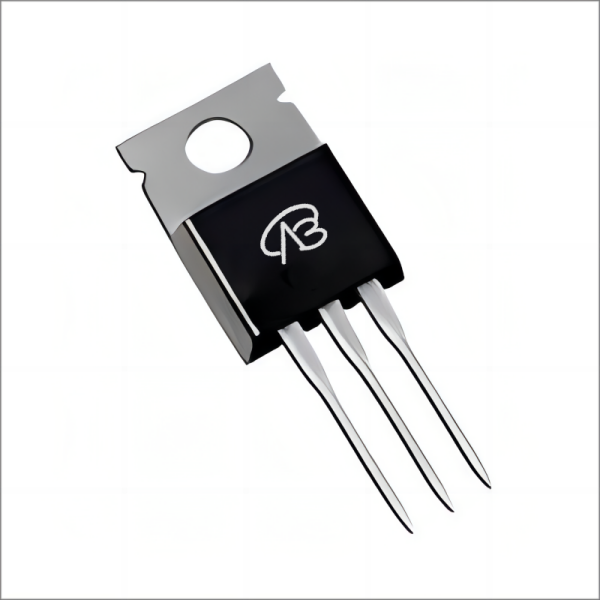
In the design of power systems, selecting a MOSFET that balances high voltage, high current, and robust performance is a critical task for engineers. This goes beyond simple part substitution; it involves careful trade-offs among voltage rating, conduction loss, current handling, and thermal management. This article uses two representative MOSFETs from STMicroelectronics—STP25N60M2-EP (high-voltage) and STP95N4F3 (medium-voltage/high-current)—as benchmarks. We will analyze their design cores and application scenarios, and evaluate two domestic alternative solutions: VBM16R20S and VBM1405. By clarifying parameter differences and performance orientations, we aim to provide a clear selection map to help you find the optimal power switching solution.
Comparative Analysis: STP25N60M2-EP (600V N-channel) vs. VBM16R20S
Analysis of the Original Model (STP25N60M2-EP) Core:
This is a 600V N-channel MOSFET from STMicroelectronics, featuring the MDmesh M2 EP technology in a TO-220 package. Its design core is to provide reliable high-voltage switching with good efficiency. Key advantages include a high drain-source voltage (Vdss) of 600V, a continuous drain current (Id) of 18A, and a typical on-resistance (RDS(on)) of 175mΩ (188mΩ @10V per datasheet). The EP (Enhanced Performance) technology offers improved switching characteristics and robustness.
Compatibility and Differences of the Domestic Alternative (VBM16R20S):
VBsemi's VBM16R20S is a direct pin-to-pin compatible alternative in a TO-220 package. The main differences lie in the electrical parameters: VBM16R20S offers a similar 600V voltage rating but features a lower on-resistance of 160mΩ @10V and a higher continuous current rating of 20A. This indicates potentially lower conduction losses and higher current handling capability compared to the original model.
Key Application Areas:
Original Model STP25N60M2-EP: Its high-voltage capability makes it suitable for off-line power supplies, power factor correction (PFC) stages, and motor drives in industrial and appliance applications where 600V breakdown is required.
Alternative Model VBM16R20S: With its lower RDS(on) and higher current rating, it is well-suited for enhanced-efficiency upgrades in similar high-voltage applications such as SMPS, inverters, and industrial controls, offering potential performance gains.
Comparative Analysis: STP95N4F3 (40V N-channel) vs. VBM1405
This comparison shifts focus to medium-voltage, very high-current applications where ultra-low on-resistance is paramount.
Analysis of the Original Model (STP95N4F3) Core:
This STripFET™ III N-channel MOSFET from ST is designed for high-current, low-loss switching. Its core advantages are:
Exceptional Current Handling: A continuous drain current (Id) of 80A.
Very Low Conduction Loss: An ultra-low on-resistance of 6.2mΩ @10V.
Robust Package: The TO-220 package supports a high power dissipation (Pd) of 110W, ensuring good thermal performance in demanding circuits.
Compatibility and Differences of the Domestic Alternative (VBM1405):
VBsemi's VBM1405 is a performance-enhanced, pin-to-pin compatible alternative. It achieves significant improvements in key parameters: a higher continuous current rating of 110A and an even lower on-resistance of 6mΩ @10V (and 7mΩ @4.5V). This represents a substantial upgrade in current capability and conduction loss performance.
Key Application Areas:
Original Model STP95N4F3: Its combination of very low RDS(on) and high current makes it ideal for high-efficiency DC-DC converters (synchronous rectification in low-voltage, high-current rails), motor drives (for brushed/brushless DC motors), and power distribution switches in servers, automotive, or industrial equipment.
Alternative Model VBM1405: With its superior current (110A) and slightly lower RDS(on), it is an excellent choice for next-generation designs or upgrades requiring maximum efficiency and power density in applications like high-current VRMs, advanced motor controllers, and heavy-duty power switches.
Summary and Selection Paths:
This analysis reveals two distinct selection paths based on voltage and current needs:
1. For 600V High-Voltage Applications: The original STP25N60M2-EP provides reliable 600V/18A performance. Its domestic alternative, VBM16R20S, offers a compelling upgrade with lower on-resistance (160mΩ vs. 188mΩ) and higher current rating (20A vs. 18A), making it a strong candidate for efficiency-focused designs in SMPS and industrial power systems.
2. For 40V Very High-Current Applications: The original STP95N4F3 sets a high standard with 80A current and 6.2mΩ RDS(on). The domestic alternative VBM1405 pushes the boundaries further with 110A current and 6mΩ RDS(on), representing a significant "performance-enhanced" option for the most demanding high-current, low-voltage switching applications.
Core Conclusion: Selection is not about absolute superiority but precise requirement matching. In the context of supply chain diversification, domestic alternatives like VBM16R20S and VBM1405 not only provide reliable backup options but also deliver parameter advancements—offering engineers greater flexibility in design trade-offs, performance optimization, and cost control. Understanding the design philosophy and parameter implications of each device is key to maximizing its value in your circuit.

Download PDF document
 Download now


