 中文
中文 English
MOSFET Selection for High-Voltage Power Applications: STP24NM60N, STW12NK80Z vs. China Alternatives VBM165R20S and VBP18R11S
Number of views:9999
 Back to previous page
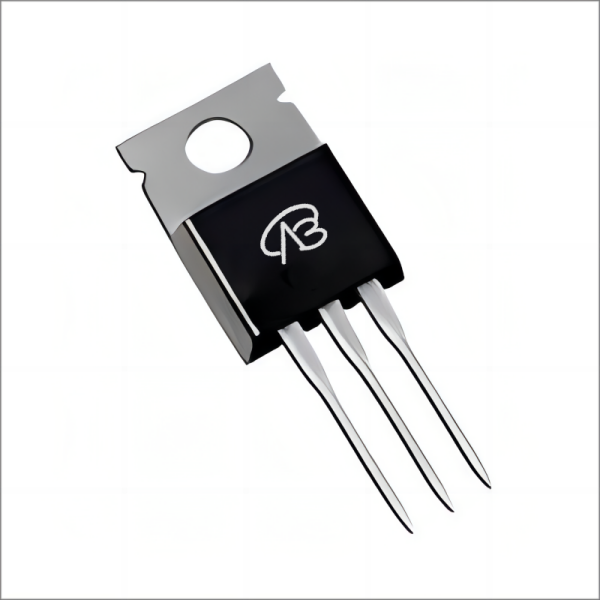
In the design of high-voltage and high-efficiency power systems, selecting the right MOSFET is a critical challenge that balances performance, reliability, and cost. This article takes two established high-voltage MOSFETs—STP24NM60N (600V) and STW12NK80Z (800V)—as benchmarks, analyzes their design cores and typical applications, and evaluates their Chinese alternative solutions, VBM165R20S and VBP18R11S. By comparing key parameters and performance orientations, we provide a clear selection guide to help you find the optimal power switching solution in your next high-voltage design.
Comparative Analysis: STP24NM60N (600V N-channel) vs. VBM165R20S
Analysis of the Original Model (STP24NM60N) Core:
This is a 600V N-channel MOSFET from STMicroelectronics, utilizing the second-generation MDmesh™ technology in a TO-220 package. Its design core focuses on achieving high efficiency in demanding converters by combining a vertical structure with a strip layout, resulting in very low on-resistance and gate charge. Key advantages include: a drain-source voltage (Vdss) of 600V, a continuous drain current (Id) of 17A, and an on-resistance (RDS(on)) of 168mΩ at 10V, 8A.
Compatibility and Differences of the Domestic Alternative (VBM165R20S):
VBsemi's VBM165R20S is offered in a TO-220 package and serves as a pin-to-pin compatible alternative. The main differences are in electrical parameters: VBM165R20S features a higher voltage rating (650V) and a slightly higher continuous current (20A) compared to the original. Its on-resistance is specified at 160mΩ at 10V, which is marginally lower, potentially offering slightly reduced conduction losses.
Key Application Areas:
Original Model STP24NM60N: Its characteristics make it well-suited for high-efficiency converters requiring robust 600V switching. Typical applications include:
Switch-Mode Power Supplies (SMPS): Such as PFC stages, flyback, or forward converters.
Motor Drives: Inverter stages for industrial motor control.
Lighting: High-voltage ballasts and LED drivers.
Alternative Model VBM165R20S: Suitable for applications requiring a higher voltage margin (650V) and potentially lower conduction loss, such as upgraded or more demanding SMPS and motor drive designs.
Comparative Analysis: STW12NK80Z (800V N-channel) vs. VBP18R11S
This comparison shifts to higher voltage applications, where the design pursuit is reliable high-voltage blocking capability with manageable conduction loss.
Analysis of the Original Model (STW12NK80Z) Core:
This 800V N-channel MOSFET from STMicroelectronics comes in a TO-247 package. Its core advantages are:
High Voltage Capability: A drain-source voltage (Vdss) of 800V, suitable for off-line applications.
Balanced Performance: A continuous drain current (Id) of 10.5A and an on-resistance (RDS(on)) of 750mΩ at 10V.
Robust Package: The TO-247 package provides good thermal performance for power dissipation.
Compatibility and Differences of the Domestic Alternative (VBP18R11S):
VBsemi's VBP18R11S, also in a TO-247 package, presents a performance-enhanced alternative. It matches the 800V voltage rating but offers improved key parameters: a higher continuous current of 11A and a significantly lower on-resistance of 500mΩ at 10V. This translates to potentially lower conduction losses and higher efficiency in operation.
Key Application Areas:
Original Model STW12NK80Z: Its 800V rating makes it a solid choice for offline power applications. Typical uses include:
Off-line SMPS: For appliances, industrial power, and telecom systems.
Power Factor Correction (PFC): In stages requiring 800V-rated devices.
Solar Inverters: In DC-AC conversion stages.
Alternative Model VBP18R11S: More suitable for applications where enhanced efficiency and current capability are desired within the same 800V class, such as next-generation SMPS, high-performance PFC circuits, or solar inverters demanding lower losses.
Conclusion
In summary, this analysis reveals two distinct selection paths for high-voltage applications:
For 600V-class applications like SMPS and motor drives, the original STP24NM60N, with its proven MDmesh™ technology offering 168mΩ RDS(on) and 17A current, remains a reliable choice for high-efficiency converters. Its domestic alternative VBM165R20S provides a compatible option with a higher voltage rating (650V) and marginally better on-resistance (160mΩ), suitable for designs seeking a performance or voltage margin upgrade.
For 800V-class offline applications, the original STW12NK80Z, with its 800V rating and 750mΩ RDS(on), is a established solution for SMPS and PFC. The domestic alternative VBP18R11S offers significant "performance enhancement" with a much lower on-resistance of 500mΩ and a slightly higher current rating (11A), making it an attractive option for designs prioritizing higher efficiency and power density.
The core conclusion is that selection depends on precise requirement matching. In the context of supply chain diversification, domestic alternatives like VBM165R20S and VBP18R11S not only provide viable backup options but also demonstrate competitive or superior parameters in key areas, offering engineers greater flexibility in design trade-offs and cost control. Understanding the design philosophy and parameter implications of each device is essential to maximize its value in the circuit.

Download PDF document
 Download now


