 中文
中文 English
MOSFET Selection for High-Performance Power Switching: STP24NF10, STL120N8F7 vs. China Alternatives VBM1101M, VBGQA1805
Number of views:9999
 Back to previous page
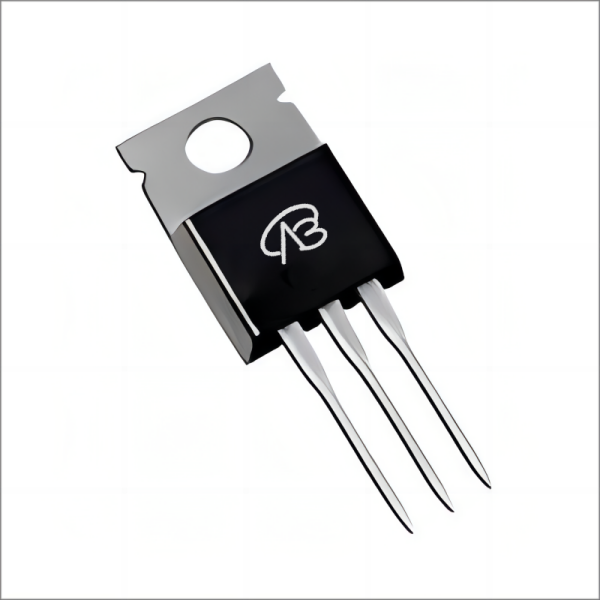
In the design of high-performance power systems, selecting the right MOSFET is a critical decision that balances voltage rating, current handling, switching efficiency, and thermal management. This is not a simple component substitution but a strategic choice based on detailed parametric analysis and application understanding. This article takes two representative MOSFETs from STMicroelectronics—the STP24NF10 (TO-220) and the STL120N8F7 (PowerFLAT)—as benchmarks. We will delve into their design cores, key applications, and perform a comparative evaluation with their domestic alternative counterparts, VBM1101M and VBGQA1805. By clarifying their parameter differences and performance orientations, we aim to provide a clear selection guide for engineers navigating the complex landscape of power switching components.
Comparative Analysis: STP24NF10 (N-channel, TO-220) vs. VBM1101M
Analysis of the Original Model (STP24NF10) Core:
This is a 100V N-channel MOSFET from STMicroelectronics, utilizing the robust TO-220 package. Its design core, based on the unique STripFET process, focuses on minimizing input capacitance and gate charge. This makes it particularly suitable for applications where driving losses are a concern. Key advantages include a drain-source voltage (Vdss) of 100V, a continuous drain current (Id) of 26A, and an on-resistance (RDS(on)) of 60mΩ at 10V gate drive.
Compatibility and Differences of the Domestic Alternative (VBM1101M):
VBsemi's VBM1101M is also offered in a TO-220 package, providing direct form-factor compatibility. The primary differences are in electrical parameters: while it matches the 100V voltage rating, its continuous current rating is lower at 18A, and its on-resistance is higher at 127mΩ (at 10V). Its gate threshold voltage is 1.8V, and it utilizes a Trench technology process.
Key Application Areas:
Original Model STP24NF10: Its combination of 100V rating, 26A current capability, and low gate charge makes it ideal for primary switching in advanced, high-efficiency isolated DC-DC converters for telecommunications and computing equipment, as well as other applications with moderate power and switching frequency demands.
Alternative Model VBM1101M: This alternative is more suitable for applications where the 100V voltage rating is required, but the current demand is lower (within 18A), and where the higher on-resistance can be tolerated within the system's loss budget. It serves as a viable pin-compatible option for cost-sensitive or supply-chain-resilient designs.
Comparative Analysis: STL120N8F7 (N-channel, PowerFLAT) vs. VBGQA1805
This comparison shifts focus to high-current, low-loss applications in a compact footprint. The design pursuit here is maximizing current density and minimizing conduction losses.
Analysis of the Original Model (STL120N8F7) Core:
This N-channel MOSFET from ST features an advanced STripFET F7 process and comes in a space-saving VDFN-8 (PowerFLAT 5x6) package. Its core advantages are exceptional:
Very High Current Capability: A continuous drain current (Id) of 120A at 80V Vdss.
Extremely Low On-Resistance: An RDS(on) as low as 4.8mΩ at 10V gate drive, minimizing conduction losses.
Advanced Packaging: The PowerFLAT package offers an excellent thermal resistance to size ratio for high-power dissipation in a small area.
Compatibility and Differences of the Domestic Alternative (VBGQA1805):
VBsemi's VBGQA1805 uses a compatible DFN8(5x6) package. It presents a compelling "performance-enhanced" alternative in several key aspects: it offers a similar voltage rating (85V vs. 80V), a very high continuous current of 80A, and boasts an exceptionally low on-resistance of 4.5mΩ at 10V (and 12mΩ at 4.5V). It employs SGT (Shielded Gate Trench) technology.
Key Application Areas:
Original Model STL120N8F7: Its ultra-low RDS(on) and massive 120A current rating make it a top-tier choice for high-current DC-DC converters (e.g., VRM, POL), motor drives, and power distribution systems where efficiency and power density in a compact form factor are paramount.
Alternative Model VBGQA1805: This model is highly suitable for upgrade or new designs requiring excellent low on-resistance (4.5mΩ) and high current (80A) capability in a compact package. It is an excellent candidate for high-efficiency synchronous rectification, high-power motor control, and other applications demanding low conduction losses.
Conclusion
In summary, this analysis reveals two distinct selection pathways based on application priorities:
For 100V-rated, medium-power switching applications where the TO-220 package is suitable, the original STP24NF10, with its balanced 26A current and optimized gate charge, is a strong choice for efficient primary switching in DC-DC converters. Its domestic alternative, VBM1101M, provides a form-factor compatible option with a lower current rating, suitable for designs where cost and supply chain are primary considerations.
For high-current, low-voltage-drop applications demanding a compact footprint, the original STL120N8F7 sets a high benchmark with its 120A capability and 4.8mΩ RDS(on). The domestic alternative VBGQA1805 emerges as a powerful contender, offering a very competitive 80A current and an even lower 4.5mΩ on-resistance, making it an attractive option for designs prioritizing minimal conduction loss and high efficiency.
The core takeaway is that selection is driven by precise requirement matching. In the context of supply chain diversification, domestic alternatives like VBM1101M and VBGQA1805 not only provide viable backup options but also offer compelling performance in specific parameters, giving engineers greater flexibility and resilience in their design trade-offs and cost optimization strategies. A deep understanding of each device's specifications and intended application is key to unlocking its full potential in your circuit.

Download PDF document
 Download now


