 中文
中文 English
MOSFET Selection for High-Power & Automotive Applications: STP20N95K5, STD170N4F7AG vs. China Alternatives VBM19R20S, VBE1402
Number of views:9999
 Back to previous page
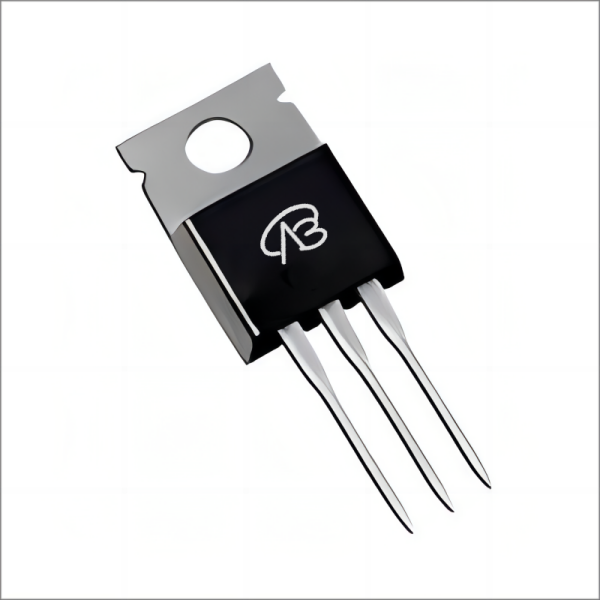
In high-power switching and demanding automotive electronics, selecting a MOSFET that balances high voltage, high current, low loss, and reliability is a critical engineering challenge. This goes beyond simple part substitution, requiring a precise trade-off among performance, ruggedness, cost, and supply chain security. This article uses two highly representative MOSFETs, STP20N95K5 (High-Voltage N-channel) and STD170N4F7AG (Automotive-Grade N-channel), as benchmarks. We will deeply analyze their design cores and application scenarios, and comparatively evaluate the two domestic alternative solutions, VBM19R20S and VBE1402. By clarifying their parameter differences and performance orientations, we aim to provide a clear selection map to help you find the optimal power switching solution for your next high-performance design.
Comparative Analysis: STP20N95K5 (High-Voltage N-channel) vs. VBM19R20S
Analysis of the Original Model (STP20N95K5) Core:
This is a 950V N-channel MOSFET from STMicroelectronics, utilizing the robust TO-220 package. Its design core is to provide high-voltage blocking capability and reliable power switching in applications like SMPS. Key advantages are: a high drain-source voltage (Vdss) of 950V, a continuous drain current (Id) of 17.5A, and an on-resistance (RDS(on)) of 330mΩ @10V. It features ST's MDmesh K5 technology, optimized for low gate charge and reduced switching losses in high-voltage scenarios.
Compatibility and Differences of the Domestic Alternative (VBM19R20S):
VBsemi's VBM19R20S is offered in a TO-220 package, providing direct form-factor compatibility. The key differences lie in the electrical parameters: VBM19R20S has a slightly lower voltage rating (900V) but offers improved conduction performance with a lower on-resistance of 270mΩ @10V and a higher continuous current rating of 20A. This indicates a potential for lower conduction loss and higher current handling in similar voltage class applications.
Key Application Areas:
Original Model STP20N95K5: Its high voltage rating makes it suitable for the primary side of offline switch-mode power supplies (SMPS), power factor correction (PFC) stages, and industrial motor drives operating around 600-800V DC link voltages.
Alternative Model VBM19R20S: With its lower RDS(on) and higher current rating, it is well-suited for high-efficiency upgrades or new designs in SMPS, UPS systems, and industrial controls where 900V blocking is sufficient, offering potential efficiency gains and higher power density.
Comparative Analysis: STD170N4F7AG (Automotive N-channel) vs. VBE1402
This comparison shifts focus to high-current, low-voltage applications where ultra-low conduction loss and automotive-grade reliability are paramount.
Analysis of the Original Model (STD170N4F7AG) Core:
This automotive-grade N-channel MOSFET from ST uses a DPAK package. Its design pursues an exceptional balance of very low on-resistance and high current capability in a compact, AEC-qualified package. Core advantages include: a low voltage rating of 40V, a very high continuous drain current of 80A, and an ultra-low on-resistance of 2.8mΩ @10V. It utilizes ST's STripFET F7 technology, designed for high efficiency and robustness in demanding automotive environments.
Compatibility and Differences of the Domestic Alternative (VBE1402):
VBsemi's VBE1402 comes in a TO-252 (DPAK) package, ensuring footprint compatibility. It presents itself as a "performance-enhanced" alternative: it matches the 40V voltage rating but significantly surpasses the original in key parameters. It boasts an even lower on-resistance of 1.6mΩ @10V and a substantially higher continuous current rating of 120A.
Key Application Areas:
Original Model STD170N4F7AG: Its ultra-low RDS(on) and high current make it an ideal choice for automotive and industrial applications requiring high efficiency and power density. Typical uses include: DC-DC converters in 12V/24V systems, motor control for pumps/fans, solenoid drivers, and advanced driver assistance systems (ADAS) power modules.
Alternative Model VBE1402: With its superior current handling and lower conduction loss, it is tailored for the most demanding upgrade scenarios or new designs where maximizing efficiency and current capability is critical. This includes high-current point-of-load (POL) converters, high-power motor drives, and power distribution switches where minimal voltage drop and heat generation are essential.
Summary
This comparative analysis reveals two distinct selection paths for high-power applications:
For high-voltage switching (e.g., SMPS primary side), the original model STP20N95K5, with its 950V rating and proven MDmesh K5 technology, offers reliable performance for industrial-grade designs. Its domestic alternative VBM19R20S provides a compelling option with better conduction characteristics (270mΩ, 20A) at a slightly lower voltage (900V), suitable for efficiency-focused designs where the voltage margin is adequate.
For high-current, low-voltage applications (e.g., automotive, high-density POL), the original automotive-grade STD170N4F7AG sets a high standard with 80A current and 2.8mΩ RDS(on). The domestic alternative VBE1402 emerges as a significant "performance powerhouse," offering dramatically lower resistance (1.6mΩ) and higher current (120A), enabling higher efficiency and power density in next-generation designs.
The core conclusion is: Selection is not about absolute superiority but precise requirement matching. In the context of supply chain diversification, domestic alternatives like VBM19R20S and VBE1402 not only provide viable backup options but also demonstrate competitive or superior performance in key parameters, offering engineers greater flexibility and resilience in design trade-offs and cost optimization. Understanding the specific design philosophy and parameter implications of each device is crucial to unlocking its full potential in the circuit.

Download PDF document
 Download now


