 中文
中文 English
MOSFET Selection for High-Power Applications: STP185N55F3, STP75NF75 vs. China Alternatives VBM1603, VBM1808
Number of views:9999
 Back to previous page
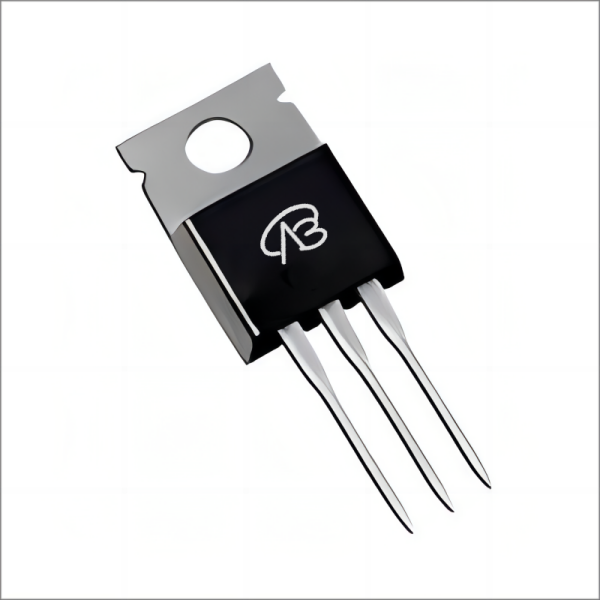
In high-power circuit design, selecting a MOSFET that balances robust performance, thermal management, and cost is a critical challenge for engineers. This goes beyond simple part substitution—it requires careful consideration of current handling, conduction losses, voltage ratings, and supply chain stability. This article takes two widely used TO-220 packaged MOSFETs, STP185N55F3 and STP75NF75, as benchmarks. We will deeply analyze their design cores and typical applications, and provide a comparative evaluation of two domestic alternative solutions, VBM1603 and VBM1808. By clarifying their parameter differences and performance orientations, we aim to offer a clear selection guide to help you find the optimal power switching solution for your next high-current design.
Comparative Analysis: STP185N55F3 (N-channel) vs. VBM1603
Analysis of the Original Model (STP185N55F3) Core:
This is a 55V N-channel MOSFET from STMicroelectronics, housed in the standard TO-220 package. Its design core is to deliver high current capability with low conduction loss in a robust, thermally efficient package. Key advantages include: a high continuous drain current rating of 120A and a low on-resistance of 3.8mΩ (measured at 10V, 60A). This combination makes it highly effective for minimizing power dissipation under heavy loads.
Compatibility and Differences of the Domestic Alternative (VBM1603):
VBsemi's VBM1603 is a direct pin-to-pin compatible alternative in the TO-220 package. The main differences are in the electrical parameters: VBM1603 has a slightly higher voltage rating (60V vs. 55V) and a significantly higher continuous current rating of 210A. Crucially, its on-resistance is even lower at 3mΩ (@10V), promising reduced conduction losses compared to the original part.
Key Application Areas:
Original Model STP185N55F3: Its high current (120A) and low RDS(on) make it ideal for high-power switching applications.
Motor Drives: For driving large brushed DC motors, BLDC motor controllers, or in industrial automation.
Power Supplies: As the main switch or synchronous rectifier in high-current DC-DC converters (e.g., for server, telecom, or welding equipment).
Inverters/UPS: In the power stage of inverters and uninterruptible power supplies.
Alternative Model VBM1603: Suited for applications requiring an upgrade in current handling (210A) and lower conduction loss (3mΩ). It is an excellent choice for next-generation designs or for replacing the STP185N55F3 where enhanced efficiency and higher current margins are needed.
Comparative Analysis: STP75NF75 (N-channel) vs. VBM1808
This comparison focuses on a robust 75V MOSFET designed for applications requiring a higher voltage margin.
Analysis of the Original Model (STP75NF75) Core:
The STP75NF75 from STMicroelectronics is an N-channel MOSFET in a TO-220 package, designed for applications needing a balance of voltage rating and current capability. Its core strengths are a 75V drain-source voltage, a continuous current of 80A, and an on-resistance of 11mΩ (@10V, 40A). This provides reliable performance in medium-to-high power circuits with higher bus voltages.
Compatibility and Differences of the Domestic Alternative (VBM1808):
VBsemi's VBM1808 is a pin-to-pin compatible alternative. It offers a higher voltage rating (80V vs. 75V) and a higher continuous current rating (100A vs. 80A). Its on-resistance is 7mΩ (@10V), which is notably lower than the original part's 11mΩ, indicating potential for improved efficiency and thermal performance.
Key Application Areas:
Original Model STP75NF75: Its 75V/80A rating makes it a reliable workhorse for various medium-power applications.
Automotive Systems: In 48V mild-hybrid systems, electric power steering, or other auxiliary drives.
Power Tools: As the main switch in high-demand cordless tool motor controllers.
Industrial Controls: For solenoid/valve drives and general-purpose high-side/low-side switching.
Alternative Model VBM1808: This is a "performance-enhanced" alternative, better suited for applications demanding higher voltage headroom (80V), higher current (100A), and significantly lower conduction loss (7mΩ). It is ideal for upgrading existing designs based on STP75NF75 or for new projects requiring superior electrical performance.
Conclusion
In summary, this analysis reveals clear upgrade paths through domestic alternatives:
For the STP185N55F3, the domestic alternative VBM1603 provides a compelling upgrade, offering a higher current rating (210A vs. 120A) and a lower on-resistance (3mΩ vs. 3.8mΩ) at a slightly higher voltage (60V). This makes it an excellent choice for designers seeking to push efficiency and power density limits in high-current applications like advanced motor drives and power supplies.
For the STP75NF75, the domestic alternative VBM1808 offers meaningful improvements across key parameters: higher voltage (80V vs. 75V), higher current (100A vs. 80A), and significantly lower on-resistance (7mΩ vs. 11mΩ). This makes it a superior drop-in replacement for applications in automotive, power tools, and industrial systems where enhanced performance and reliability are desired.
The core takeaway is that selection is about precise requirement matching. In the context of supply chain diversification, these domestic alternatives (VBM1603, VBM1808) not only provide reliable backup options but also deliver tangible performance gains in key areas. They offer engineers greater flexibility, resilience, and potential for design optimization in their power management challenges.

Download PDF document
 Download now


