 中文
中文 English
MOSFET Selection for High-Power and Medium-Power Applications: STP140N6F7, STD10P6F6 vs. China Alternatives VBM1603, VBE2610N
Number of views:9999
 Back to previous page
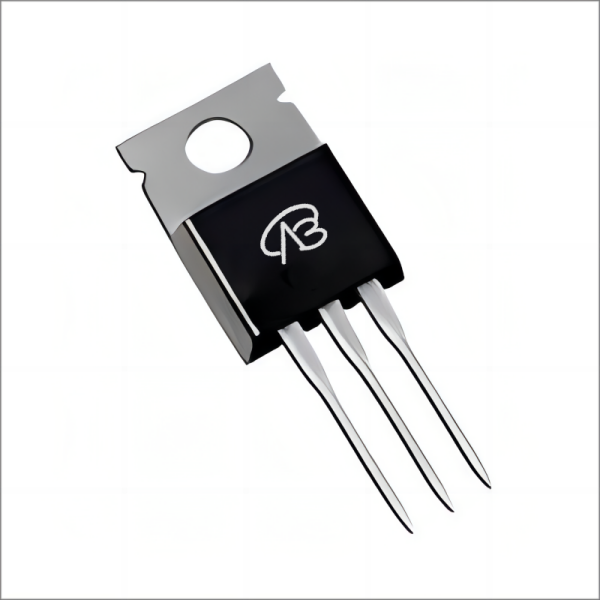
In the design of power systems, selecting the right MOSFET is a critical decision that balances performance, efficiency, cost, and supply chain stability. This article takes two representative MOSFETs from STMicroelectronics—the high-current N-channel STP140N6F7 and the medium-power P-channel STD10P6F6—as benchmarks. It provides a deep analysis of their design cores and application scenarios, followed by a comparative evaluation of their domestic alternative solutions, VBM1603 and VBE2610N from VBsemi. By clarifying parameter differences and performance orientations, this article aims to offer a clear selection guide to help you find the most suitable power switching solution in the complex world of components.
Comparative Analysis: STP140N6F7 (N-channel) vs. VBM1603
Analysis of the Original Model (STP140N6F7) Core:
This is a 60V N-channel MOSFET from STMicroelectronics in a TO-220 package. Its design core is to deliver high current handling and low conduction loss in a robust, industry-standard package. Key advantages include: a very low on-resistance of 3.5mΩ (measured at 10V, 40A), a high continuous drain current rating of 80A, and utilization of ST's advanced STripFET F7 technology for excellent switching performance and thermal characteristics.
Compatibility and Differences of the Domestic Alternative (VBM1603):
VBsemi's VBM1603 is also offered in a TO-220 package and serves as a pin-to-pin compatible alternative. The key differences are in the electrical parameters: while both are rated for 60V, the VBM1603 offers a significantly higher continuous current rating of 210A and an even lower on-resistance of 3mΩ (at 10V). This represents a substantial performance enhancement in terms of current capability and conduction loss.
Key Application Areas:
Original Model STP140N6F7: Its high current (80A) and low RDS(on) make it ideal for high-power switching applications.
High-Current DC-DC Converters: Serving as the main switch or synchronous rectifier in server power supplies, telecom rectifiers, or high-power POL converters.
Motor Drives and Inverters: For driving large brushed/brushless DC motors, or in the power stage of motor controllers and inverters.
Power Distribution and Switching: Used in solid-state relays, battery management system (BMS) discharge switches, or high-current load switches.
Alternative Model VBM1603: With its superior 210A current rating and 3mΩ RDS(on), it is perfectly suited for upgraded or next-generation designs that demand even higher power density, lower losses, and greater current headroom, especially in applications pushing the limits of the original part.
Comparative Analysis: STD10P6F6 (P-channel) vs. VBE2610N
This P-channel MOSFET is designed for medium-power applications where a high-side switch is required, balancing voltage rating, current, and package size.
Analysis of the Original Model (STD10P6F6) Core:
This is a -60V P-channel MOSFET in a DPAK (TO-252) package. Its design focuses on providing a reliable and compact high-side switching solution. Its key parameters include a continuous drain current of -10A and an on-resistance of 160mΩ (at -10V, -5A). It uses ST's STripFET F6 technology, offering a good balance for space-constrained, medium-power circuits.
Compatibility and Differences of the Domestic Alternative (VBE2610N):
VBsemi's VBE2610N comes in a TO-252 (DPAK) package, ensuring footprint compatibility. The domestic alternative offers significant performance improvements: a much higher continuous current rating of -30A (vs. -10A) and a substantially lower on-resistance of 61mΩ (at -10V) compared to the original's 160mΩ. This translates to significantly reduced conduction losses and higher current capability in the same form factor.
Key Application Areas:
Original Model STD10P6F6: Suitable for various medium-power P-channel switching needs.
High-Side Load Switching: For power rail control in industrial controls, automotive subsystems, or power supplies.
Battery Protection and Management: Used as a charge/discharge control switch in BMS for multi-cell battery packs.
Power Management in Compact Designs: Ideal for DC-DC converter high-side switches or polarity protection where a DPAK package is preferred.
Alternative Model VBE2610N: With its triple the current rating and less than half the on-resistance, it is an excellent choice for performance-enhanced replacements or new designs that require higher efficiency, greater power handling, and lower thermal stress in the same board space, effectively upgrading the capability of the application.
Summary
In summary, this comparative analysis reveals two distinct selection pathways:
For high-current N-channel applications, the original STP140N6F7, with its 80A rating and 3.5mΩ RDS(on), is a robust choice for demanding high-power circuits. Its domestic alternative, VBM1603, provides a substantial performance upgrade with a 210A rating and 3mΩ RDS(on), making it ideal for pushing efficiency and power density limits.
For medium-power P-channel applications requiring a compact package, the original STD10P6F6 offers a solid -10A, 160mΩ solution. Its domestic alternative, VBE2610N, delivers a major performance leap with a -30A rating and 61mΩ RDS(on), enabling higher efficiency and greater load capability in a pin-compatible footprint.
The core conclusion is that selection is about precise requirement matching. In the context of supply chain diversification, domestic alternatives like VBM1603 and VBE2610N not only provide reliable backup options but also offer significant performance enhancements in key parameters. This gives engineers greater flexibility, resilience, and potential for design improvement during component selection and cost optimization. Understanding the design philosophy and parameter implications of each device is essential to unlocking its full value within your circuit.

Download PDF document
 Download now


