 中文
中文 English
MOSFET Selection for High-Voltage Power Applications: STP13NM60ND, STW18N65M5 vs. China Alternatives VBM16R11S, VBP165R20S
Number of views:9999
 Back to previous page
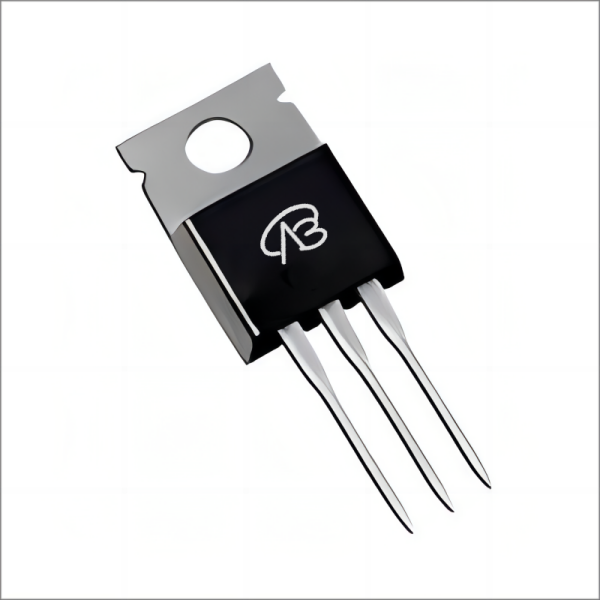
In high-voltage power conversion and motor drive designs, selecting a MOSFET that balances voltage rating, conduction loss, switching performance, and cost is a critical engineering challenge. This is not merely a component substitution but a strategic trade-off among reliability, efficiency, thermal management, and supply chain diversity. This article takes two representative high-voltage MOSFETs—STP13NM60ND (600V) and STW18N65M5 (650V)—as benchmarks, analyzes their design cores and application scenarios, and evaluates two domestic alternative solutions, VBM16R11S and VBP165R20S. By clarifying parameter differences and performance orientations, we aim to provide a clear selection guide to help you find the optimal power switching solution in your next high-voltage design.
Comparative Analysis: STP13NM60ND (600V N-channel) vs. VBM16R11S
Analysis of the Original Model (STP13NM60ND) Core:
This is a 600V N-channel MOSFET from STMicroelectronics, utilizing FDmesh™ II technology in a TO-220 package. Its design core is to achieve low conduction loss and excellent switching performance in high-voltage applications. Key advantages include: a drain current rating of 11A, an on-resistance (RDS(on)) of 380mΩ at 10V gate drive, and an intrinsic fast-recovery body diode. It is specifically optimized for bridge topologies and zero-voltage switching (ZVS) phase-shift converters, offering robust performance in resonant and hard-switching circuits.
Compatibility and Differences of the Domestic Alternative (VBM16R11S):
VBsemi’s VBM16R11S is a direct pin-to-pin compatible alternative in a TO-220 package. It matches the original model’s key parameters: a 600V voltage rating, 11A continuous drain current, and an identical on-resistance of 380mΩ at 10V. The alternative utilizes a SJ_Multi-EPI (Super Junction Multi-Epitaxial) process, aiming to provide comparable switching performance and reliability. This makes it a viable drop-in replacement for cost-optimized or supply-chain-diversified designs without sacrificing electrical specifications.
Key Application Areas:
Original Model STP13NM60ND: Ideal for high-efficiency, high-voltage power supplies and converters. Typical applications include:
Switch-mode power supplies (SMPS) for industrial and computing.
Power factor correction (PFC) stages.
Bridge topologies (e.g., half-bridge, full-bridge) and ZVS phase-shift converters.
Motor drives and inverters requiring a 600V rating.
Alternative Model VBM16R11S: Suitable for the same application spaces as the original—particularly in 600V systems where design footprint and electrical parameters are fixed, but alternative sourcing or cost reduction is desired. It offers a reliable domestic option for SMPS, PFC, and medium-power motor drives.
Comparative Analysis: STW18N65M5 (650V N-channel) vs. VBP165R20S
This comparison shifts to higher-power 650V MOSFETs, where the design pursuit is a balance of high voltage withstand, lower conduction loss, and superior thermal performance.
Analysis of the Original Model (STW18N65M5) Core:
This 650V N-channel MOSFET from STMicroelectronics uses MDmesh™ M5 technology in a TO-247 package. Its core advantages are:
High Voltage & Current Rating: 650V drain-source voltage and 15A continuous drain current.
Low On-Resistance: A typical RDS(on) of 198mΩ at 10V gate drive, reducing conduction losses.
High Power Dissipation: A 110W power rating in the TO-247 package, offering good thermal capability for higher-power applications.
The domestic alternative VBP165R20S presents a “performance-enhanced” option: It achieves significant improvements in key parameters: the same 650V voltage rating, but a higher continuous drain current of 20A, and a notably lower on-resistance of 160mΩ at 10V. This translates to potentially lower conduction losses and higher current-handling capability in similar applications.
Key Application Areas:
Original Model STW18N65M5: Well-suited for higher-power 650V systems requiring robust performance. Typical applications include:
High-power SMPS and server power supplies.
Industrial motor drives and inverters.
Solar inverters and UPS systems.
Applications where the 198mΩ RDS(on) and 15A current meet the design margin.
Alternative Model VBP165R20S: Targets upgraded scenarios demanding higher efficiency and power density. Its 20A current rating and 160mΩ RDS(on) make it suitable for:
Next-generation SMPS designs aiming for lower losses.
Motor drives requiring higher current capability.
Power stages where enhanced performance can reduce thermal stress or improve overall system efficiency.
Conclusion
In summary, this analysis reveals two clear selection paths for high-voltage applications:
For 600V systems with fixed TO-220 footprints, the original STP13NM60ND, with its proven FDmesh™ II technology and optimized performance for bridge and ZVS topologies, remains a strong choice. Its domestic alternative VBM16R11S offers a direct, parameter-matched replacement, providing a valuable option for sourcing flexibility and cost management without redesign.
For 650V, higher-power applications, the original STW18N65M5 offers a reliable balance of voltage, current (15A), and on-resistance (198mΩ) in a TO-247 package. The domestic alternative VBP165R20S emerges as a compelling performance-enhanced choice, with its higher current rating (20A) and lower on-resistance (160mΩ), enabling potential efficiency gains and power density improvements in next-generation designs.
The core conclusion is that selection hinges on precise requirement matching. In the context of supply chain diversification, domestic alternatives like VBM16R11S and VBP165R20S not only provide viable backup options but also, in the case of VBP165R20S, offer performance advancements. This gives engineers greater flexibility and resilience in design trade-offs, cost control, and performance optimization. Understanding the design philosophy and parameter implications of each device is essential to maximize its value in the circuit.

Download PDF document
 Download now


