 中文
中文 English
MOSFET Selection for High-Voltage Power Applications: STP11NK40Z, STD17NF25 vs. China Alternatives VBM165R09S, VBE1252M
Number of views:9999
 Back to previous page
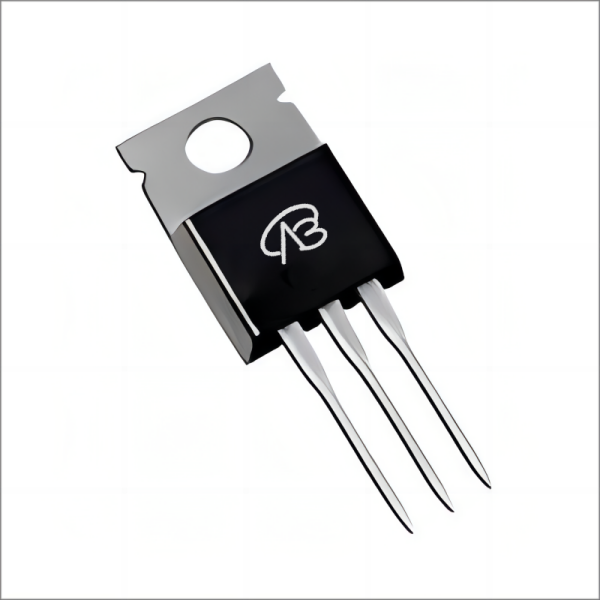
In the design of high-voltage power circuits, selecting a MOSFET that balances voltage withstand, switching performance, and cost is a critical task for engineers. This goes beyond simple part substitution—it requires careful trade-offs among reliability, efficiency, thermal management, and supply chain stability. This article takes two representative high-voltage MOSFETs, STP11NK40Z and STD17NF25, as benchmarks, analyzes their design cores and typical applications, and evaluates two domestic alternative solutions, VBM165R09S and VBE1252M. By clarifying parameter differences and performance orientations, we provide a clear selection guide to help you find the most suitable power switching solution in your next high-voltage design.
Comparative Analysis: STP11NK40Z (N-channel) vs. VBM165R09S
Analysis of the Original Model (STP11NK40Z) Core:
This is a 400V N-channel MOSFET from STMicroelectronics, in a TO-220 package. It is built on SuperMESH technology, an evolution of the mature PowerMESH platform. Its design core focuses on high-voltage robustness and optimized dynamic performance. Key advantages include: a drain-source voltage (Vdss) of 400V, continuous drain current (Id) of 9A, and an on-resistance (RDS(on)) of 550mΩ at 10V gate drive. Notably, it features Zener-protected gates and is engineered for high dv/dt capability, ensuring reliability in demanding switching applications.
Compatibility and Differences of the Domestic Alternative (VBM165R09S):
VBsemi's VBM165R09S offers a pin-to-pin compatible alternative in a TO-220 package. The key differences are in electrical parameters: VBM165R09S has a higher voltage rating (650V vs. 400V) and a lower on-resistance (500mΩ @10V vs. 550mΩ). The continuous current rating remains the same at 9A. It utilizes a SJ_Multi-EPI (Super Junction Multi-Epitaxial) process.
Key Application Areas:
Original Model STP11NK40Z: Ideal for 400V-class applications requiring proven reliability and good dv/dt immunity. Typical uses include:
Switched-Mode Power Supplies (SMPS): PFC (Power Factor Correction) stages, flyback, or forward converter primary-side switches.
Industrial controls: Motor drives, solenoid drivers, and relay replacements in high-voltage systems.
Lighting: Ballasts and LED driver circuits.
Alternative Model VBM165R09S: Suited for applications requiring a higher voltage margin (up to 650V) and slightly improved conduction loss, such as:
SMPS designs targeting higher input voltages or needing extra voltage derating for enhanced reliability.
Industrial and automotive systems where a higher breakdown voltage is beneficial for surge protection.
Comparative Analysis: STD17NF25 (N-channel) vs. VBE1252M
This comparison shifts focus to applications requiring lower on-resistance and fast switching in a medium-voltage range.
Analysis of the Original Model (STD17NF25) Core:
This 250V N-channel MOSFET from STMicroelectronics uses a DPAK package. It is built on ST's unique STripFET process, which minimizes input capacitance and gate charge. Its core advantages are:
Optimized Switching Performance: Low gate charge and input capacitance make it highly suitable for high-frequency switching.
Good Conduction: Features an on-resistance of 165mΩ at 10V gate drive and a continuous current of 17A.
Package Efficiency: The DPAK package offers a good balance between power handling and board space.
Compatibility and Differences of the Domestic Alternative (VBE1252M):
VBsemi's VBE1252M is offered in a TO-252 (DPAK compatible) package. It presents a highly comparable alternative: the voltage rating (250V) and continuous current (17A) match the original. The on-resistance is very similar at 176mΩ @10V versus the original's 165mΩ. It employs a Trench technology process.
Key Application Areas:
Original Model STD17NF25: Excellent for high-efficiency, medium-voltage applications where fast switching is critical. Typical applications include:
Isolated DC-DC Converters: Primary-side switches in telecom and server power supplies.
Computing Power Supplies: VRM (Voltage Regulator Module) and intermediate bus converters.
Motor Drives: For 48V-250V range brushless DC or stepper motor control.
Alternative Model VBE1252M: A direct functional alternative suitable for the same application spaces as STD17NF25, particularly where supply chain diversification or cost optimization is a priority, with negligible performance difference.
Conclusion
This analysis reveals two distinct selection scenarios:
1. For 400V-650V class applications, the original STP11NK40Z provides a robust 400V solution with proven SuperMESH reliability. The domestic alternative VBM165R09S offers a compelling upgrade with a higher 650V rating and lower on-resistance, making it suitable for designs requiring extra voltage headroom or improved efficiency.
2. For 250V class fast-switching applications, the original STD17NF25, with its STripFET low-charge design, is an excellent choice for high-frequency DC-DC conversion. The domestic alternative VBE1252M serves as a near-drop-in replacement with virtually identical key specifications, offering a viable option for supply chain resilience.
The core takeaway is that selection is driven by precise requirement matching. In the context of supply chain diversification, domestic alternatives like VBM165R09S and VBE1252M not only provide reliable backup options but also, in some cases, offer parameter enhancements or cost advantages. Understanding the design philosophy and parametric implications of each device is key to leveraging its full value in your circuit.

Download PDF document
 Download now


