 中文
中文 English
MOSFET Selection for High-Power & High-Voltage Applications: STP110N10F7, STF10N60M2 vs. China Alternatives VBM1105, VBMB165R10
Number of views:9999
 Back to previous page
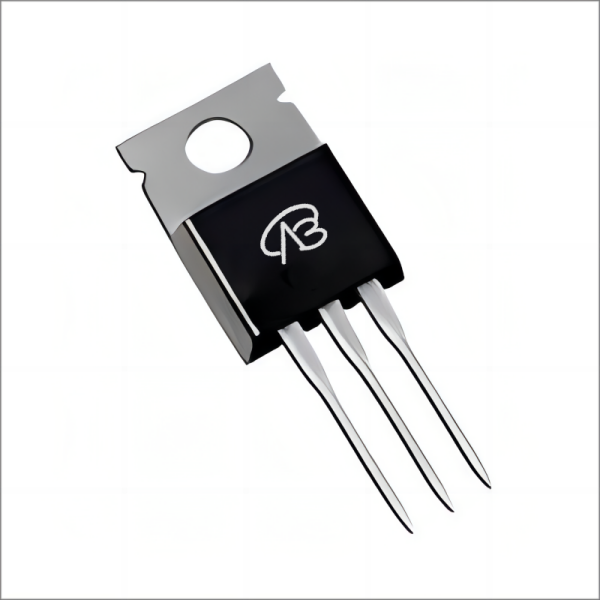
In high-power and high-voltage switching designs, selecting a MOSFET that balances robust performance, thermal management, and cost is a critical engineering decision. This is not a simple drop-in replacement exercise, but a strategic evaluation of voltage ratings, current handling, conduction losses, and package suitability. This article takes two established MOSFETs from STMicroelectronics—STP110N10F7 (100V N-channel) and STF10N60M2 (600V N-channel)—as benchmarks. We will analyze their design focus and typical applications, then compare them with two domestic alternative solutions: VBM1105 and VBMB165R10. By clarifying parameter differences and performance orientations, we provide a clear selection guide to help you identify the most suitable power switching solution for your next high-performance design.
Comparative Analysis: STP110N10F7 (100V N-channel) vs. VBM1105
Analysis of the Original Model (STP110N10F7) Core:
This is a 100V N-channel MOSFET from STMicroelectronics, utilizing the standard through-hole TO-220 package. Its design core is to deliver extremely low conduction loss and high current capability in a robust, thermally efficient package. Key advantages include: a very low on-resistance of 5.1mΩ (typical) at a 10V gate drive, and a high continuous drain current rating of 110A. This makes it an excellent choice for applications demanding minimal voltage drop and high power throughput.
Compatibility and Differences of the Domestic Alternative (VBM1105):
VBsemi's VBM1105 is a direct pin-to-pin compatible alternative in the same TO-220 package. The parameters show a highly competitive profile: it matches the 100V voltage rating and offers a slightly higher continuous current rating of 120A. The on-resistance is also specified at a low 5mΩ (@10V), essentially matching the performance of the original STP110N10F7.
Key Application Areas:
Original Model STP110N10F7: Ideal for high-current, medium-voltage switching applications where efficiency and thermal performance are paramount.
High-Current DC-DC Converters: Synchronous rectification or primary switches in server power supplies, telecom rectifiers.
Motor Drives and Controllers: For driving brushed/brushless DC motors in industrial tools, automotive systems, or robotics.
Power Distribution & Load Switching: In UPS systems, battery management systems (BMS), and high-power solid-state relays.
Alternative Model VBM1105: Serves as a strong, performance-equivalent domestic alternative for all the above applications, offering a reliable and potentially cost-effective source for 100V/110A+ class MOSFETs with low RDS(on).
Comparative Analysis: STF10N60M2 (600V N-channel) vs. VBMB165R10
This comparison shifts focus to high-voltage switching. The design pursuit for the original model is achieving a balance between high voltage blocking capability and manageable conduction loss in a compact insulated package.
Analysis of the Original Model (STF10N60M2) Core:
This 600V N-channel MOSFET from ST uses the TO-220FP (fully insulated) package. Its core advantages are:
High Voltage Rating: A 600V drain-source voltage (Vdss) makes it suitable for off-line applications.
Optimized Technology: Utilizes ST's MDmesh M2 technology, offering a typical on-resistance of 0.55Ω (600mΩ @10V per provided data) for its voltage class.
Insulated Package: The TO-220FP package provides built-in isolation, simplifying thermal interface and assembly.
Compatibility and Differences of the Domestic Alternative (VBMB165R10):
VBsemi's VBMB165R10 is offered in a TO-220F package (similar insulated type). It represents a "voltage-enhanced" alternative with key parameter differences:
Higher Voltage Rating: It boasts a 650V drain-source voltage, offering additional margin for high-voltage line transients.
Adjusted Current & Resistance: It has a higher continuous current rating (10A vs. 7.5A) but a slightly higher typical on-resistance (830mΩ @10V vs. 600mΩ @10V for the ST part).
Key Application Areas:
Original Model STF10N60M2: Well-suited for medium-power off-line and high-voltage DC-DC applications.
Switch-Mode Power Supplies (SMPS): PFC (Power Factor Correction) stages, flyback, or forward converter primary sides in adapters, LED drivers, and auxiliary power supplies.
Lighting Ballasts: Electronic ballasts for fluorescent or HID lighting.
Industrial Controls: Motor drives for appliances or low-power industrial systems operating from AC mains.
Alternative Model VBMB165R10: More suitable for applications where the higher 650V voltage rating is a key advantage for improved reliability against voltage spikes, and where the available 10A current is sufficient, despite a moderately higher conduction loss.
Summary
This analysis reveals two distinct selection scenarios:
1. For high-current, 100V-class applications, the original STP110N10F7 sets a high standard with its 5.1mΩ RDS(on) and 110A current rating. Its domestic alternative, VBM1105, emerges as a highly compelling, performance-matched replacement, offering equivalent key parameters (5mΩ, 120A) in the same TO-220 package, providing a viable and potentially advantageous sourcing option.
2. For medium-power, 600V-class applications, the original STF10N60M2 offers a balanced solution with its MDmesh technology and insulated TO-220FP package. The domestic alternative VBMB165R10 takes a different approach, trading slightly higher on-resistance for a higher voltage rating (650V) and current rating (10A). This makes it a suitable alternative where voltage margin is prioritized over ultimate conduction efficiency.
Core Conclusion: Selection is driven by application priorities. For brute-force current handling at 100V, both original and alternative offer top-tier performance. For high-voltage switching, the choice depends on whether the design values the original's lower RDS(on) or the alternative's higher voltage ruggedness. In today's diversified supply chain, domestic alternatives like VBM1105 and VBMB165R10 provide engineers with credible, specification-competitive options, enhancing design flexibility and supply resilience. A deep understanding of each device's parameter trade-offs is essential to leverage its full value in the circuit.

Download PDF document
 Download now


