 中文
中文 English
MOSFET Selection for Industrial and Automotive Applications: STN3NF06L, STD15NF10T4 vs. China Alternatives VBJ1695, VBE1104N
Number of views:9999
 Back to previous page
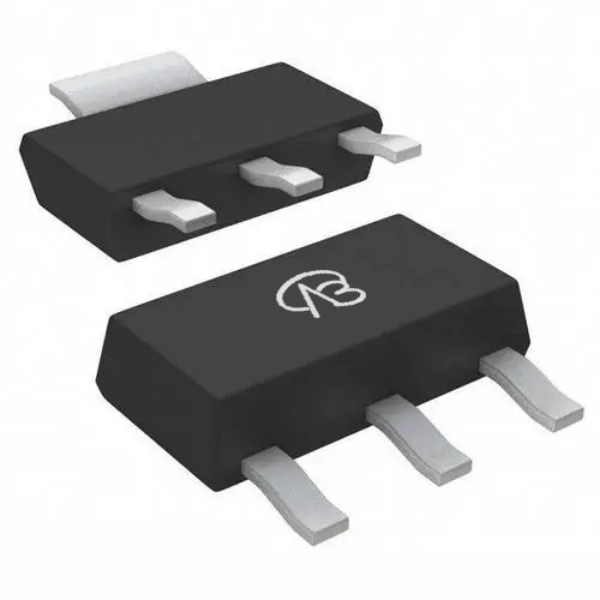
In the design of industrial controls, automotive electronics, and power management systems, selecting a MOSFET that balances ruggedness, efficiency, and cost is a critical task for engineers. This goes beyond simple part substitution, requiring a careful evaluation of voltage ratings, current handling, switching performance, and thermal management. This article uses two established MOSFETs from STMicroelectronics—the STN3NF06L (N-channel) and the STD15NF10T4 (N-channel)—as benchmarks. We will delve into their design cores and typical applications, followed by a comparative evaluation of their domestic alternative solutions, VBJ1695 and VBE1104N from VBsemi. By clarifying the parametric differences and performance orientations, this analysis aims to provide a clear selection guide for your next power switching design.
Comparative Analysis: STN3NF06L (N-channel) vs. VBJ1695
Analysis of the Original Model (STN3NF06L) Core:
This is a 60V N-channel MOSFET from STMicroelectronics in a compact SOT-223 package. Its design core is to provide a reliable, cost-effective switching solution for medium-voltage, moderate-current applications. Key advantages include a robust 60V drain-source voltage (Vdss) rating, a continuous drain current (Id) of 4A, and an on-resistance (RDS(on)) of 120mΩ at a 5V gate drive. It serves as a fundamental building block for various control and switching circuits.
Compatibility and Differences of the Domestic Alternative (VBJ1695):
VBsemi's VBJ1695 is a direct pin-to-pin compatible alternative in the same SOT-223 package. The key differences are in the electrical parameters: VBJ1695 offers significantly improved conduction performance. It features a lower on-resistance of 85mΩ at 4.5V and 76mΩ at 10V gate drive, compared to the original's 120mΩ at 5V. Its continuous current rating is also slightly higher at 4.5A versus 4A, while maintaining the same 60V voltage rating.
Key Application Areas:
Original Model STN3NF06L: Ideal for general-purpose switching, load driving, and power management in 12V, 24V, or 48V systems where cost and basic reliability are primary concerns. Typical applications include:
Relay and solenoid drivers in automotive and industrial controls.
Low-side switches in DC-DC converters for consumer electronics.
Motor control for small fans or pumps.
Alternative Model VBJ1695: Better suited for applications requiring higher efficiency and lower conduction losses within the same voltage class. Its lower RDS(on) translates to reduced power dissipation and potentially better thermal performance, making it a superior drop-in upgrade for circuits originally using the STN3NF06L.
Comparative Analysis: STD15NF10T4 (N-channel) vs. VBE1104N
This comparison shifts to higher-power applications. The design pursuit of the STD15NF10T4 is a balance of high voltage capability, good current handling, and robust thermal performance in a DPAK (TO-252) package.
Analysis of the Original Model (STD15NF10T4) Core:
Its core advantages are:
High Voltage Rating: A 100V Vdss makes it suitable for automotive and industrial environments with higher voltage transients.
Substantial Current Capability: A continuous drain current of 23A supports significant power levels.
Balanced Conduction Performance: An on-resistance of 65mΩ at 10V gate drive offers a good compromise between silicon area and performance for its class.
The domestic alternative VBE1104N represents a significant "performance-enhanced" choice. It achieves comprehensive surpassing in key parameters: maintaining the same 100V voltage rating, but dramatically increasing the continuous current to 40A and reducing the on-resistance to 30mΩ at 10V gate drive. This represents a major leap in current density and conduction loss reduction.
Key Application Areas:
Original Model STD15NF10T4: A reliable workhorse for applications requiring 100V breakdown and currents up to 23A. Typical uses include:
Automotive motor drives (e.g., window lift, wipers).
Switching in 48V mild-hybrid systems or industrial power supplies.
High-side or low-side switches in robust DC-DC converters.
Alternative Model VBE1104N: Ideal for upgraded or new designs demanding higher efficiency, higher power density, or greater current headroom. Its ultra-low 30mΩ RDS(on) and 40A rating make it suitable for:
Next-generation, higher-efficiency motor drives.
Primary-side switches or synchronous rectifiers in high-current power supplies.
Applications where reducing thermal stress is critical.
Conclusion
In summary, this analysis reveals two distinct selection and upgrade paths:
For medium-voltage, compact SOT-223 applications, the original STN3NF06L provides a proven, cost-effective solution. Its domestic alternative, VBJ1695, offers a compelling performance upgrade with significantly lower on-resistance and a slightly higher current rating, enabling higher efficiency as a direct replacement.
For higher-voltage, higher-power DPAK applications, the original STD15NF10T4 is a robust and reliable choice. Its domestic alternative, VBE1104N, delivers a dramatic performance enhancement, with vastly superior current capability (40A vs. 23A) and much lower on-resistance (30mΩ vs. 65mΩ), enabling more powerful and efficient designs.
The core conclusion is that selection depends on precise requirement matching. In the context of supply chain diversification, these domestic alternatives not only provide reliable backup options but also offer opportunities for performance uplift and cost optimization, giving engineers greater flexibility in their design trade-offs.

Download PDF document
 Download now


