 中文
中文 English
MOSFET Selection for High-Power and High-Voltage Applications: STI270N4F3, STW37N60DM2AG vs. China Alternatives VBN1402, VBP16R26S
Number of views:9999
 Back to previous page
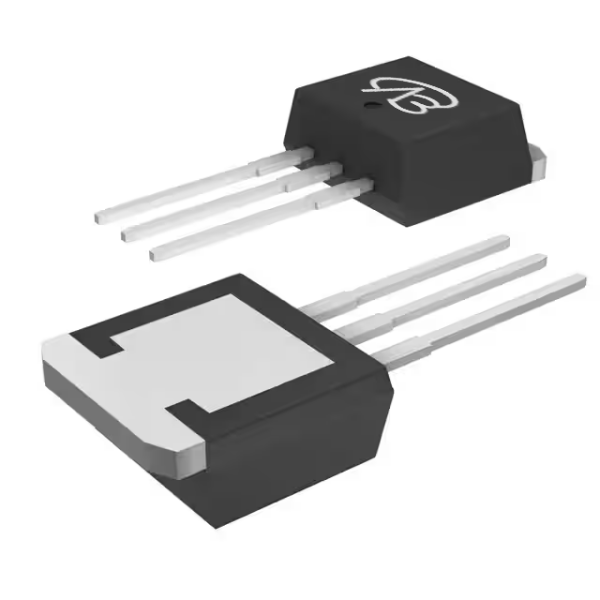
In high-power design and automotive-grade applications, selecting a MOSFET that balances high current capability, low conduction loss, and robust voltage withstand is a critical engineering challenge. This goes beyond simple part substitution—it requires a careful trade-off among performance, reliability, cost, and supply chain security. This article takes two highly representative MOSFETs, the STI270N4F3 (medium-voltage, ultra-low RDS(on)) and the STW37N60DM2AG (high-voltage, automotive-grade), as benchmarks. It deeply analyzes their design cores and application scenarios, and provides a comparative evaluation of two domestic alternative solutions: VBN1402 and VBP16R26S. By clarifying parameter differences and performance orientations, we aim to provide a clear selection map to help you find the optimal power switching solution in the complex world of components.
Comparative Analysis: STI270N4F3 (N-channel) vs. VBN1402
Analysis of the Original Model (STI270N4F3) Core:
This is a 40V N-channel MOSFET from STMicroelectronics, in a robust I2PAK (TO-262) package. Its design core is to deliver extremely low conduction loss in high-current paths. Key advantages include: an ultra-low on-resistance of 2.6mΩ (measured at 10V, 80A), and a very high continuous drain current rating of 160A. This makes it ideal for applications where minimizing I²R loss is paramount.
Compatibility and Differences of the Domestic Alternative (VBN1402):
VBsemi's VBN1402 is offered in a TO-262 package and serves as a pin-to-pin compatible alternative. The key differences are in electrical parameters: VBN1402 features a significantly lower on-resistance of 1.7mΩ (@10V) and a slightly lower continuous current rating of 150A compared to the original's 160A. This represents a performance enhancement in conduction loss.
Key Application Areas:
Original Model STI270N4F3: Its ultra-low RDS(on) and high current capability make it perfectly suited for high-efficiency, high-current DC-DC conversion and power distribution.
Synchronous rectification in high-current VRMs/VRDs: For servers, workstations, and high-end GPUs.
High-current load switches and OR-ing circuits: In power backup systems and telecom infrastructure.
Motor drives and solenoid drivers: For industrial equipment requiring high peak current.
Alternative Model VBN1402: With its even lower 1.7mΩ RDS(on), it is an excellent "performance-enhanced" drop-in replacement for applications where further reducing conduction loss and thermal stress is the priority, especially within its 150A current rating.
Comparative Analysis: STW37N60DM2AG (N-channel) vs. VBP16R26S
This comparison shifts focus to high-voltage, automotive-grade applications where reliability and switching performance at high voltages are critical.
Analysis of the Original Model (STW37N60DM2AG) Core:
This is a 600V, automotive-grade N-channel MOSFET from ST, utilizing MDmesh DM2 technology in a TO-247 package. Its design pursues an optimal balance of high voltage blocking, good switching performance, and ruggedness. Core advantages include: a high voltage rating of 600V, a continuous current of 28A, and a specified on-resistance of 110mΩ (@10V, 14A). Its automotive-grade qualification ensures reliability for demanding environments.
Compatibility and Differences of the Domestic Alternative (VBP16R26S):
VBsemi's VBP16R26S is a direct pin-to-pin compatible alternative in a TO-247 package. The parameters show a highly comparable profile: the same 600V voltage rating, a slightly lower continuous current of 26A (vs. 28A), and an almost identical on-resistance of 115mΩ (@10V). It utilizes Super Junction Multi-EPI technology for efficient high-voltage switching.
Key Application Areas:
Original Model STW37N60DM2AG: Its 600V rating and automotive-grade ruggedness make it ideal for demanding high-voltage applications.
Automotive systems: OBC (On-Board Chargers), DC-DC converters, and other powertrain/power management modules.
Industrial SMPS: Power supplies for factory automation, 3-phase input power systems.
PFC (Power Factor Correction) stages: In servers, telecom rectifiers, and UPS systems.
Alternative Model VBP16R26S: Serves as a highly competitive domestic alternative, offering nearly identical electrical performance (600V, ~115mΩ, 26A). It is a viable replacement for the STW37N60DM2AG in applications such as industrial SMPS, PFC circuits, and other high-voltage switching scenarios where supply chain diversification or cost optimization is needed, providing a reliable and performance-matched option.
Conclusion
In summary, this analysis reveals two distinct selection paths for high-power and high-voltage designs:
For ultra-low RDS(on), high-current (40V class) applications, the original STI270N4F3, with its 2.6mΩ and 160A capability, is a benchmark for minimizing conduction loss. Its domestic alternative VBN1402 offers a compelling "performance-upgrade" path with an even lower 1.7mΩ RDS(on), making it an excellent choice for efficiency-critical designs within its 150A rating.
For high-voltage, rugged (600V class) applications, the automotive-grade STW37N60DM2AG sets a standard for reliability in demanding fields like automotive and industrial. The domestic alternative VBP16R26S emerges as a highly parameter-matched and pin-compatible alternative, providing a nearly identical electrical profile (600V, ~115mΩ, 26A), offering significant value for supply chain resilience and cost-effective design in industrial power systems.
The core takeaway is that selection is about precise requirement matching. In the context of supply chain diversification, domestic alternatives like VBN1402 and VBP16R26S not only provide reliable backup options but also demonstrate competitive or even superior performance in key parameters. This gives engineers greater flexibility and resilience in design trade-offs and cost control. Understanding the design philosophy and parameter implications of each device is essential to unlocking its full potential in your circuit.

Download PDF document
 Download now


