 中文
中文 English
MOSFET Selection for High-Voltage Power Applications: STFI20NK50Z, STP2N80K5 vs. China Alternatives VBMB15R18S, VBM185R04
Number of views:9999
 Back to previous page
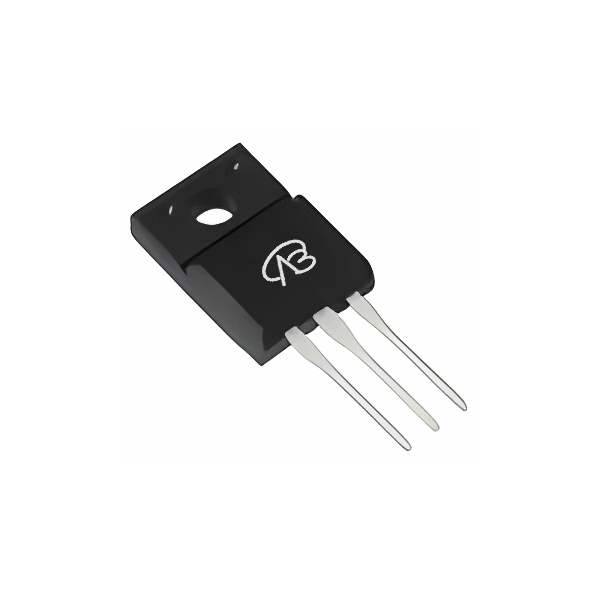
In high-voltage power design, selecting a MOSFET that balances voltage rating, current capability, and switching efficiency is a critical challenge for engineers. This goes beyond simple part substitution—it requires careful trade-offs among performance, reliability, cost, and supply chain stability. This article takes two representative high-voltage MOSFETs, STFI20NK50Z (500V N-channel) and STP2N80K5 (800V N-channel), as benchmarks, analyzes their design focus and application scenarios, and evaluates two domestic alternative solutions: VBMB15R18S and VBM185R04. By clarifying parameter differences and performance orientations, we provide a clear selection guide to help you find the most suitable power switching solution in the complex component landscape.
Comparative Analysis: STFI20NK50Z (500V N-channel) vs. VBMB15R18S
Analysis of the Original Model (STFI20NK50Z) Core:
This is a 500V N-channel MOSFET from STMicroelectronics, packaged in I2PAKFP (TO-281). Its design focuses on robust performance in medium-high voltage applications. Key advantages include a drain-source voltage (Vdss) of 500V, a continuous drain current (Id) of 17A, and an on-resistance (RDS(on)) of 270mΩ at 10V gate drive. It suits applications requiring good voltage withstand and moderate current handling in a compact power package.
Compatibility and Differences of the Domestic Alternative (VBMB15R18S):
VBsemi’s VBMB15R18S is offered in a TO-220F package and serves as a functional alternative. The main differences are in electrical parameters: VBMB15R18S features a lower on-resistance of 210mΩ at 10V and a slightly higher continuous current rating of 18A, while maintaining the same 500V voltage rating. This indicates better conduction loss and current capability compared to the original.
Key Application Areas:
- Original Model STFI20NK50Z: Ideal for 500V systems requiring reliable switching and moderate current, such as:
- SMPS (Switched-Mode Power Supplies) in industrial or consumer electronics.
- Power factor correction (PFC) stages.
- Motor drives and inverter circuits operating below 500V.
- Alternative Model VBMB15R18S: Better suited for applications demanding lower conduction loss and higher current (up to 18A) within 500V systems, offering an upgraded performance option where efficiency and thermal management are critical.
Comparative Analysis: STP2N80K5 (800V N-channel) vs. VBM185R04
This comparison highlights the trade-off between high voltage capability and conduction performance in power MOSFETs.
Analysis of the Original Model (STP2N80K5) Core:
STP2N80K5 is an 800V N-channel MOSFET from STMicroelectronics in a TO-220 package. It is designed for high-voltage, low-current applications. Its key features include a high drain-source voltage of 800V, a continuous drain current of 2A, and a relatively high on-resistance of 4.5Ω at 10V gate drive. With a power dissipation of 45W, it is built for scenarios where voltage withstand is prioritized over low conduction loss.
Compatibility and Differences of the Domestic Alternative (VBM185R04):
VBsemi’s VBM185R04 comes in a TO-220 package and serves as a pin-to-pin compatible alternative. It offers a higher voltage rating of 850V and a higher continuous current of 4A, but with a significantly higher on-resistance of 2700mΩ (2.7Ω) at 10V. This makes it suitable for applications requiring higher voltage margins and slightly higher current, albeit with increased conduction loss compared to the original.
Key Application Areas:
- Original Model STP2N80K5: Best for high-voltage, low-current switching where voltage rating is critical, such as:
- Auxiliary power supplies in industrial equipment.
- High-voltage LED driving circuits.
- Snubber or clamp circuits in power converters.
- Alternative Model VBM185R04: More appropriate for applications needing an 850V voltage margin and up to 4A current, where the higher on-resistance is acceptable, such as in certain offline power supplies or high-voltage linear regulators.
Conclusion:
This analysis reveals two distinct selection paths for high-voltage MOSFETs:
For 500V N-channel applications, the original STFI20NK50Z provides a balanced solution with 500V withstand, 17A current, and 270mΩ on-resistance, making it reliable for medium-power SMPS and motor drives. Its domestic alternative VBMB15R18S offers enhanced performance with lower on-resistance (210mΩ) and higher current (18A), serving as an efficient upgrade for designs prioritizing conduction loss and thermal performance.
For 800V N-channel applications, the original STP2N80K5 excels in high-voltage, low-current scenarios with its 800V rating and 2A capability, ideal for auxiliary power and high-voltage switching. The domestic alternative VBM185R04 extends the voltage margin to 850V and current to 4A, catering to designs that require higher voltage endurance and moderate current, despite its higher on-resistance.
The core takeaway is that selection depends on precise requirement matching. In the context of supply chain diversification, domestic alternatives not only provide reliable backup options but also offer parameter enhancements in specific areas, giving engineers greater flexibility and resilience in design trade-offs and cost control. Understanding each device’s design philosophy and parameter implications is key to maximizing its value in the circuit.

Download PDF document
 Download now


