 中文
中文 English
MOSFET Selection for High-Voltage Power Applications: STF8NM50N, STF9N80K5 vs. China Alternatives VBMB165R12, VBMB18R07S
Number of views:9999
 Back to previous page
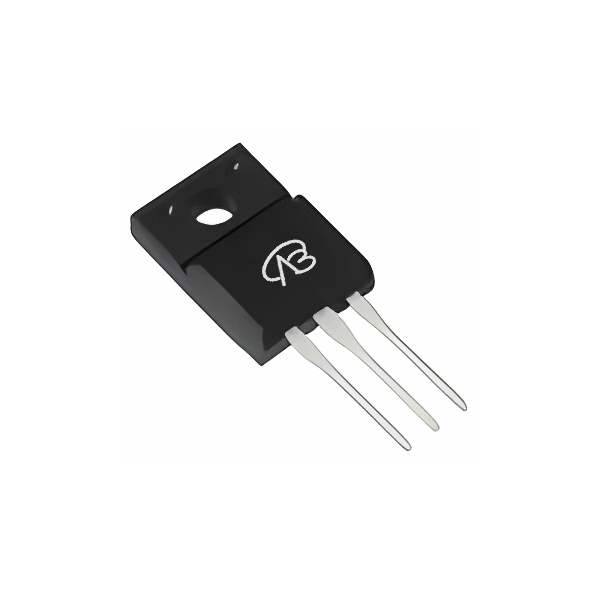
In high-voltage power conversion and switching applications, selecting a MOSFET that balances voltage rating, conduction loss, and ruggedness is a critical engineering challenge. This is not merely a component substitution but a careful trade-off among performance, reliability, and supply chain diversity. This article takes two representative high-voltage MOSFETs from STMicroelectronics—STF8NM50N (500V) and STF9N80K5 (800V)—as benchmarks. It delves into their design cores and application scenarios, while comparatively evaluating two domestic alternative solutions: VBMB165R12 and VBMB18R07S from VBsemi. By clarifying their parameter differences and performance orientations, we aim to provide a clear selection guide to help you find the most suitable power switching solution for your next high-voltage design.
Comparative Analysis: STF8NM50N (500V N-channel) vs. VBMB165R12
Analysis of the Original Model (STF8NM50N) Core:
This is a 500V N-channel MOSFET from STMicroelectronics, utilizing TO-220FP packaging. Its design core is based on the second-generation MDmesh™ technology, which combines a vertical structure with a strip layout to achieve an excellent balance of low on-resistance and low gate charge. Key advantages include: a drain-source voltage (Vdss) of 500V, a continuous drain current (Id) of 5A, and an on-resistance (RDS(on)) of 790mΩ at 10V gate drive. This makes it well-suited for demanding high-efficiency converters where switching performance and conduction losses are critical.
Compatibility and Differences of the Domestic Alternative (VBMB165R12):
VBsemi's VBMB165R12, offered in a TO-220F package, serves as a functional pin-compatible alternative. The main differences lie in the electrical parameters: VBMB165R12 features a higher voltage rating (650V vs. 500V) and a higher continuous current rating (12A vs. 5A). Its on-resistance is also lower at 680mΩ (@10V) compared to the original's 790mΩ. This indicates that the alternative can handle higher power levels with potentially lower conduction losses.
Key Application Areas:
Original Model STF8NM50N: Its characteristics make it ideal for medium-power, high-efficiency offline converters and switching power supplies operating around 500V. Typical applications include:
SMPS (Switched-Mode Power Supplies) for industrial controls and appliances.
Power Factor Correction (PFC) stages in mid-power AC-DC converters.
Inverters and motor drives for low to medium power applications.
Alternative Model VBMB165R12: With its higher voltage and current ratings, it is more suitable for applications requiring greater voltage margin and higher current capability, such as:
Higher-power or more ruggedized SMPS designs.
PFC stages and inverter circuits in systems with wider input voltage ranges or higher output power.
Comparative Analysis: STF9N80K5 (800V N-channel) vs. VBMB18R07S
This comparison focuses on 800V-rated MOSFETs, where the design pursuit is high-voltage blocking capability combined with manageable conduction losses.
Analysis of the Original Model (STF9N80K5) Core:
This 800V N-channel MOSFET from ST uses MDmesh K5 technology in a TO-220FP package. Its core advantages are:
High Voltage Rating: A Vdss of 800V makes it suitable for direct off-line applications and harsh voltage environments.
Balanced Performance: It offers a continuous current of 7A with a typical on-resistance of 0.73 Ohm (900mΩ @10V per datasheet), providing a good compromise between voltage withstand and conduction loss for its class.
Robust Technology: The MDmesh K5 platform is designed for high efficiency and reliability in switching.
Compatibility and Differences of the Domestic Alternative (VBMB18R07S):
VBsemi's VBMB18R07S, in a TO-220F package, is a direct pin-to-pin compatible alternative. It matches the original's 800V voltage rating and 7A continuous current rating very closely. Its key parameter, on-resistance, is specified at 770mΩ (@10V), which is slightly lower than the original's 900mΩ, suggesting potentially marginally better conduction performance. It utilizes a Super Junction Multi-EPI process.
Key Application Areas:
Original Model STF9N80K5: An excellent choice for applications requiring 800V blocking capability with moderate current. Typical uses include:
Off-line SMPS for industrial and telecom equipment.
High-voltage DC-DC converters.
Lighting ballasts and inverter drives.
Alternative Model VBMB18R07S: Serves as a highly comparable alternative for the same 800V application space. Its similar ratings and slightly improved RDS(on) make it suitable for direct replacement or new designs in:
Similar off-line power supplies and inverters.
Applications where supply chain diversification or cost optimization is desired without sacrificing key specifications.
Conclusion
In summary, this comparative analysis reveals clear selection and alternative paths for high-voltage MOSFETs:
For 500V-class applications, the original STF8NM50N offers proven performance based on MDmesh™ technology for medium-power, efficient conversion. Its domestic alternative, VBMB165R12, provides a significant performance upgrade in terms of voltage rating (650V), current capability (12A), and lower on-resistance, making it a compelling choice for more demanding or upgraded designs.
For 800V-class applications, the original STF9N80K5 delivers reliable high-voltage switching with balanced characteristics. Its domestic alternative, VBMB18R07S, offers a highly comparable and pin-compatible solution with essentially matching voltage/current ratings and a slightly lower on-resistance, presenting a viable alternative for supply chain resilience.
The core conclusion is that selection depends on precise requirement matching. In the context of supply chain diversification, these domestic alternative models not only provide feasible backup options but also offer competitive or enhanced parameters in some cases. This gives engineers greater flexibility and choice space in design trade-offs, cost control, and ensuring project continuity. Understanding the design philosophy and parameter implications of each device is essential to maximize its value in the circuit.

Download PDF document
 Download now


