 中文
中文 English
MOSFET Selection for High-Voltage and High-Current Applications: STF5N95K3, STL60N10F7 vs. China Alternatives VBMB195R06, VBGQA1102N
Number of views:9999
 Back to previous page
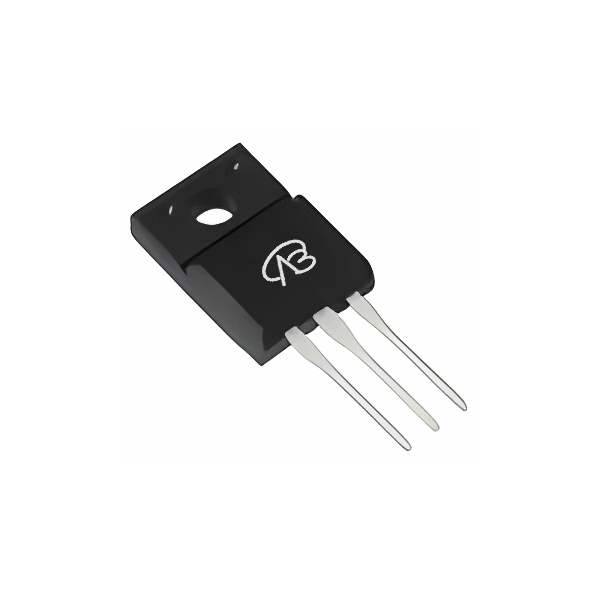
In power design, selecting the right MOSFET for high-voltage switching or high-current handling is a critical engineering challenge. It requires balancing voltage rating, current capability, on-resistance, and package performance. This article uses two distinct MOSFETs—STF5N95K3 (high-voltage N-channel) and STL60N10F7 (low-voltage high-current N-channel)—as benchmarks. We will analyze their design cores, application scenarios, and compare them with domestic alternative solutions VBMB195R06 and VBGQA1102N. By clarifying parameter differences and performance orientations, we provide a clear selection map to help you find the optimal power switching solution.
Comparative Analysis: STF5N95K3 (High-Voltage N-channel) vs. VBMB195R06
Analysis of the Original Model (STF5N95K3) Core:
This is a 950V N-channel MOSFET from STMicroelectronics, utilizing SuperMESH3 technology in a TO-220FP package. Its design core is to achieve robust performance in high-voltage, demanding applications. Key advantages are: a high drain-source voltage (Vdss) of 950V, a continuous drain current (Id) of 4A, and an on-resistance (RDS(on)) of 3.5Ω at 10V gate drive. It features very low on-resistance, excellent dynamic performance, and high avalanche capability, making it suitable for the most stringent applications.
Compatibility and Differences of the Domestic Alternative (VBMB195R06):
VBsemi's VBMB195R06 is offered in a TO-220F package and serves as a functional alternative for high-voltage switching. The main differences lie in the electrical parameters: VBMB195R06 matches the 950V voltage rating but offers a higher continuous current of 6A. However, its on-resistance is significantly lower at 2400mΩ (2.4Ω) @ 10V, compared to the original's 3.5Ω, indicating potentially lower conduction losses in its current range. It uses planar technology.
Key Application Areas:
Original Model STF5N95K3: Ideal for high-voltage, medium-current switching where ruggedness is key. Typical applications include:
Switch-Mode Power Supplies (SMPS): PFC stages, flyback converters in offline power supplies.
Lighting: Ballasts and LED driver circuits.
Industrial controls: High-voltage switching and energy management.
Alternative Model VBMB195R06: Suitable for high-voltage applications requiring a higher current margin (up to 6A) and lower conduction loss, such as upgraded or cost-optimized SMPS designs.
Comparative Analysis: STL60N10F7 (Low-Voltage High-Current N-channel) vs. VBGQA1102N
This N-channel MOSFET focuses on high-current handling with low loss in a compact footprint.
Analysis of the Original Model (STL60N10F7) Core:
This 100V N-channel MOSFET from ST uses STripFET F7 technology in a PowerFLAT 5x6 package. Its core advantages are:
High Current Capability: Continuous drain current of 46A.
Very Low On-Resistance: RDS(on) as low as 18mΩ @ 10V gate drive.
Compact Power Package: The PowerFLAT 8 (5x6) package offers a good balance between power handling and space savings.
Compatibility and Differences of the Domestic Alternative (VBGQA1102N):
VBsemi's VBGQA1102N comes in a DFN8(5x6) package and is a pin-to-pin compatible alternative. It presents a mixed parameter profile: It has a lower continuous current rating of 30A compared to the original's 46A. However, it offers a lower on-resistance of 21mΩ @ 10V (and 26mΩ @ 4.5V), which can mean higher efficiency at its rated current. It utilizes SGT (Shielded Gate Trench) technology.
Key Application Areas:
Original Model STL60N10F7: Its high current (46A) and low on-resistance make it perfect for high-current, efficiency-critical applications in compact spaces. For example:
Synchronous rectification in high-current DC-DC converters (e.g., for servers, telecom).
Motor drives for power tools, e-bikes.
High-power load switches and battery management systems (BMS).
Alternative Model VBGQA1102N: More suitable for applications where the current requirement is within 30A but lower on-resistance and potentially better switching performance (due to SGT) are desired, such as in space-constrained, high-efficiency POL (Point-of-Load) converters or motor drives.
Conclusion
This analysis reveals two distinct selection paths based on application priority:
For high-voltage (~950V) switching, the original STF5N95K3 offers proven reliability and avalanche capability with SuperMESH3 technology. Its domestic alternative VBMB195R06 provides a compelling option with a higher current rating (6A vs. 4A) and significantly lower on-resistance (2.4Ω vs. 3.5Ω), making it suitable for designs prioritizing efficiency and current headroom in this voltage class.
For low-voltage high-current (100V range) applications, the original STL60N10F7 is a powerhouse with an exceptional 46A current rating and very low 18mΩ on-resistance, ideal for the most demanding compact power stages. The domestic alternative VBGQA1102N, while rated for a lower continuous current (30A), counters with even lower on-resistance (21mΩ) and modern SGT technology, presenting an excellent choice for applications where peak current is lower but maximizing efficiency and thermal performance is critical.
The core conclusion is that selection depends on precise requirement matching. In the context of supply chain diversification, domestic alternatives like VBMB195R06 and VBGQA1102N not only provide viable backups but also offer specific parameter advantages—such as lower RDS(on) or newer technology—giving engineers greater flexibility in design trade-offs and cost optimization. Understanding each device's design philosophy and parameter implications is key to unlocking its full potential in your circuit.

Download PDF document
 Download now


