 中文
中文 English
MOSFET Selection for High-Voltage Power Applications: STF33N60M2, STD5N52K3 vs. China Alternatives VBMB16R26S, VBE165R05S
Number of views:9999
 Back to previous page
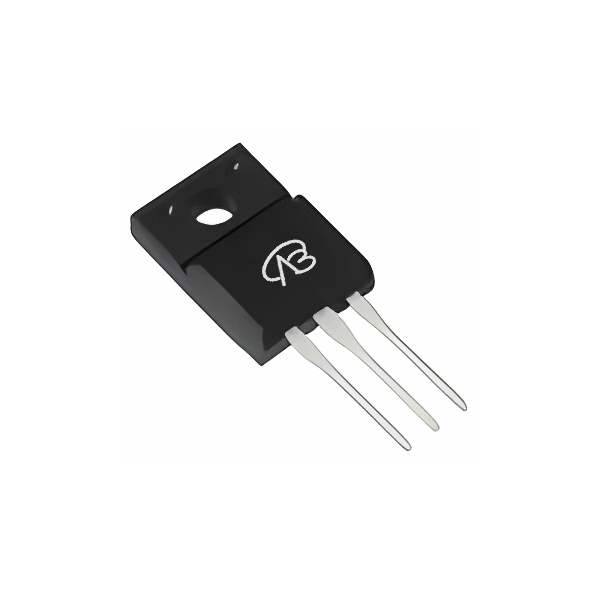
In high-voltage power conversion and switching applications, selecting a MOSFET that balances voltage rating, current capability, and switching efficiency is a critical design challenge. This is not a simple part substitution but a careful trade-off among performance, ruggedness, cost, and supply chain security. This article takes two representative high-voltage MOSFETs, STF33N60M2 (N-channel, TO-220FP) and STD5N52K3 (N-channel, DPAK), as benchmarks. It deeply analyzes their design cores and application scenarios and provides a comparative evaluation of two domestic alternative solutions: VBMB16R26S and VBE165R05S. By clarifying their parameter differences and performance orientations, we aim to provide a clear selection guide to help you find the most suitable power switching solution in the complex component landscape.
Comparative Analysis: STF33N60M2 (N-channel) vs. VBMB16R26S
Analysis of the Original Model (STF33N60M2) Core:
This is a 600V N-channel MOSFET from STMicroelectronics, featuring the MDmesh M2 technology in a TO-220FP package. Its design core is to offer a robust balance of high voltage blocking, good current handling, and low conduction loss in a classic, thermally efficient package. Key advantages include: a high drain-source voltage (Vdss) of 600V, a continuous drain current (Id) of 26A, and a typical on-resistance (RDS(on)) of 108mΩ (125mΩ max @ 10V gate drive). This makes it suitable for demanding high-voltage, medium-current applications.
Compatibility and Differences of the Domestic Alternative (VBMB16R26S):
VBsemi's VBMB16R26S is offered in a TO-220F package, providing a form-factor compatible alternative. The key electrical parameters show a compelling match: it shares the same 600V voltage rating and 26A continuous current capability. Notably, its on-resistance is specified at 115mΩ (@10V), which is comparable to and potentially slightly better than the maximum rating of the original part. This indicates a potential for similar or slightly lower conduction losses.
Key Application Areas:
Original Model STF33N60M2: Its 600V/26A rating with moderate RDS(on) makes it well-suited for medium-power off-line applications. Typical uses include:
Switch-Mode Power Supplies (SMPS): PFC stages, flyback, or forward converter primary-side switches.
Motor Drives: Inverters for industrial motor control.
Lighting: High-voltage ballasts and LED driver circuits.
Alternative Model VBMB16R26S: With its closely matched specifications, it targets the same application space as the original—600V systems requiring ~26A current handling. It serves as a viable direct alternative where package compatibility (TO-220 type) is acceptable and supply chain diversification is desired.
Comparative Analysis: STD5N52K3 (N-channel) vs. VBE165R05S
This comparison focuses on a higher-voltage, lower-current MOSFET in a compact DPAK package, where the design pursuit is high-voltage switching in a space-constrained, surface-mount design.
Analysis of the Original Model (STD5N52K3) Core:
The core advantages of this STMicroelectronics part are:
High Voltage Rating: A Vdss of 525V, suitable for off-line or bus voltages around 400V.
Compact Power Package: The DPAK (TO-252) package offers a good compromise between footprint, power handling, and thermal performance for surface-mount assembly.
Application-Tailored Spec: With 4.4A continuous current and 1.5Ω RDS(on), it is designed for lower-current, high-voltage switching tasks where minimizing gate drive and switching loss is also important.
The domestic alternative VBE165R05S represents a "voltage-upgraded" option:
It offers a significantly higher voltage rating of 650V compared to the original's 525V, providing a greater safety margin in high-voltage designs. Its continuous current rating is 5A (slightly higher than 4.4A), but its on-resistance is also higher at 1000mΩ (1Ω @10V). This indicates a trade-off: higher voltage capability and slightly higher current rating, but with increased conduction loss.
Key Application Areas:
Original Model STD5N52K3: Its 525V rating and DPAK package make it ideal for compact, high-voltage, lower-current applications. For example:
Auxiliary Power Supplies: Standby or bias supply switches in larger SMPS.
LED Lighting Drivers: Primary-side switches in mid-power LED drivers.
Appliance Control: Switching and control circuits in home appliances.
Alternative Model VBE165R05S: Is more suitable for scenarios demanding a higher voltage margin (up to 650V systems) where the current requirement is around 5A and the higher RDS(on) is acceptable within the system's loss budget. It can be a strategic choice for designs needing extra voltage ruggedness.
Conclusion
In summary, this analysis reveals two distinct selection paths for high-voltage applications:
For 600V, ~26A applications using a through-hole TO-220 type package, the original model STF33N60M2 provides a proven, balanced performance benchmark. Its domestic alternative VBMB16R26S offers a highly competitive, pin-to-pin compatible solution with essentially equivalent key specifications (600V, 26A, ~115mΩ), making it a strong direct replacement candidate.
For ~500-650V, ~5A applications in a surface-mount DPAK package, the original STD5N52K3 (525V, 4.4A) is tailored for efficient, compact high-voltage switching. Its domestic alternative VBE165R05S takes a different approach, prioritizing a higher voltage rating (650V) and slightly higher current (5A) at the expense of higher on-resistance. This makes it a suitable alternative where voltage margin is paramount and the increased conduction loss is manageable.
The core conclusion is that selection depends on precise requirement matching. In the context of supply chain diversification, domestic alternatives not only provide viable backup options but also offer different performance trade-offs (like higher voltage rating in the VBE165R05S), giving engineers more flexibility in design optimization and cost control. Understanding the specific parameter implications of each device is key to leveraging its full value in the circuit.

Download PDF document
 Download now


